


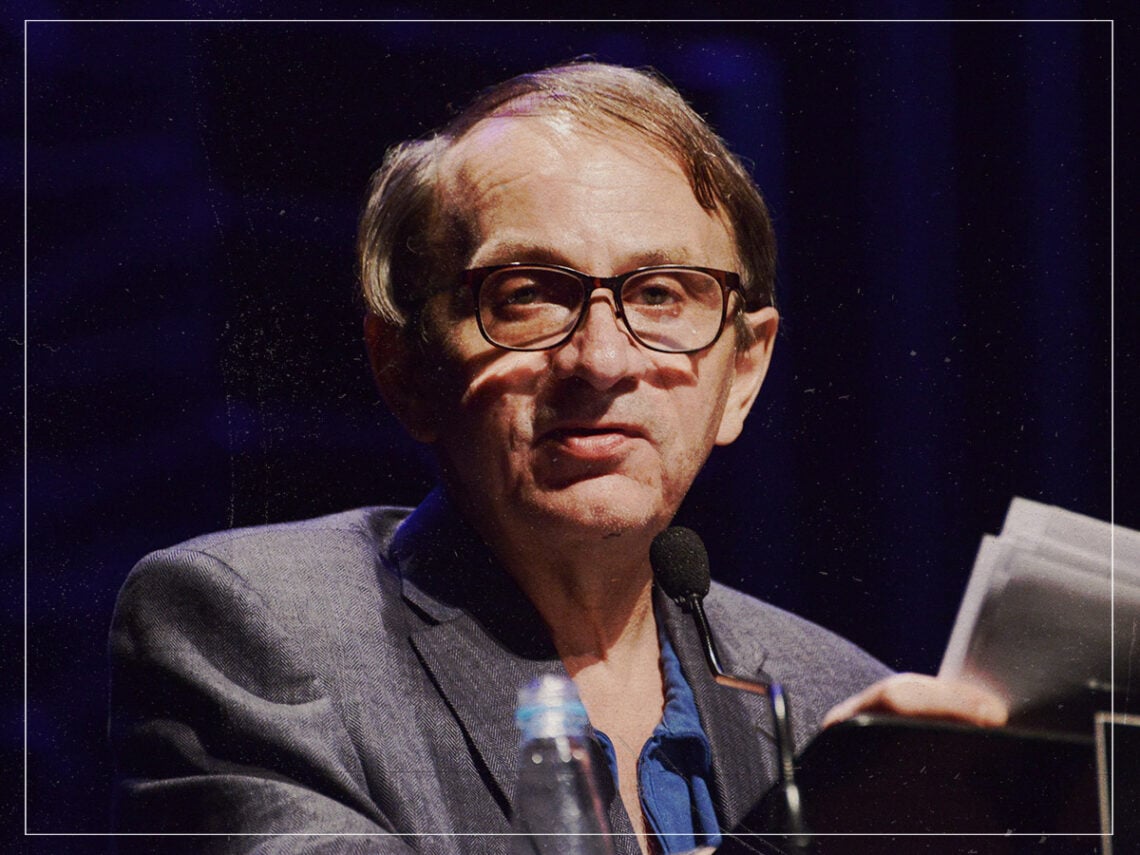
Michel Houllebecq: France’s most hated writer?

Throughout the course of literature or, indeed, any artistic medium at all, there have been a series of figures who have drawn widespread controversy and criticism. Where the United States has American Psycho author Bret Easton Ellis, France finds its analogous writer in the shape of Michel Houllebecq.
Sometimes referred to as France’s most hated writer, Houllebecq is indeed a provocative figure who has polarised his readers and critics, which is often the case with the most notorious and infamous artists. Houllebecq’s works frequently explore the nature of social alienation, modern sexuality and the contemporary abandonment of moral values.
His novels are doused in an air of sheer darkness, but they also possess a striking sense of humour, the likes of which have drawn as much acclaim and controversy. Houllebecq’s debut, 1994’s Whatever, first gave the literary world an insight into his themes and style, and following the release of 1998’s The Elementary Particles, Houllebecq had become a condemned and celebrated literary star.
The novel focuses on the sexual liberation of the second half of the 20th century, described in an extremely graphic nature that some readers found to be grotesque at best and misogynistic at worst. However, literature should be controversial at times, and the best works often unflinchingly confront the most taboo subjects with radical honesty.
The reason Houllebecq is perhaps most hated is because of his suspected Islamophobia. In 2001, he released Platform, which combined the explorations of sex tourism and radical Islam terrorism, which naturally brought a steady stream of detractors who accused Houllebecq of Islamophobia and racism. Rather than shy away from such criticism, though, Houllebecq doubled down on his beliefs by labelling Islam “the most stupid religion”, which itself brought about a series of legal battles and accusations of hate speech.
2015’s Submission also showed that Islam is something Houllebecq often thinks of, and the novel depicts a future France under Islamic rule. Such a thematic view was naturally perceived as playing into the hands of right-wing hatred and the threat of Islam against Western culture, although others felt that Submission was itself a satire of political correctness as the disintegration of a Western belief system.
Houllebecq had once responded to his critics, noting, “First of all, they hate me more than I hate them. What I do reproach them for isn’t bad reviews. It is that they talk about things having nothing to do with my books and that they caricature me so that I’ve become a symbol of so many unpleasant things – cynicism, nihilism, misogyny. People have stopped reading my books because they’ve already got their idea about me.”
It’s hard to think of Houllebecq without thinking of a cynical worldview that can indeed border on nihilism and misogyny. His public persona portrays the author as an alienated misanthrope, much like the authors of his novels. In interviews, Houllebecq seems to mock journalists and make intentionally provocative statements, which leads to not only his position as French literature’s most notorious enfant terrible but also the understanding that he simply doesn’t care if his readers and critics hate him or not.
There is indeed something off-putting about Houllebecq’s work, but it’s precisely for that reason that it is also so alluring, much in the same manner as Bret Easton Ellis, who also writes of sexual and violent acts in a graphic yet affectless style. Houllebecq’s novels resonate with those who themselves feel disillusioned with the contemporary state of the world and the unease that seems to afflict so many in the West.
Perhaps it is precisely because of Houllebecq’s commitment to provocation that he has been rendered as one of France’s most celebrated yet reviled literary figures. Whether one perceives him as a proponent of cynical nihilism or a man with profound views on sexuality and society, it’s clear that Michel Houllebecq is simply one of the most divisive authors in contemporary literature.
