


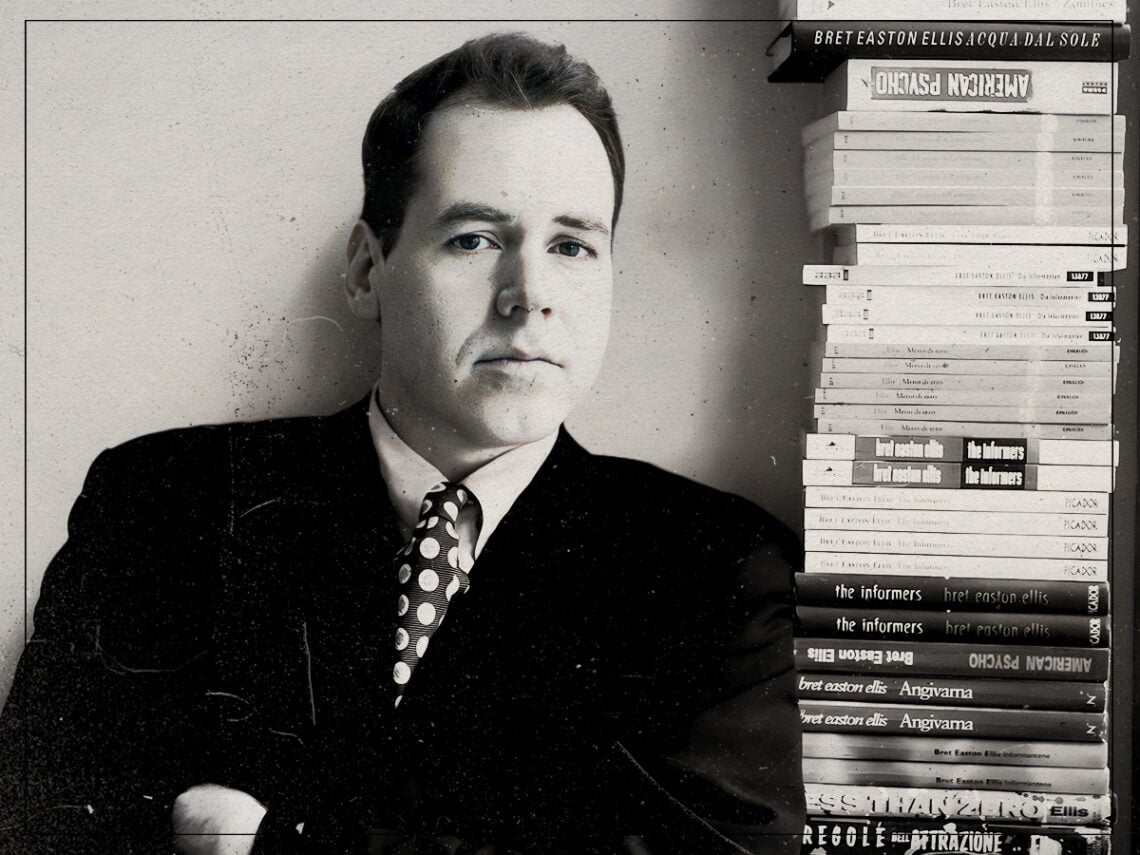
The sickening emptiness of Bret Easton Ellis’ ‘Less Than Zero’

Reading a Bret Easton Ellis novel undoubtedly generates a strange quality and atmosphere. The notorious and controversial American author’s writing style often details a series of shocking, immoral, and violent acts in an utterly affectless style, most notably in his 1991 work American Psycho.
However, even as far back as Ellis’ debut, 1985’s Less Than Zero, which was published when the author was just 21 years old, it was clear that Ellis had his literary ambition set on providing readers with a sensory and entertaining experience that would somehow leave them feeling oddly hollow and dissociative once the book had been put back on the bedside table.
Less Than Zero tells of the emotional and moral disparity of the most privileged subsection of the Los Angeles youth in the 1980s. By focusing on the protagonist, Clay, an 18-year-old student returning to his Californian home from his New Hampshire college for the Christmas holidays, plus his disaffected, wealthy LA friends, Ellis taps into the hedonistic tendencies of the decade, the likes of which he had himself experienced as a young man and adolescent.
Even dialled back from the excessive consumerism of Patrick Bateman in American Psycho, Less Than Zero’s prose style is one of complete detachment amid the luxury of privilege. The constant parties and rampant drug use, the days spent lounging by the pool and driving out to Palm Springs for the weekend, leaving both Clay and the novel’s readership feeling overwhelmed by a state of nihilism and ennui, in line with the novel’s title, i.e. to be lower than nothing.
Whether faced with moral and emotional repugnance or the striking pleasures of life like sex, consumerism and intoxicants, Clay seems utterly alienated from his affluent existence. When we read of his partying and lavish lifestyle, we can’t help but feel excited at the moment of sharing in such privilege, only to mirror Clay’s apathy when we close the novel’s pages.
Perhaps it’s the fact that Clay, Blair, Trent, and Julian’s positions in life ought to bring them emotional and intellectual engagement with life, but by squandering it, they are left feeling utterly empty. Less Than Zero feels lacking in any pursuit beyond the detailing of acts, even though it is well written and has precise intent, so we, too, become wrapped up in its glamourous futility.
While much of Ellis’ novel primarily details the day-to-day occurrence of its characters’ lives, which is essentially just hanging out and passing the time, towards its crescendo, when the true horrors of the Los Angeles elite are revealed, we’ve spent such an inordinate amount of time in apathy and moral hollowness, that rape, torture, murder and prostitution barely even scratch the surface of our empathy. It is an incredibly strange position to be found in as a reader with a functioning moral compass.
However, that effect is precisely the thing behind the literary prowess of Ellis’ debut. While it might lack the flowery language with which we associate the literary medium, it’s an intention from Ellis, a signifier of the moral decay of the late 20th century that he lived through and detailed in all its wealthy, luxurious horror. Less Than Zero serves as an examination of the excess of the 1980s, but also the power of the novel to generate the same feeling in its readership as its characters.
