


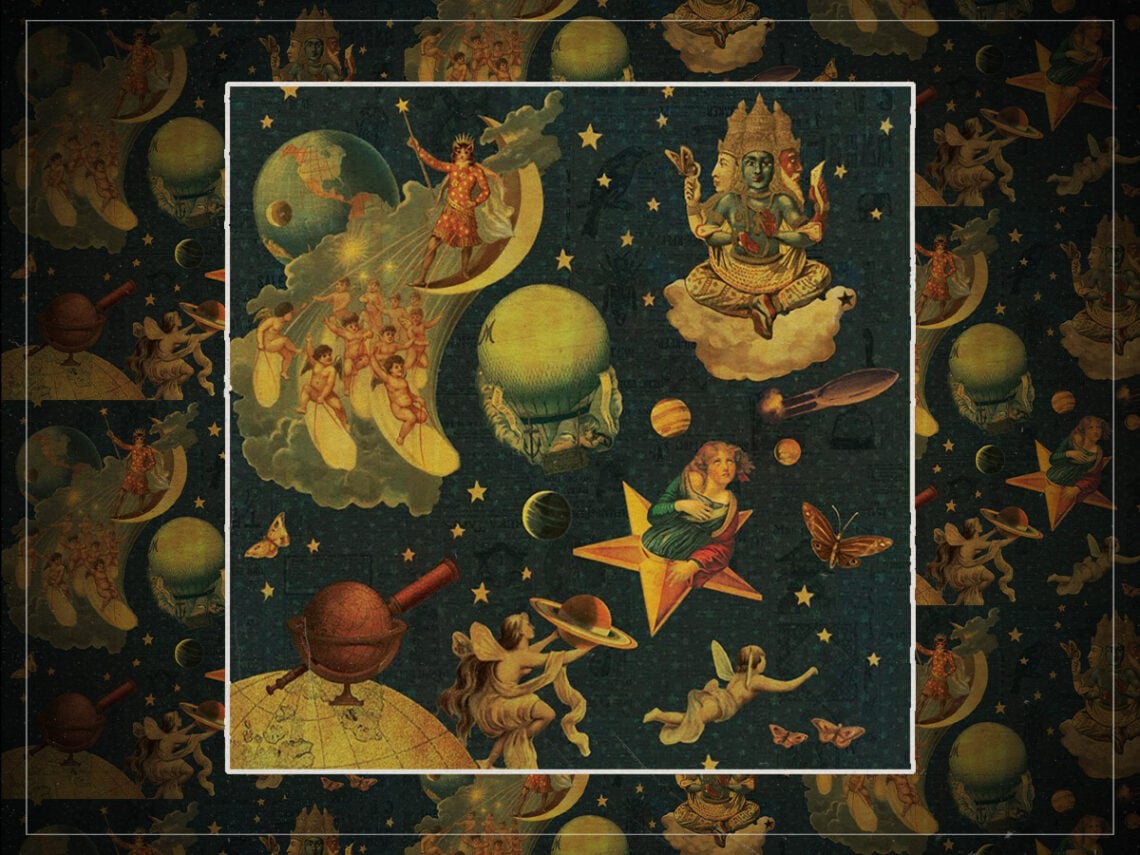
‘Mellon Collie and the Infinite Sadness’: Smashing Pumpkins’ creative gamble

It’s now 30 years since alternative rock stalwarts Smashing Pumpkins released their double opus Mellon Collie and the Infinite Sadness, an audacious artistic long shot fuelled by cocksure hubris and paying off in Billboard dominating spades.
Rightly or wrongly, Smashing Pumpkins had rubbed up the Chicago music community the wrong way when first picking up steam in the early 1990s. Deemed careerists by the alternative scene’s underground pillars in the city, including a scathing excoriation by arch-miserabilist Steve Albini comparing them to REO Speedwagon, the Pumpkins frontman was never scared of the mainstream.
Following in the tradition of Bryan Ferry’s captaining of Roxy Music toward the pop sphere while clinging to their art-rock vitality, Billy Corgan, too, possessed an unabashed pursuit of fame and fortune’s beckoning hinterland, eager to forge a chart presence and wider audience to hear his rueful lyrical observations on life, loss, and the black fug of depression.
To hell with the purists! Smashing Pumpkins weren’t content with an underground pedigree if it meant creative stifle and dwelling in the same indie venues for the rest of time. Corgan’s songwriting ambitions were fast outpacing the conventional band set-up. Founded on a paisley neo-psych direction before imbuing heavy metal to their punk brew, vast creative planes were already begging to be realised even when cutting 1991’s Gish debut with Nirvana’s future Nevermind producer Butch Vig.
Riding the grunge wave after the aforementioned record burst the Seattle dam into the charts’ limelight, a tag Smashing Pumpkins always held diffident misgivings for, 1993’s Siamese Dream would mark the arrival of a band to be reckoned with, scoring rich, layered dreampop spiked with metal effrontery that saw them sail to the centre of heavy MTV rotation, if irking their fellow Chicagoans that bit sharper.
Corgan never hid his ego, triggering a lifelong habit of self-aggrandisement and keen congratulating of his own musical talents. Endearing himself further to his naysayers, Corgan gave the perhaps ever so slightly tongue-in-cheek quip that the awaited third LP would stand as “The Wall for Generation X”. It was a bold statement. Hungry for new creative territory, Smashing Pumpkins sought to expand their instrumental horizons even further, recruiting the production partnership of Flood and Alan Moulder to meet Corgan’s lofty grab at a rock behemoth with the eclectic scope of his disparate lyrical pen.

“To sum up all the things I felt as a youth but was never able to voice articulately,” he told the Chicago Tribune on the eve of his anticipated masterstroke’s release. “I’m waving goodbye to me in the rear view mirror, tying a knot around my youth and putting it under the bed.”
The world had been giving one hell of a taster with ‘Bullet With Butterfly Wings’, which dropped a week before the album’s drop. Standing as their defining song, everything about the unveiling of the double album was touched on with the strutting lead single. Possessed with a demonically hard bass riff, Corgan’s palpable self-obsession never sounded so good, marrying the quiet-loud dynamic as good as Pixies ever captured, and the “rat in a cage” refrain as immortal as Cobain’s “Here we are now / Entertain us” or Trent Reznor’s “I wanna fuck you like an animal”. Despite Corgan comparing himself to Jesus Christ in his lyrics, delusions of grandeur were getting away with it with the strength of his improved songcraft.
The certitude of your own creative brilliance is a fraught energy, often lacking the self-awareness to realise the dross you’re unleashing to the world. An ambitious double-album statement would have been more than many bands could chew with only two albums behind them, and having only broken through with the previous record. Yet Corgan was stuffed with songs, entering the studio with over 50 sketches to be worked out, eventually boiled down to the 28 songs across two discs, with much of the material ending up on the The Aeroplane Flies High box set.
Finally seeing release in October 1995, Mellon Collie and the Infinite Sadness was the Smashing Pumpkins’ ultimate payoff. A sprawling epic that weaved between blistering metal attack, orchestral grandiosity, synthpop detours, elegant waltzes, and brittle folk wanderings that all hit its thematic bullseye, and finally cemented Corgan as a minor icon of the era. There’s nothing effortless about Mellon Collie. Every moment, emotional chasm, and dextrous U-turn is driven by a principal songsmith guided by guts, undimmed ambition, and an inarguable bout of vainglorious chutzpah where many of his peers would have been too precious to go near, or too concerned with indie stripes to ever hurtle towards with unabashed gusto.
Peaking at number one on the Billboard 200, Mellon Collie was embraced by longtime fans while garnering a whole swathe of new ones. Stylistic changes would continue, a veer into further electronic goth territory and excursions into dystopian comic silliness that saw Corgan begin to misfire, albeit still boasting fantastic songs, but Corgan’s roll of the double album dice stands as Smashing Pumpkins’ finest, enduring moment, a record charged with peacocking, flaunting creativity only a certain kind of braggadocio can conjure.
