


‘May’: the horror of loneliness

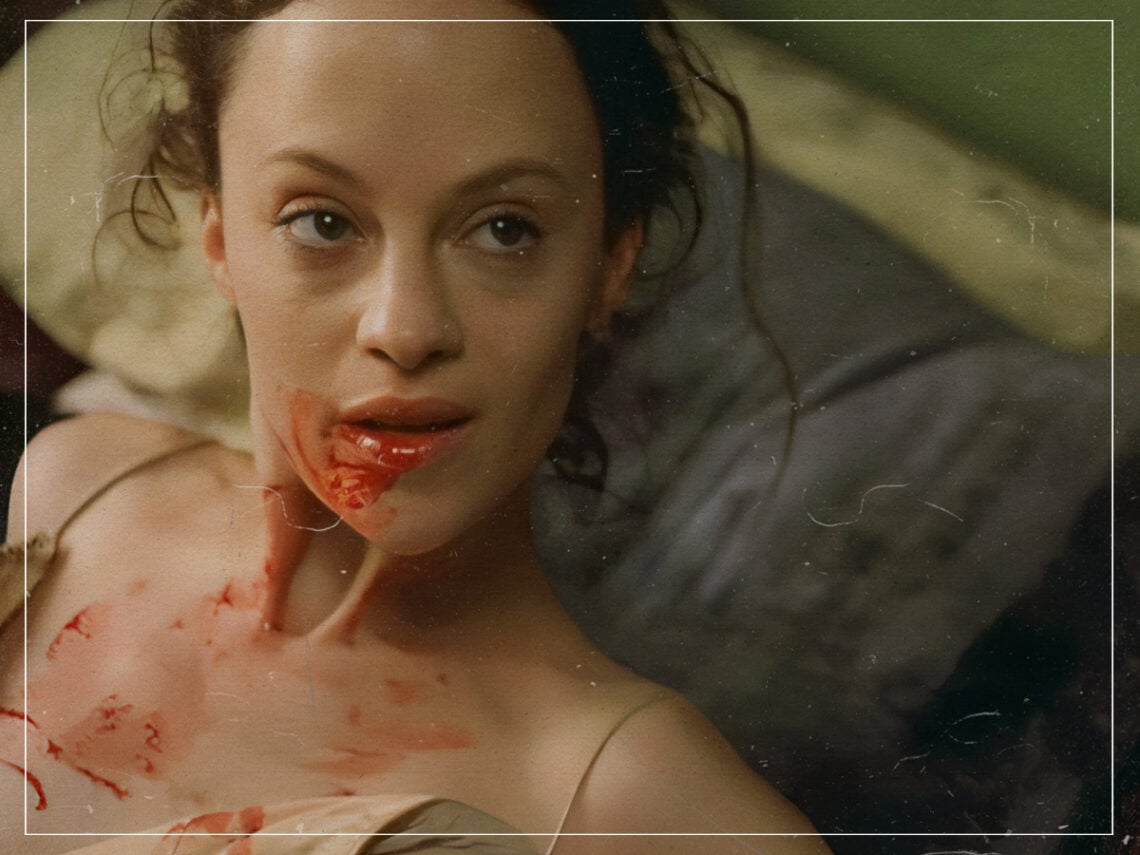
Sometimes, a good offbeat indie horror goes under the radar, fading into the annals of time, only to turn into a cult classic years later. This is exactly what happened to May, Lucky McKee’s surprisingly emotional tale of a strange woman who takes her attempts to find companionship to unexpectedly terrifying levels.
Don’t be fooled by the aggressively 2000s poster – an oversaturated, blue-tinted image of May’s face (played by Angela Bettis) – the film is a hidden gem for any fans of Frankenstein, with McKee paying homage to Mary Shelley’s classic tale in a genuinely creative way.
Bettis’ performance as May is unnerving yet sympathetic; we find ourselves empathising with her despite the fact she consistently engages in bizarre, socially unacceptable behaviour that is often incredibly creepy. McKee provides us with a simple backstory – May was ostracised as a child due to her lazy eye – which explains why the protagonist has come to be the way she is. Having grown up with a lack of friends or genuine connections, May finds adulthood increasingly hard to navigate, unable to deal with or process feelings of jealousy or attraction healthily. She is clearly stunted and childlike, reflected in the fact that she relies on an antique doll as her only companion.
May, who works as a veterinarian assistant, soon becomes obsessed with Jeremy Sisto’s Adam, a mechanic, and stalks him around town. She becomes infatuated with his hands, going as far as to touch them at a café after she follows him there and watches him from another table, striking gold when he falls asleep with his arm outstretched. You can’t help but laugh as May shamelessly embarks on a quest to find a connection with others, acting so completely out of the ordinary that she might as well be an alien beamed down from a different planet.
Meanwhile, her lesbian colleague Polly, played by Anna Faris, expresses interest in her, but May is mainly just interested in how beautiful her neck is. May’s obsession with Adam is too strong for her to be interested in anyone else, and her weirdness attracts him, too, and they soon begin dating. It doesn’t take long, however, for him to realise that she’s a lot weirder than he first thought. This becomes abundantly clear when she gets aroused from watching a movie featuring cannibalism, biting Adam’s lips afterwards and causing him to bleed.

All May wants is to find someone, romantic or platonic, who won’t judge her for her odd ways. McKee’s movie truly digs into the horrifying nature of loneliness, with Bettis’ character slowly descending further into derangement and losing sight of her sanity as she fails to make any meaningful and enduring connections. After Adam ditches her, she explores her sexuality with Polly.
Still, she quickly discovers that she is also seeing a leggy blonde named Ambrosia, causing May to feel an extreme sense of jealousy and rage. Unable to understand that relationships come and go and that sometimes we have to deal with seeing those we like becoming more closely acquainted with others, May’s feelings manifest into violence – her loneliness spawning acts of pure horror.
Her mental state deteriorates quickly, which is made worse after her beloved doll is damaged and removed from her case. May appears possessed by her doll, killing her cat – given to her by Polly – with little remorse. This marks the start of her downfall, which is tragic and heartbreaking to witness. It is clear that as weird as May is, she’s a nice person; she is simply a victim of significant childhood trauma that has prevented her from developing into a stereotypically ‘normal’ adult. That’s what makes May’s descent into murder so saddening – she is a relatable figure to many, albeit a slightly exaggerated one. She’s the girl in school who people refused to befriend because of a mere physical difference, the girl who her peers rejected despite making an effort to be seen as normal. May was made to feel like a misfit, subsequently leading her to become one.
After befriending a punk on the street (James Duvall), she takes him back to her house, although he soon finds the dead cat in the freezer. His reaction, unsurprisingly, is pure disgust. May’s strangeness is emphasised once again, leading her to kill him in a fit of rage. This is the start of her transition from being a seemingly harmless weirdo to a cold-blooded Dr Frankenstein. Embarking on a killing spree, which includes Adam, Polly and Ambrosia, May assembles the parts she needs to make her own best friend – her own doll to play with whenever she likes, who will never leave her or betray her.
Using Ambrosia’s legs, Adam’s arms, Polly’s neck and the punk’s body, she crafts a monster. She is truly past the point of repair now, unable to see sense as she dresses the doll and lays next to it, finally content with herself.
But McKee doesn’t end the film there. To give it an even more tragic end, we see May realise that her new friend cannot see her as it has no eyes. In a manic state of instability, she stabs herself in the face and pulls out her eyeball, placing it on her creation’s face while screaming in pain. It’s one last act of desperation, showing how painful and horrifying it can be to feel extreme alienation and loneliness. She begs to be seen by the doll, reflecting her desire to be understood by her peers, something she failed to achieve earlier in the movie.
This is what makes May such a devastating film. All she wants is to be seen and to be heard, to be accepted by others after experiencing over 20 years of love’s absence. The movie’s relatively slow pacing (the killing spree doesn’t start until the final third) allows us to genuinely feel saddened by May’s attempts to find companionship. Building up our trust only to smash it to pieces and ask us if we still side with a now-serial killer, May is a truly underrated slice of ‘00s horror that digs into the nuances of loneliness through grisly kills, slight campiness, eccentric humour and emotional depth.
