


Matmos: the electronic duo for whom no concept is too tricky

If you were paying attention to some of the strangest musical phenomena of 2024, then you might recall the birth of an unusual new genre in electronic music known as ‘hit ‘em’. While its time in the spotlight burnt bright but fast, the bizarre concept of music “in 5/4 time at 212 bpm with super crunched out sounds” felt uber-specific but brought together producers from around the world who attempted to make their own tunes that fit the description in a flurry of excitement.
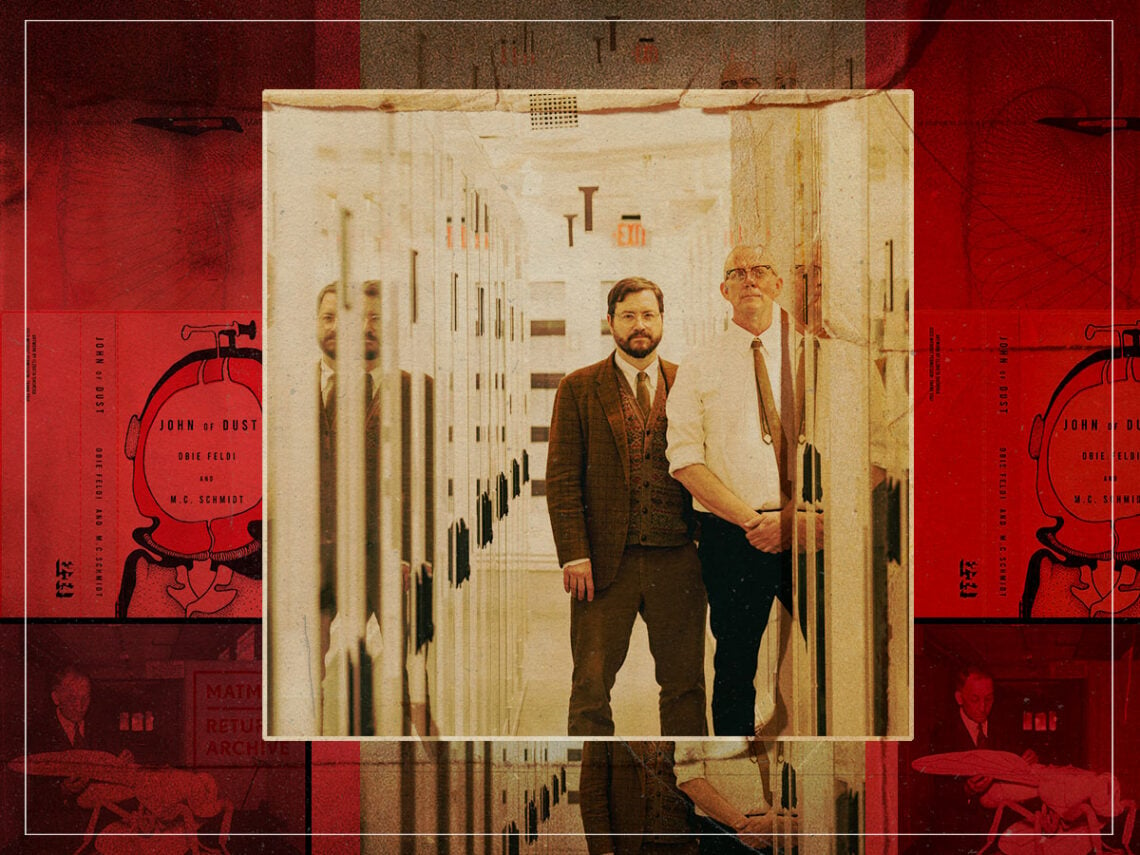
This genre description appeared so chaotic yet vague because it stemmed from a dream. The reason it was stranger still was probably because that dream came from the warped mind of Drew Daniel, one half of the Baltimore experimental duo Matmos. Alongside his long-term romantic and creative partner, Martin ‘MC’ Schmidt, Daniel has never been afraid to bring highly conceptual ideas to life, and the fever-dream genesis of ‘hit ‘em’ is far from his wildest invention.
To use other electronic pioneers as a yardstick for madcap experimentation, if you find albums like Aphex Twin’s Drukqs to be a headache-inducing melange of noise or any output from acts like Venetian Snares to be far too intense for your feeble ears to handle, then Matmos might be a tricky act to wrap your head around. However, if you have a particular predilection for records that take bonkers concepts to the extreme and challenge the limits of sound design or what can even be considered a musical instrument, then welcome to a whole new world.
Right from the start, they were making use of samples that one might never think it was conceivably possible to place in a musical context, and their self-titled debut album made use of sounds such as the nerve activity of a crayfish and amplifying freshly cut hair in what was presented as a glitchy take on IDM and musique concrète. While these only accounted for some of the samples used on the album, and indeed were similar to the sounds heard on their next two releases, it was on their fourth release, 2001’s A Chance to Cut is A Chance to Cure, where they began to really limit where their sounds were coming from on a particular album.
The record in question, save for one track, is built around samples from operating theatres, with all of the snipping of scissors and grotesque slurping sounds all having originated from recordings of procedures such as plastic surgery and liposuction. In spite of how stomach-churning and unmusical this concept sounds, the album is a fine example of how Daniel and Schmidt can create melodic and rhythmically captivating music using noises that one might be repulsed by when in their normal context. ‘Spondee’ manages to be a bouncy house track based around a hearing test – imagine that.

If an album of surgery noises sounds far-fetched, on perhaps their best-known concept album, the duo attempted to create an album only using the sounds created by their washing machine. The resulting record, Ultimate Care II, has both the sampled noises of a regular cycle but also the sounds of Matmos and a series of guest ‘musicians’ hitting, rubbing and operating the machine for one 38-minute long track, which takes the listener through perhaps one of the most aurally invigorating chores ever endured. If you’re able to listen to your own household appliances working their magic without imagining a beat behind it after experiencing Ultimate Care II, then perhaps the bizarre beauty of their domestic masterpiece hasn’t sunk in.
However, arguably, the most ambitious album that the duo have committed to record is 2013’s The Marriage of True Minds. Based on the Ganzfeld Experiment, the concept behind the record was for Daniel and Schmidt to take a group of subjects in for a series of psychological experiments, where they would place them in a sensory deprivation chamber and attempt to communicate ideas for a new Matmos record to them.
Anything related to sound described back to the duo was then reconstructed into their own interpretations of what the test subjects had experienced. Given how the record was imagined by minds other than their own and essentially recounted from telepathic transmissions, the record ends up being one of their most sonically diverse and is a showcase of what they can do without relying on sampling as much as on other releases.
From albums made entirely out of plastic noises to an album of medieval folktronica to a project commissioned by the Smithsonian Folkways sound library whereby they only sampled non-musical records from their catalogue in celebration of their 75th anniversary, Matmos have demonstrated that there is no concept which is out of reach for them.
With an approach equally as rooted in the science of sound as it is in the mischievous and playful desire to conduct experiments, it’s clear that Matmos have always skipped the core question of “what if” when conceiving their albums and instead focused on the “how” to ensure that what they’re doing is achievable and satisfying to listen to.
