


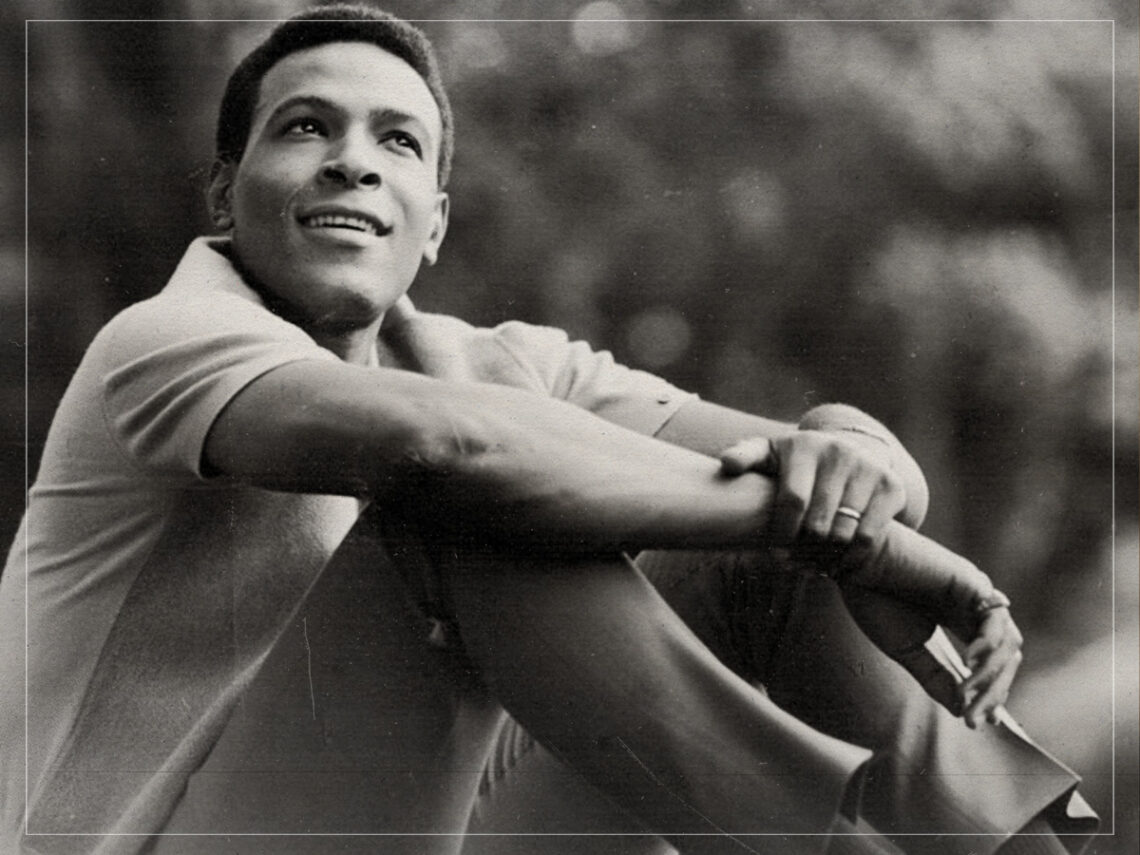
‘Midnight Lady’: The classic song Marvin Gaye slammed as totally “contrived”

From profound political commentary to foot-stomping soul and even a few sensual bedroom anthems, Marvin Gaye was part of a rare breed of artists who could seemingly do it all – traversing the landscape of soul and R&B with the kind of expertise which is sought by many, but achieved by only a select few.
You only need to take a passing glance at the early work of Gaye to realise that the Washington DC vocalist was always destined for greatness. With the Marquees in the late 1950s, Gaye courted the attention of Bo Diddley, Chess Records, and Okeh Records all at the same time – a mark of quality, if ever there was one. However, it was when Gaye went solo and joined the ranks of a blossoming new record label in Detroit that his name started to make an impact on the world of soul.
As far as education goes, Motown Records tended to subscribe to the school of tough love. Label boss Berry Gordy had no time to wait around or nurse his roster into the stars they were so destined to become; he needed hit records, and he needed them quick. For the most part, Gaye was adept at keeping up with those demands, recording a litany of solo hits as well as performing on various other Motown singles alongside the ever-expanding Funk Brothers. He was Motown’s everyman, their poster boy, yet Gaye struggled to fully endear himself to Gordy.
After all, Gordy’s iron-fist seemed to knock Gaye back at his most profound moments. In 1967, for instance, the boss refused to release Gaye’s recording of ‘I Heard It Through The Grapevine’ for a variety of paper-thin reasons. Similarly, when the songwriter crafted his magnum opus, What’s Going On, Gordy was determined not to release it, for fear of its political nature alienating certain markets. Inevitably, when ‘Grapevine’ and What’s Going On eventually hit the airwaves, they became some of Motown’s all-time biggest hits.
Still, though, the repeated knock-backs and tough love at Motown did seem to affect Gaye’s confidence to an extent, even in the post-Motown days of the early 1980s. So much so that, during an interview promoting 1982’s Midnight Love, the songwriter described some of his own songs as being “contrived”, which isn’t exactly the advertisement you would expect someone to give for their latest record, particularly if that album is as good as Midnight Love clearly is.
Nevertheless, with the words of Berry Gordy presumably ringing in his ears, Gaye earmarked “a couple of songs” as being “contrived”, per The Nelson George Mixtape. “I have to think about it a minute. ‘Midnight Lady’ is one that’ll give you a good example of what I mean,” he declared. “You’re surprised I’m so honest. My honesty has gotten me in trouble in the past, but one can’t be a true artist without it.”
Now, nobody can deny Gaye’s unwavering sense of artistry, and ‘Midnight Lady’ is far from being the songwriter’s all-time greatest work, but to describe it as “contrived” still feels like a disservice. To be fair to him, he was largely talking about his writing process in that interview, describing how some songs come to him fully formed, and others take quite a while to fully hammer out – ‘Midnight Lady’ being one of them, supposedly.
Contrived or not, that particular single earned Gaye an essential post-Motown top-ten single both in the UK and the US, ushering in his comeback era and helping to cement his well-deserved position among the most important and enduring soul artists to ever grace the airwaves.
