


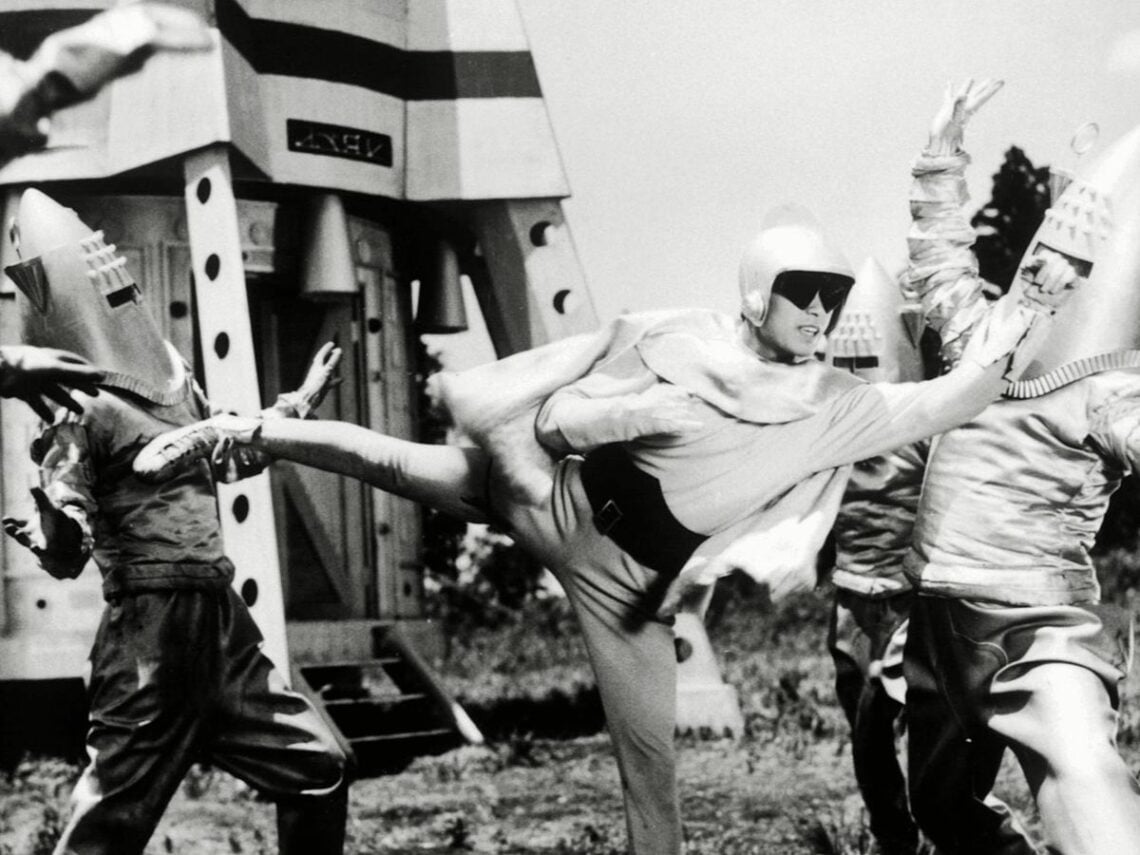
The martial arts magic of Sonny Chiba

The hard-hitting world of martial arts cinema has its eternal stars, from the early brilliance of Bruce Lee to the late 20th-century champions in the form of Jackie Chan and Jet Li. There’s always been an Asian heralding in martial arts, but in terms of Japanese films of such ilk, it’s hard to look beyond the impact and sheer excellence of Sonny Chiba.
Born Sadaho Maeda in 1939 in Fukuoka, later to take his acting stage name, Chiba became a legendary martial arts star with international recognition. His proficiency in martial arts was evident for all to see from an early age, and Chiba set about learning karate, judo and kendo with the discipline and dedication of a master fighter.
After earning a reputation in competitive fights in his younger years, Chiba began his acting career in the 1960s with a series of action movies that showcased not only his extraordinary physicality but also his nuanced acting charisma on screen. A handful of performances eventually led to his breakthrough role in Shigehiro Ozawa’s 1974 martial arts film The Street Fighter.
In portraying Terry Tsurugi, a ruthless mercenary with unrivalled skills as a fighter on a quest for vengeance, Chiba emerged as one of Japan’s top action heroes, and the film was praised for his fight sequences of genuine intensity, setting the standard for martial arts movies across the world and leading to The Street Fighter becoming the first X-rated film the US solely for its depiction of violence.
From there, Chiba went on to feature in a number of hit movies as Tsurigi, including Return of the Street Fighter and The Street Fighter’s Last Revenge, as well as several others outside the role like Champion of Death, Karate for Life and Ninja Wars. Known for his love of Asian martial arts movies, Quentin Tarantino later paid homage to Chiba by casting him in Kill Bill as the master swordmaker Hattori Hanzo.
Chiba was no one-role actor, though, as he was capable of portraying honourable samurais, keen detectives, and hardened anti-heroes in equal measure, always bringing an emotional depth and nuance to such characters, bringing his electrifying presence to a number of productions. Plus, he always had his unrivalled skills in fighting to fall back on.
Off-screen, Chiba was well-respected, too, and passed on his knowledge of martial arts as an instructor, as well as offering choreography details to those who sought out his mastery. Countless fellow fighters learned the brilliance and dedication of Chiba throughout his life, meaning his influence spread far and wide beyond the realms of his own movies.
As a true hero of the martial arts genre, Sonny Chiba set out on the path for the future success of those who preceded him, like Iko Uwais and Jet Li. With skill, commitment and honour in the fighting world and a charismatic presence and character that burned through the screen, Chiba delivered a martial arts magic that ensured his place in the history of its cinematic genre and cemented a legend that will continue to whisper through the ages as each dodge is made and every punch lands.
