


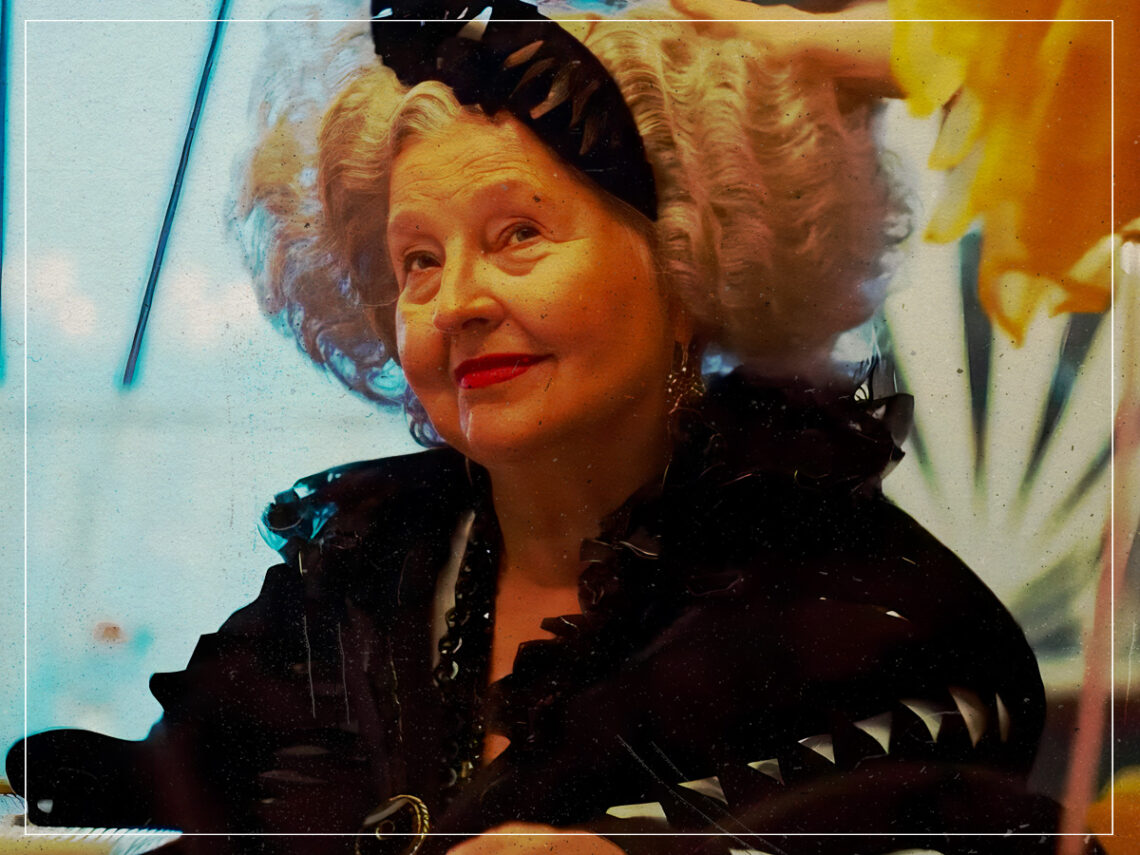
Martha von Kurtzrock: the key to understanding the unabashed feminism of ‘Poor Things’

In the halcyon sea, full of technicolour characters, that is Yorgos Lanthimos’s Poor Things, one character that stands out is Hanna Schygulla’s Martha von Kurtzrock. She embodies the defiant Crone archetype—at once amused and always quietly ready to confront the big, bad bull that is patriarchy and its many upholders.
Patriarchy perpetuates a myth that older women are inherently envious of the young. They’re deemed killjoys, only there to police the fun they can no longer have. Sometimes, they play this role well, too, because of patriarchal bargaining, which gives them a modicum of power in an inherently biased society.
The Crone lurks around in folklore and mythos. She is sometimes the helpful, wise woman and sometimes the disagreeable, malicious old bat—depending on the gaze we are meant to see her through. In Poor Things, Martha plays the Crone as the female gaze knows her to be.
She is the only one who is neither envious of Bella nor looking to take advantage of her. With her endless supply of books and the spark of this revolutionary idea – mind over masturbation – Martha shows up in Bella’s path as a possibility the men never manage to confer upon her. She is the patriarch’s biggest threat, a jolly ol’ hag and a harridan thriving in her post-horny era. And Martha’s a glorious steampunk one at that.

The Maiden, Mother, Crone and Poor Things
Martha’s Crone acts as a kindly threshold guardian for Emma Stone’s Bella Baxter, who meets her at the brink of Maidenhood with a bagful of wisdom. Bella’s predecessor, Victoria Blessington, is relegated to the Mother archetype. This is a burden that pushes her towards an actual and metaphoric death that most women have to undergo in order to be reborn as all-sacrificing maternal beings.
Martha is mildly amused by Bella’s youthful candour when they first meet. But there is no judgment or any inherent meanness towards Bella’s cocooned innocence that even Harry (Jerrod Carmichael) inflicts upon her. Martha answers Bella’s curious queries without any aside about polite society rules (which the men do for her constantly) or moral high ground. She has an unperturbed confidence and an anarchic grace that is almost unnerving for Duncan Wedderburn (Mark Ruffalo) to be around.
In a world where women are pigeonholed into narrow roles dictated by age and appearance, Martha defies convention with her unapologetic intellect and independence. She embraces her autonomy and acts as a beacon of empowerment amid a sea of societal constraints.
Bella’s journey is marred by the insidious nature of patriarchal indoctrination from the onset. She is told a version of the tale we are all too familiar with. From her formative years, Bella is reminded that she is not like other girls—she is an experiment, as per Godwin, not a girl at all and somehow more special. Most women of our generation also grew up between learning and unlearning the mantra “I’m not like other girls”, realising that is how patriarchy divides and conquers. Remove the peculiar and the fantastical from Bella’s story, and her experiences become universal to all women.

The distorted Crone in Yorgos Lanthimos’s Poor Things
Martha is the Crone that Swiney (Kathryn Hunter) couldn’t be. Swiney can be interpreted as a distorted or deformed version of the more empowered Crone figure. While Martha embodies qualities of joyful wisdom, independence, and confidence, Swiney represents a corrupted manifestation of these traits. Swiney’s character is tainted by envy, trauma, and a pragmatic breed of bitterness. She reflects a side of femininity—and humanity—textured by oppressive hierarchies and personal experiences.
Martha, Bella, Victoria, and Swiney—each navigate a society saturated with patriarchal expectations and prejudices that shape the male characters to be stunted. Even the few good men, Ramy Youssef’s Max McCandles, Jerrod Carmichael’s Harry Astley, and even Willem Dafoe’s Dr Godwin Baxter, fail to see the women in their lives as fully realised human beings. Harry and Max, both people of colour who have met their fair share of discrimination and struggles in life, cannot see Bella for all her shackles and disadvantages.
Max had no qualms about marrying a childlike Bella. Harry is irritated by Bella’s naivety – a naivety shaped by the patriarchy’s obsession with keeping women confined. Godwin has to unlearn his childhood traumas before he can acknowledge how he mistreated Bella. However, by the end, they do the work needed in order to see women as equals, transcending the societal dictat that views them to be mere extensions of male existence. Women are more than just an appendage.
