


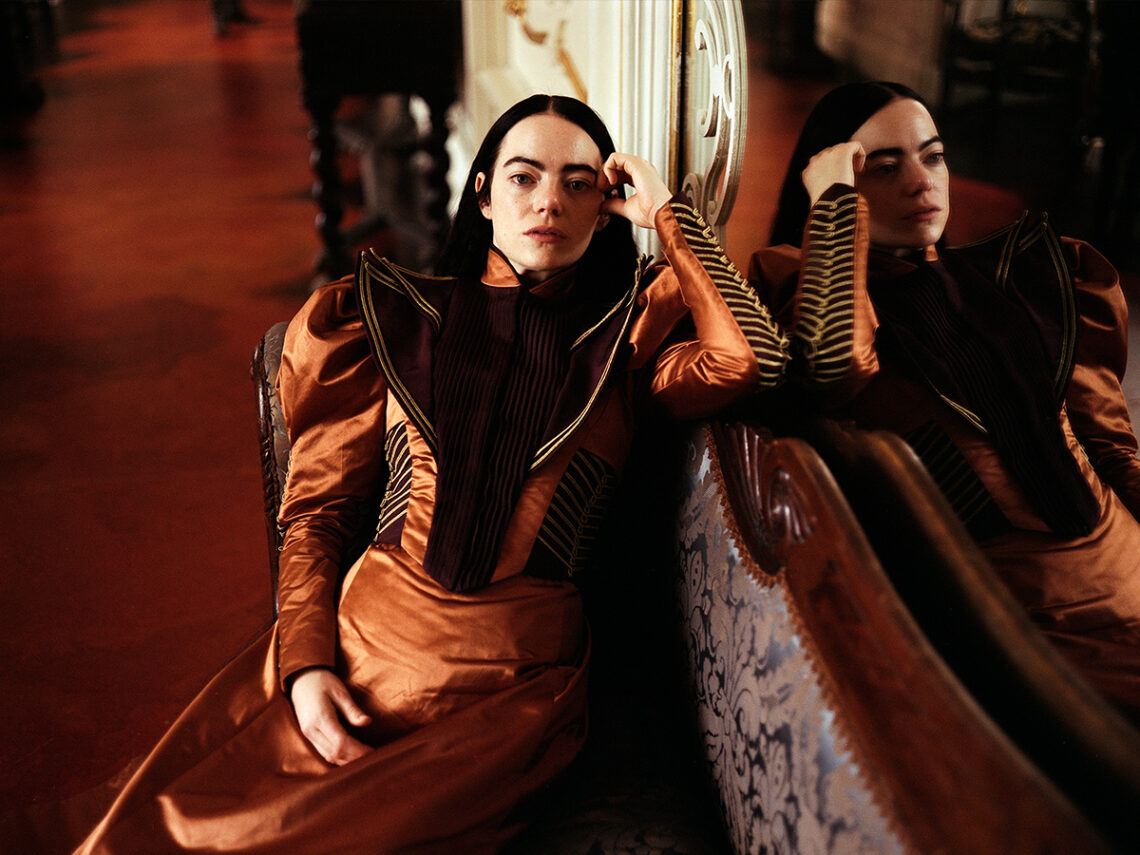
Moments of revelation: Why does ‘Poor Things’ use a fish-eye lens?

Yorgos Lanthimos once again stunned the global cinema audience with his adaptation of Alasdair Gray’s 1992 novel Poor Things, starring Emma Stone, Willem Dafoe, Mark Ruffalo and Ramy Youssef. The plot focuses on Bella Baxter, a post-suicidal Victorian woman resurrected by an experimental scientist who swaps her brain with that of her unborn child, leading to a newfound curiosity about life and a sexual odyssey.
The storytelling, acting performances, score and set design are all at a masterful level in Poor Things and helped Lanthimos weave his very peculiar tale with a steampunk, feminist-leaning outlook. However, one facet of the film’s production that captivated audiences was its cinematography, with the generous use of a fish eye lens.
The cinematography was handled by Robbie Ryan, who’d previously worked with Lanthimos on The Favourite, as well as with the likes of Ken Loach, Andrea Arnold and Noah Baumbach. As the film went into production, Ryan and Lanthimos found that they only needed a handful of lenses to shoot Poor Things.
“We tested a ton of lenses, and the great thing about Yorgos’ testing ethic is that he just wants to test to a point where he doesn’t have to have too many lenses,” Ryan told IndieWire. “So we got it down to four or five in the end that he was keen to try out. It meant it was quicker to shoot on the day because he knew he only had four lenses to choose from.”
Going on to explain the use of the fish eye lens in particular, Ryan added, “Any time a scene needed a bit more expression, Yorgos would call out [for it]. It’s the one a lot of people talk about because it’s quite a funny lens. Usually, when the scene gets a bit heightened, that lens comes out.”
The wide-angle fish eye lens served arguably three purposes. Firstly, it offered the film a peculiar feel in line with its overall tone and narrative. Poor Things can border on the maddening at times, and by using a fish-eye lens, audiences are transported into its almost unsettlingly psychedelic world.
Secondly, by using the wide-angle lens, Ryan was able to capture more of the phenomenal set design work that had been undertaken to bring Lanthimos’ visions of London, Lisbon, Paris and Alexandria to life. However, this provided its own set of challenges, as he also had to avoid capturing any sound and camera equipment in the shot.
Finally, it’s worth pointing out that there is also likely a symbolic significance to the fish eyes lens use in Poor Things, too. It’s often used at moments of heightened emotion for Bella, as she either finds herself trapped in a particular situation for the first time or discovers a new facet of life’s meaning or the delimiting constraints of society.
By depicting Bella in the centre of a fish eye lens shot, Ryan and Lanthimos were able to create a world around her, a protective layer of innocence that might be pierced at any given moment. The fish eye lens might have seemed like a mere aesthetic embellishment, but it was, in fact, used to an excellent degree of skill and narrative symbolism.
What is Poor Things about?
Yorgos Lanthimos’s 2023 film Poor Things, based on the 1992 novel of the same name by Alasdair Gray, tells of a post-suicidal Victorian women called Bella Baxter, who is resurrected by an experimental scientist having swapped her brain with that of her unborn child. The infantile Bella spends the first years of her life under the protection of her guardian, the scientist Godwin Baxter, and his aide, Max McCandles.
However, a curiosity for the outside world nags at Bella and eventually, she departs her home, despite Godwin’s protestations, with the company of Duncan Wedderburn, a sexually debauched lawyer. Bella undergoes a period of sexual liberation as she learns the true beauties and sheer horrors of the real world.
