


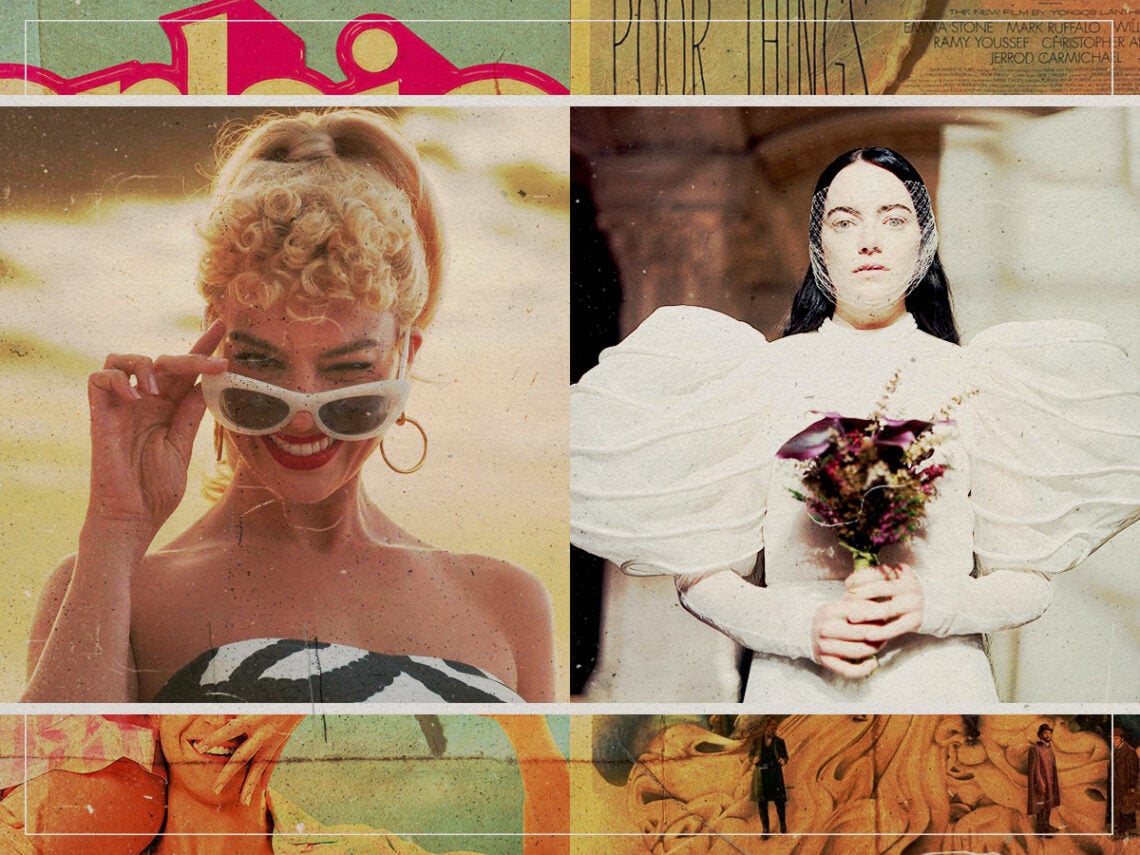
Post-suicidal lust for life: how ‘Poor Things’ succeeded the conceptual failings of ‘Barbie’

In the summer of 2023, the world experienced a cinematic mania unlike any other, with the release of Christopher Nolan’s Oppenheimer and Greta Gerwig’s Barbie on July 21st. Collectively dubbed Barbenheimer to a painstaking degree, Gerwig’s modern reflection on the iconic blonde doll was cast next to the father of the atomic bomb biopic in one of the most peculiar cultural mashups in recent memory.
Now, of course, Barbie had absolutely sod all to do with Oppenheimer other than sharing a release date. Still, it does have at least some narrative and thematic connections to one of Nolan’s Academy Award competitors, Yorgos Lanthimos’s Poor Things. The latter has also enjoyed widespread critical acclaim and commercial success since it was released earlier this year.
Barbie saw Margot Robbie portray the eponymous “stereotypical” Mattel fashion doll who lives in the matriarchal society of Barbieland with her fellow Barbies and a handful of dopey Kens. However, Barbie’s idyllic worldview is thrown into question when she visits the real world to find the child to whom she belongs and interrogates her internal existential anxiety and fear of mortality.
What Barbie finds in the real world is quite the inverse of her plastic fantasy, and she is confronted with the ugly and severe realities of our patriarchal society, a socio-political arena in which Ken naturally thrives. What follows is a pseudo-feminist ordeal that depicts mental unwellness in universal terms and pulls at a mass audience’s heartstrings in increasingly desperate measures. While it’s undoubtedly endearing and bright and sparkly and all the rest of it, Barbie is, unfortunately, a sickening studio exercise that increases brand and product awareness under the guise of female empathy.
Gerwig’s film was not bad per se. It had excellent production, direction and a handful of decent performances and songs, too. It’s just that it posited the state of anxiety and existential dread as something to be covered up with bright lights, sing-song numbers, glamorous outfits and a soppy sentimental speech about being a woman. Enter Lanthimos’s Poor Things, based on the 1992 novel of the same name by Alasdair Grey and featuring the likes of Emma Stone, Mark Ruffalo, Willem Dafoe and Ramy Youssef.
Where Barbie is encased in her plastic bubble, free from the horrors of the real world, so too is Emma Stone’s Bella Baxter. She is a post-suicide Victorian woman resurrected by an experimental scientist who implants the brain of her unborn baby into her skull and begins to raise her as a childlike young woman in the confines of his London home.
Eventually, though, Bella’s natural inquisitiveness leads to her departure from her guardian with the company of Duncan Wedderburn, a randy and chauvinistic lawyer played by Ruffalo. Like Barbie, Bella too learns of the realities of the world and discovers the harsh Victorian conditions of women. Not only is she infantilised by Duncan, unaware of her youthful mind, but she also eventually finds herself engaged in sex work when he is no longer able to provide for them on their journey.
Bella undergoes a genuine sexual odyssey and liberation, from first discovering her clitoris in the safety of her home to putting it to frequent use with the abhorrent Duncan and finally selling it as the only genuine way to establish herself as commercially viable in the real world. In that light, Barbie was about as feminist as two halves of Carling, while Poor Things seemed to genuinely liberate its female protagonist as well as casting a positive view on sex work in general and its practitioner’s actual societal dominance over men, despite their unknowing.
What’s more is that Lanthimos’s film put forth an actual remedy for existential doubt and anxiety in having its post-suicidal protagonist – with the admitted fresh curiosity of a child – discover a lust for life that never ceases nor abates. She finds meaning in food, drink, music, dance, sex, love and all the beautiful things that make human life worth living. Where Barbie “worried” about dying, leading to laughter from the audience, Bella actually killed herself amid the awful conditions for women in the Victorian era and yet found herself happy at its end.
There’s a beautiful metaphor in Poor Things of killing the wasp nests that are our overactive minds and replacing them with the consciousness of a beginner to life, through which every experience is new. Lanthimos delivered a far more poignant and sincere directive of feminism, social commentary, and actual “comedy” than Gerwig and co-writer/soppy husband Noah Baumbach could ever hope of mustering with their pink, sentimental, made-in-China doll advertisement.
Socio-political leanings on a mass scale can never be a truly bad thing. Still, Barbie had to contend with the fact that, at its root, it’s a movie about a plastic product, further proof of the contemporary commodification of social causes. By contrast, Poor Things is a genuine work of cinema, one that unabashedly liberates its protagonists, ridicules the misogynistic tendencies of its very own Ken in the shape of Duncan Wedderburn, and yet still has all the unbelievable production, costume, set and art direction qualities of its predecessor. In that light, Lanthimos and Stone took the failings of Barbie and ran and delivered one of the undoubtedly great films of recent times.
