


Composer Spotlight: Mark Korven on horror, Robert Eggers and the brilliance of Bach

You know a Mark Korven score when you hear one. Cavernous, textured and frequently atonal, the Toronto-based composer’s soundtracks for films like 2019’s The Lighthouse and 2022’s The Black Phone are famed for striking a primordial fear into the hearts of their listeners.
A multi-instrumentalist with left-field sensibilities, Korven started out as a singer-songwriter. Feeling ill-suited to life as a performer, he welcomed the opportunity to compose a score for Patricia Rozema’s debut offering, 1987’s I’ve Heard The Mermaids Singing. For the next decade, he composed mostly for dramas and comedies, landing his first full-length horror feature, The Cube, in 1997.
Korven’s chilling score for Robert Egger’s 2015 period horror The Witch earned him international recognition. He would go on to work with Eggers again on 2019’s The Lighthouse, starring Robert Pattinson and Willam Dafoe.
Those scores gave birth to countless imitations, but Korven has remained one set ahead, releasing his startlingly innovative score for The Black Phone on vinyl in 2022. We sat down with Mark to discuss his craft, the key to an unnerving horror soundtrack, and his advice to composers hoping to step into the industry.
Far Out: To begin, could you tell us a bit about what attracted you to film scoring?
Korven: “I actually stumbled into film scoring quite by accident. I was working on a pop music record a long time ago when the producer passed on the bed tracks to a friend who was directing her first movie. She liked my music and asked me to score her film, which went on to win a prize at Cannes.
“But I quickly fell in love with film music composing, and I was much more at home being behind the camera rather than in front. Having so much influence over a scene, depending on what music you lay under it, is a great responsibility.”
Why did you think you feel so at home as a composer for horror?
“I also really stumbled into horror music. But it was a natural fit since I always loved to improvise and experiment, coming up with new and strange sounds. So it was a good fit. Very freeing artistically. You can get away with unbelievably strange shit in horror music.”
How do you go about starting a score? Is there an R&D phase where you’re exploring ideas, or do you go straight into guns-blazing?
“To start, it’s always just improvisatory. I play around with sounds and see what enhances the scene. I only go in with guns-blazing once everyone is on board with the sound palette and musical approach. I never assume they’re going to like everything I do!”
What did working with a director like Robert Eggers teach you about your craft?
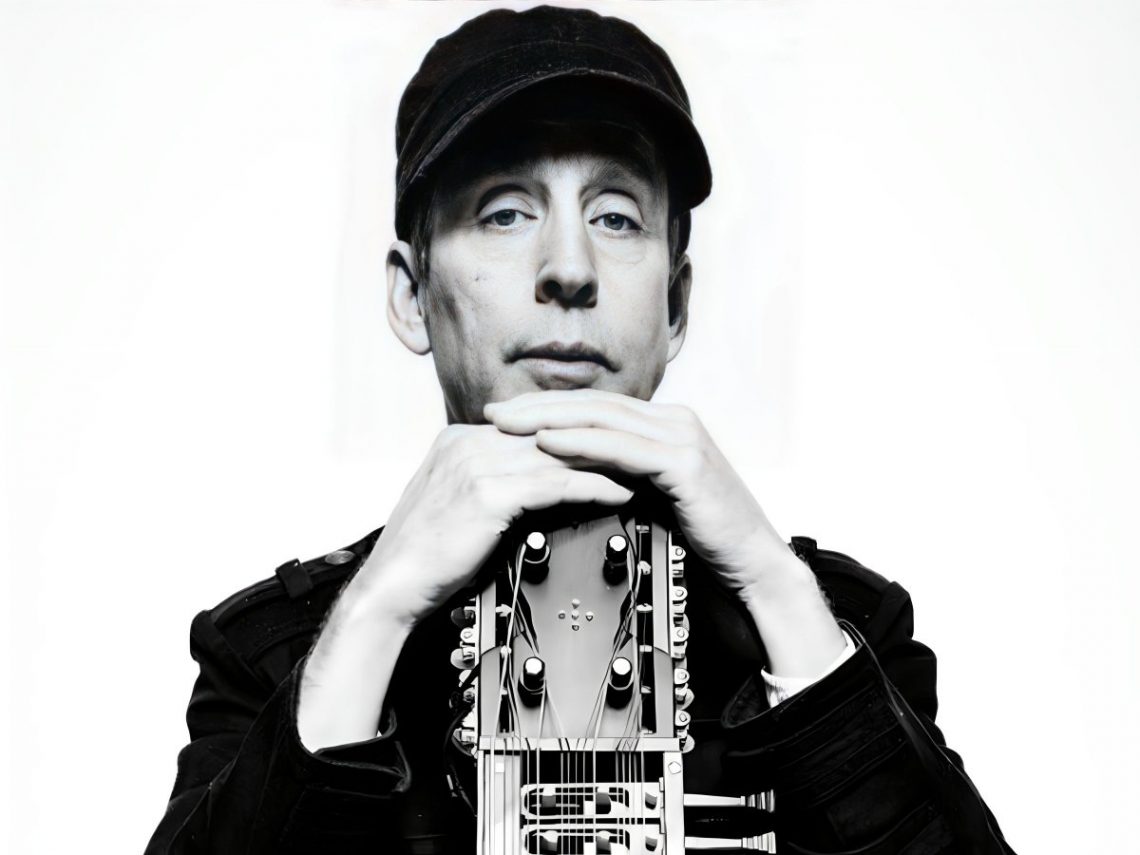
“Rob is real big on acoustic music and he really awakened that in me. It led to the creation of the Apprehension Engine, which is an instrument designed to produce horrifying sounds acoustically.
“Also, with The Witch, I started to work without a click track for much of the time, adopting a much more free-flowing approach.”
Who, in your opinion, is the greatest composer of all time?
“Bach, hands down. ‘Air on a G String’ is still a favourite.
“If you mean film composers, that’s much more difficult. John Williams (Catch me If You Can). John Powell (The Bourne Identity) Jerry Goldsmith (A Patch of Blue), Elmer Bernstein (To Kill a Mockingbird). But I’d have to say my favourite is Thomas Newman. Virtually everything he does is pure genius.”
The Witch – About the music from Mark Korven on Vimeo.
What’s the key to creating tension in a horror score?
“The use of space, where there’s no music but there should be. Also, uncertain, unpredictable rhythms and unfamiliar, strange textures.”
What was your biggest challenge while working on your score for The Black Phone?
“It actually went swimmingly well. Scott Derrickson was fabulous to work with. There were a couple of cues that I really struggled with, though, one being the big cue at the end. How to give a feeling of release and victory without being too on the nose, especially coming at the end of a very disturbing and atonal score.”
Of which of your scores are you most proud and why?
“I like what I did for the horror series Chapelwaite. Also, I thought The Witch was pretty good. Chapelwaite, I will always remember it as a great experience. I was given a lot of creative freedom on that one, and the producers were very supportive of my weirdness.”
Were you working with a temp track, or did the Chapelwaite team allow you a blank canvas?
“As is the case with pretty much everything a picture composer works on, there’s a temp track. It’s extremely rare that you are greeted with a blank canvas. Virtually unheard of these days. Fortunately, the powers that be could let go of the temp score, and I was allowed to create my own stamp on things.”
Is it better for a composer to be collaborative or work in isolation?
“Although I never collaborate, one day I’d like to. It’d be nice to have another composer pushing you in unexpected directions. Composing by yourself all of the time can be mighty lonesome. Also, if you’re left to your own devices, the nasty habit of repeating yourself can set in.”
Finally, if you could give young composers one piece of advice, what would it be?
“Find your own voice. And if you can’t find that, become highly skilled at emulating others. The first way is the hardest, most financially precarious, yet ultimately the most rewarding to your soul. The second way is much more dependable at keeping the rent paid.”
Thank you to Mark Korven. His scores for The Witch, Our House, The Lighthouse, The Black Phone and The Peripheral are all available on Spotify. You can learn more about the Apprehension Engine by visiting his website.
