


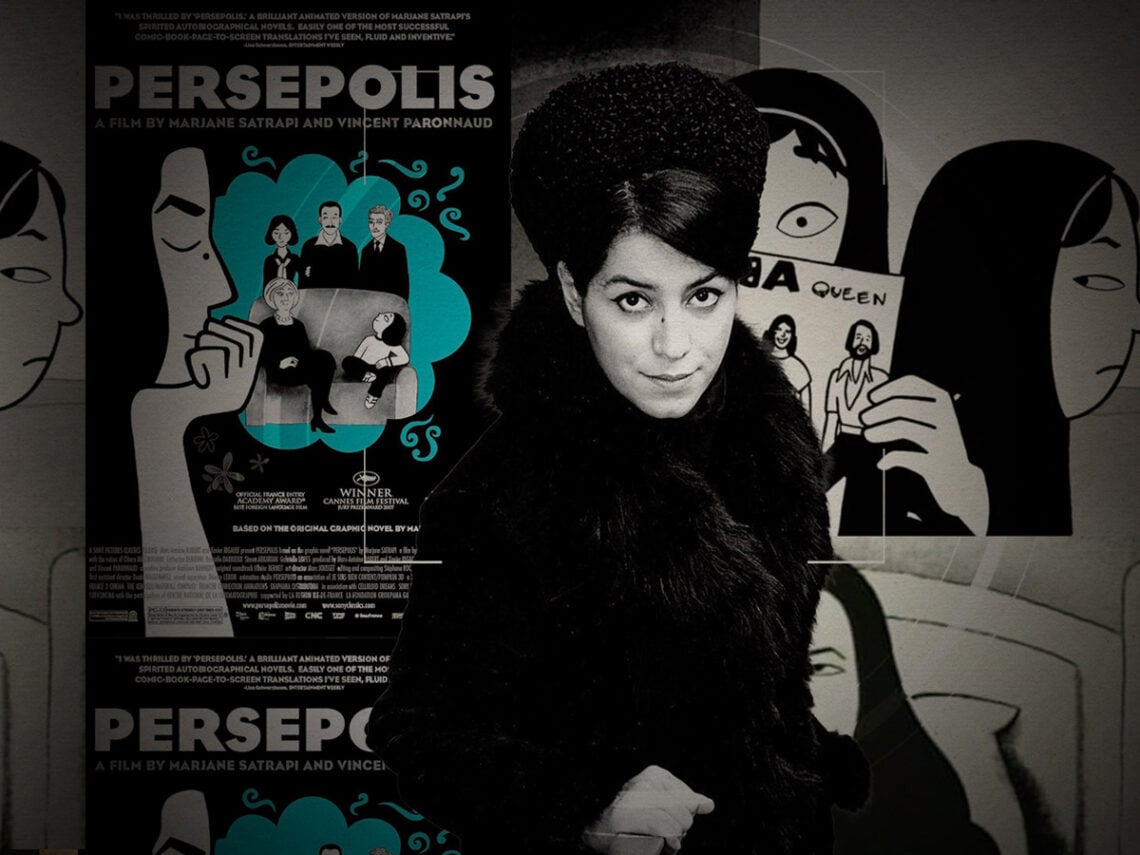
‘Persepolis’: Marjane Satrapi’s revolutionary coming-of-age masterpiece

With the announcement of writer, director, and cartoonist Marjane Satrapi’s tragic passing at the age of just 56, and her family reporting her death as a result of “sadness”, there couldn’t be a more appropriate time to reflect on the greatest work of her career: Persepolis.
Written as a series of graphic novels published between 2000 and 2003, Satrapi used a simplistic yet distinctive visual style to tell the story of the Iranian revolution through the eyes of a child as she comes of age. In 2007, she co-directed a film adaptation with Vincent Paronnaud, bringing her hand-drawn style to the big screen to great success. Not only did the film win the Jury Prize at the Cannes Film Festival, but it also earned a nomination for ‘Best Animated Feature’ at the Academy Awards.
With Chiara Mastroianni voicing Marjane and Catherine Deneuve voicing her mother, Persepolis is a carefully crafted tale of self-discovery against a backdrop of resistance and fear. The young Marjane is just like any other nine-year-old girl, with childish fantasies and curiosities about the world around her and her place in it. While Hollywood coming-of-age films usually centre on issues like romantic relationships, high-school hierarchy, and the often shallow fight between teens and parental authority, Persepolis is markedly different.
Instead, Marjane must come to terms with her entrance into the adolescent and adult world as revolution breaks out in 1979, leading to the banning of music and fun, of men and women being able to exist alongside each other without restriction. While women become vital parts of the revolution, their rights are soon stripped away once the new regime takes over; everything changes.
The character brings a vital humanising, youthful eye to a major political and cultural moment in West Asia, one that it is often easy for Western audiences to feel far removed from. It seems like something so distant, something that couldn’t possibly happen to citizens of global superpowers like the United States. But that is, of course, not true.
We see Marjane trying to purchase heavy metal records on the black market, while trying to avoid persecution for the things once taken for granted, like dressing without emphasis on modesty, wearing makeup, or holding a man’s hand in public.
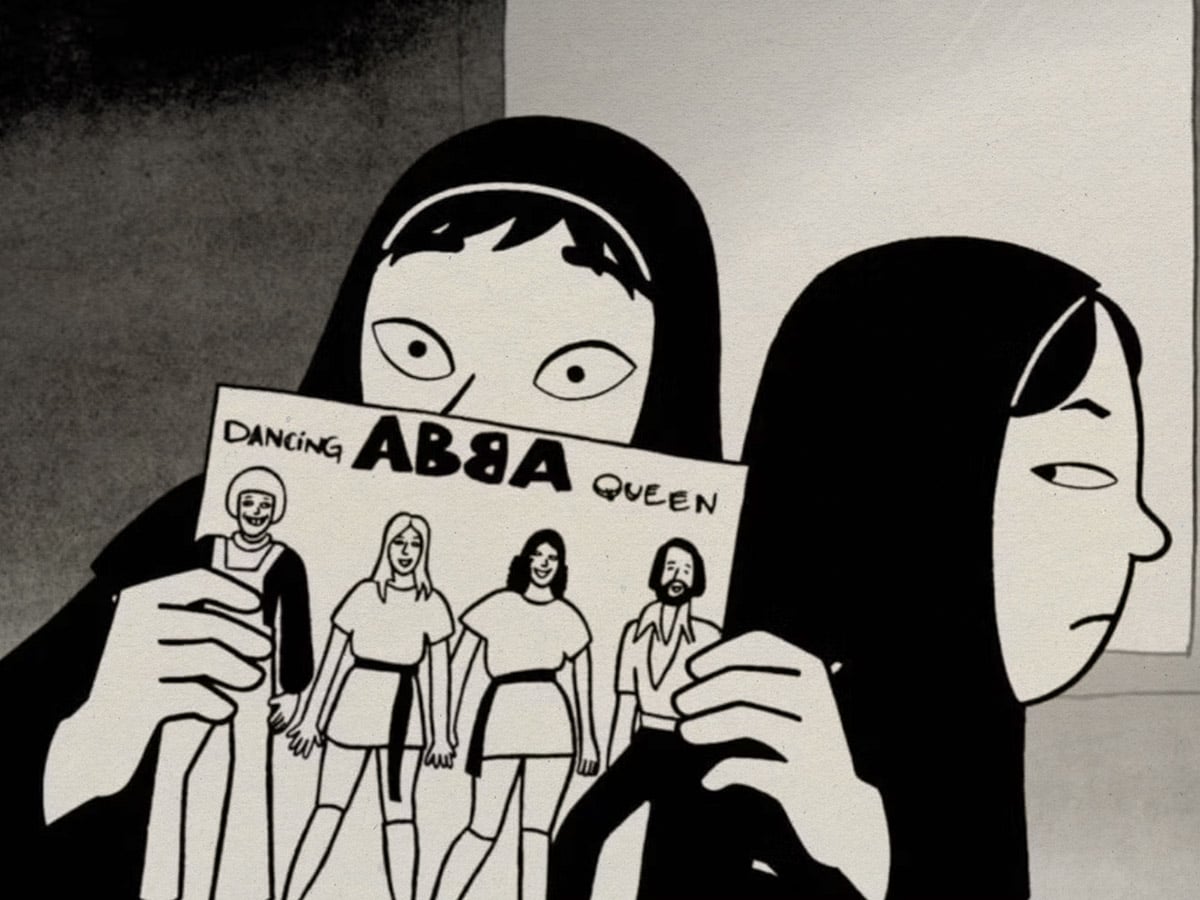
Through Persepolis, Satrapi challenged the Western notion of the Iranian experience, and once emphasised how her film aimed to bring visibility to the humanity and relatability of people who have for so long been viewed through a skewed lens, one she believes to be a form of “hidden racism.” Satrapi said, “We live in cities, we have very complicated problems.” The writer and filmmaker wanted people to register, “Oh, they’re actually human beings like us.”
For many, Persepolis, with its bright black-and-white hand-drawn animation that appeals both to younger audiences and adults, is a documentation of Iran unlike anything they’ve seen before. I, for one, watched Persepolis for the first time when I was about 18, with very little knowledge of the Iranian Revolution and its impact on women.
Walking away from the movie, not only did I have a newfound understanding of how such a momentous time in history affected individuals, but I also gained an understanding of the resilience and rebellion enacted by so many women like Marjane, who were just trying to fight for a normal life and for their human rights.
She almost dies when she’s rendered homeless, she tries to kill herself, and she even finds herself (and her family) fined when she is caught holding hands in the street with her boyfriend. Persepolis reveals a world that is so crushingly human and brutal, and it is so honest in its depiction of just how profound an effect a tyrannical government can have on its citizens, especially young girls.
And really, while Persepolis is so location-specific in its exploration of Iran, you could really apply the sentiment at the heart of the movie to conflicts and wars happening much further afield. We’re reminded, above everything, that these grand acts of power and authoritarianism that turn countries into unrecognisable versions of themselves have devastating consequences on the families, the couples, and the individuals that exist within them. Personal freedom is eradicated.
With Persepolis, we’re reminded not to view the persecution of ethnic groups different from our own, of people who live thousands of miles away, as an abstract concept, but as something that could happen to anyone, even you. And all you can do is hope that your acts of rebellion are enough to keep you alive, and remember that love, even when it seems hard to believe in, will always prevail.
