


The five greatest autobiographical screenplays

The biographical drama is part and parcel of cinema, not to mention one of the easiest ways to transparently manufacture a potential awards season contender, but the autobiographical drama is something altogether different and a lot more rare.
The all-conquering success of Netflix’s Baby Reindeer saw Richard Gadd open himself up to the world and explode into becoming one of the most popular TV shows to premiere in a long time, but on the other side of the coin, inconsistent actor and terrible director Madonna co-writing and helming her own biopic probably wouldn’t have had the same effect when it would be so easy to favour self-hagiography instead.
Plenty of movies over the years from a number of celebrated auteurs have been at least semi-autobiographical in nature, with François Truffaut making a habit out of it after incorporating on-screen surrogate Antoine Doinel in no less than five of his films.
In the interest of fairness, these autobiographical screenplays and the films that emerged as the light at the end of the tunnel are restricted to one-and-done endeavours only, with all five of them equally powerful and evocative of the experiences of the people who lived through them in real life.
Five incredible autobiographical screenplays:
5. The Big Red One (Samuel Fuller, 1980)
Filmmakers who saw active service during times of conflict regularly used their experiences to form the basis for movies set during wartime, but Samuel Fuller leaned heavily into his own past more than most when the independent maverick painted The Big Red One with an intentionally conflicted brush.
The dirt, mud, and blood of the battlefield is presented in its many forms throughout, ranging from pure terror and heart-wrenching fear to admiration for those who fought and died, punctuated by ear-shattering set pieces and the occasional burst of jet-black humour.
It could have easily devolved into being tonally unwieldy, but with Fuller having served as an infantryman in the the titular 1st Infantry Division and been present at the liberation of the Falkenau concentration camp as depicted in the third act, The Big Red One is lent an air of haunting and visceral immediacy knowing the writer and director was right there when these events transpired.
4. Adaptation (Charlie Kaufman, 2002)
Although there’s obviously a fantastical element in play given that Charlie Kaufman doesn’t have a twin brother at all, never mind one named Donald, Adaptation was born directly from the writer and filmmaker’s professional struggles.
In the late 1990s, Kaufman was hired to adapt Susan Orlean’s The Orchid Thief for the big screen, with Jonathan Demme planning to direct. However, he was stricken by a severe case of writer’s block and never managed to piece together a completed screenplay, which gave rise to Adaptation.
Enlisting Spike Jonze to direct, the story is reflective of the anxiety, self-loathing, and depressive episodes Kaufman was forced to contend with during his failure to script The Orchid Thief, although the idiosyncratic scribe takes plenty of creative and artistic liberties to put an even more existential spin on his own despair.
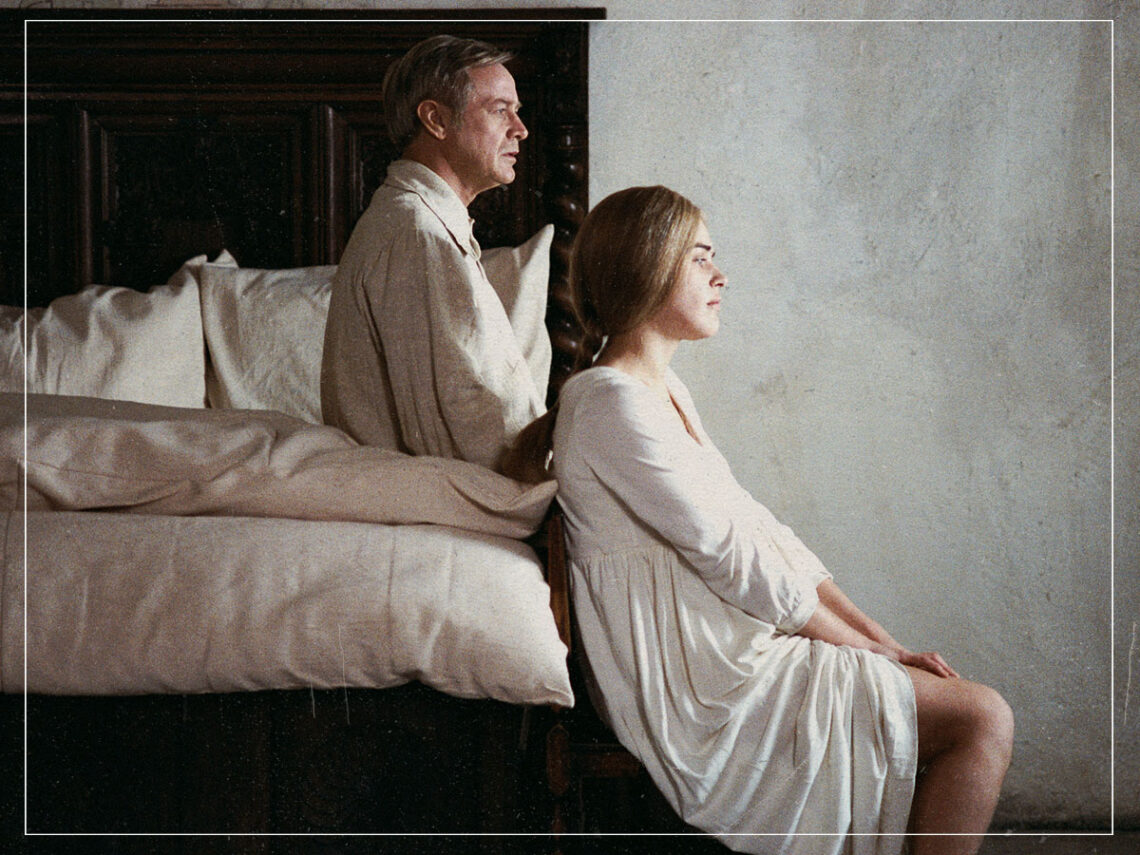
3. The Souvenir (Joanna Hogg, 2019)
Writer, director, and producer Joanna Hogg originally wanted to downplay the autobiographical elements of her fourth feature before deciding that “it was ungenerous not to admit they’re my own memories” when the time came for The Souvenir to bear fruit.
Much like Honor Swinton Byrne’s facsimile Julie, Hogg was a wide-eyed and aspiring film student who ended up entering into a relationship with a much older man who turned out to be a heroin addict, with their bond quickly souring and becoming toxic as her introduction to the world of adulthood threatens to fly straight off the rails.
Adding an even more autobiographical layer to the film, the lead actor’s mother, Tilda Swinton, was a classmate of Hogg’s when they both attended the National Film and Television School in the 1980s when the events that inspired The Souvenir in the first place unfolded.
2. Fanny and Alexander (Ingmar Bergman, 1982)
Legendary director Ingmar Bergman intended Fanny and Alexander to be his last feature before retirement, and even though he wrote another four screenplays in the years to come, the autobiographical drama became his final narrative work from behind the camera.
The characters of Alexander Ekdahl, his sister Fanny, and stepfather Edvard are based on Bergman, his own sibling Margareta, and his father Erik, with the story unfolding in his childhood hometown of Upsala, Sweden to further illustrate the reflective nature of the drama indebted to his upbringing.
It wasn’t a slavish beat-for-beat recreation of his formative years, but the sense of bleakness brought on by loss is one that the filmmaker experienced for himself, with that aching emptiness and tribute to the importance of family coming directly from the heart.
1. Persepolis (Marjane Satrapi, 2007)
Marjane Satrapi ended up co-writing and co-directing the animated adaptation of her own acclaimed graphic novel, which recounted the story of how she and her family were driven into exile at the height of the Islamic revolution.
During the production, Satrapi would act out the scenes for the animation team to give them a physical background to the movements they were tasked to create, which makes Persepolis hit that much harder knowing the filmmaker lived them first-hand before re-enacting them once again for the sake of adding authenticity to what was a stylised interpretation of her experience.
The rebellious, music-loving teenager from a middle-class family finds her life turned upside down by social and political upheaval, with her acts of defiance only pushing her closer towards the brink as the world she grew up in becomes unrecognisable in front of her very eyes, which served as the backdrop to a stunning animated feature.
