


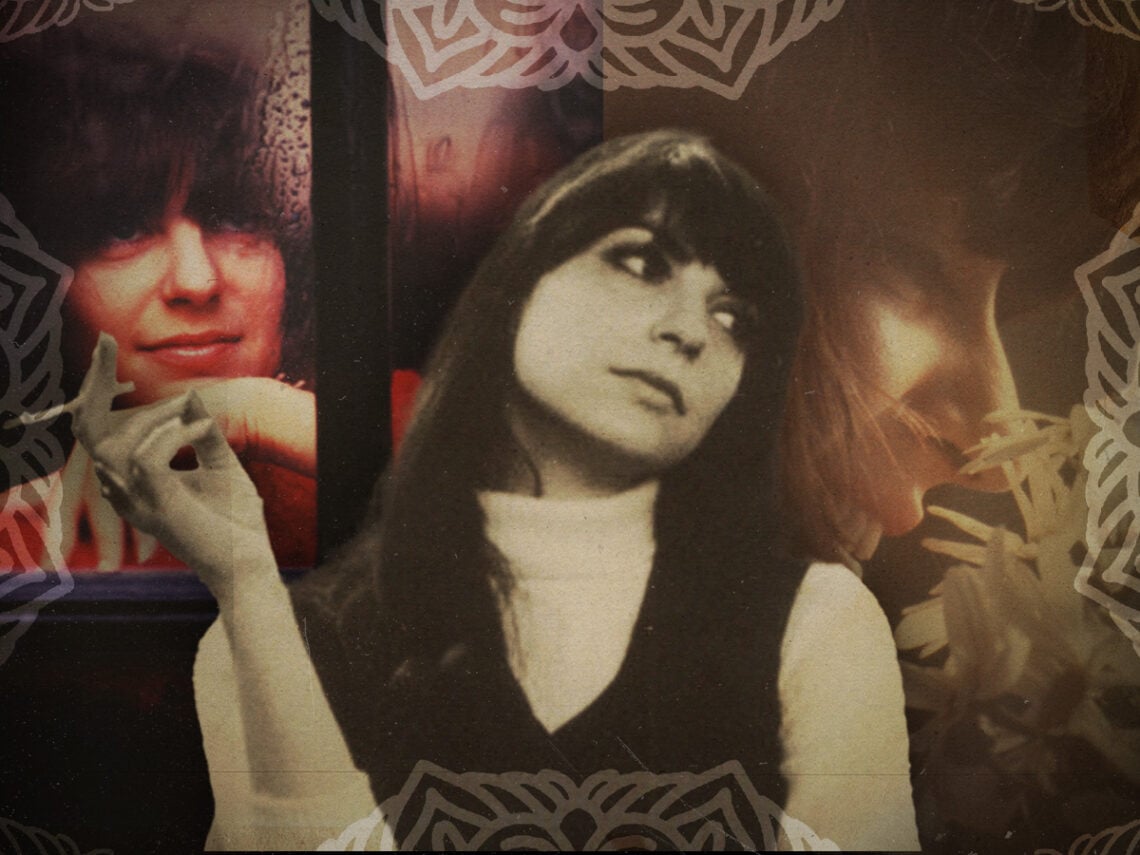
Margo Guryan: The singer-songwriter who vanished before the world caught up

As the story goes for many, the singer-songwriter Margo Guryan came to my attention far too late.
She was, curiously, the subject of TikTok virality in recent years, soundtracking videos of melancholy taken from a distinctly feminine lens. It can be said that this is where Guryan’s legacy rests: a gentle honesty that placed love, sex and loss at the forefront of her narratives, timelessly universal and yet, distinct to her voice, alone.
However, little knowledge of Guryan, outside of her songs, that, conscious to the average listener or not, has settled into music history, but this was slightly intentional, on her part, for after going through the trials and tribulations of the music industry, she chose to step away, living in relative solitude for the majority of her life, until her passing in 2021.
Guryan was a born-and-raised New Yorker since September 20th, 1937, from Far Rockaway, Queens, to Russian-Jewish parents, both pianists. Naturally, living among artists from an early age, she began to write poetry that transitioned into songs, adopting the piano as her own and using the instrument to craft her stories.
Soon, Guryan fell in love with jazz music and in 1959, took up studies of both jazz and classical music at Boston University, where, as a 19-year-old student, she was ‘discovered’ by Atlantic Records, finding herself in their New York offices by way of the company Frank Music, whose owner thought that her songs were too ‘jazzy’.
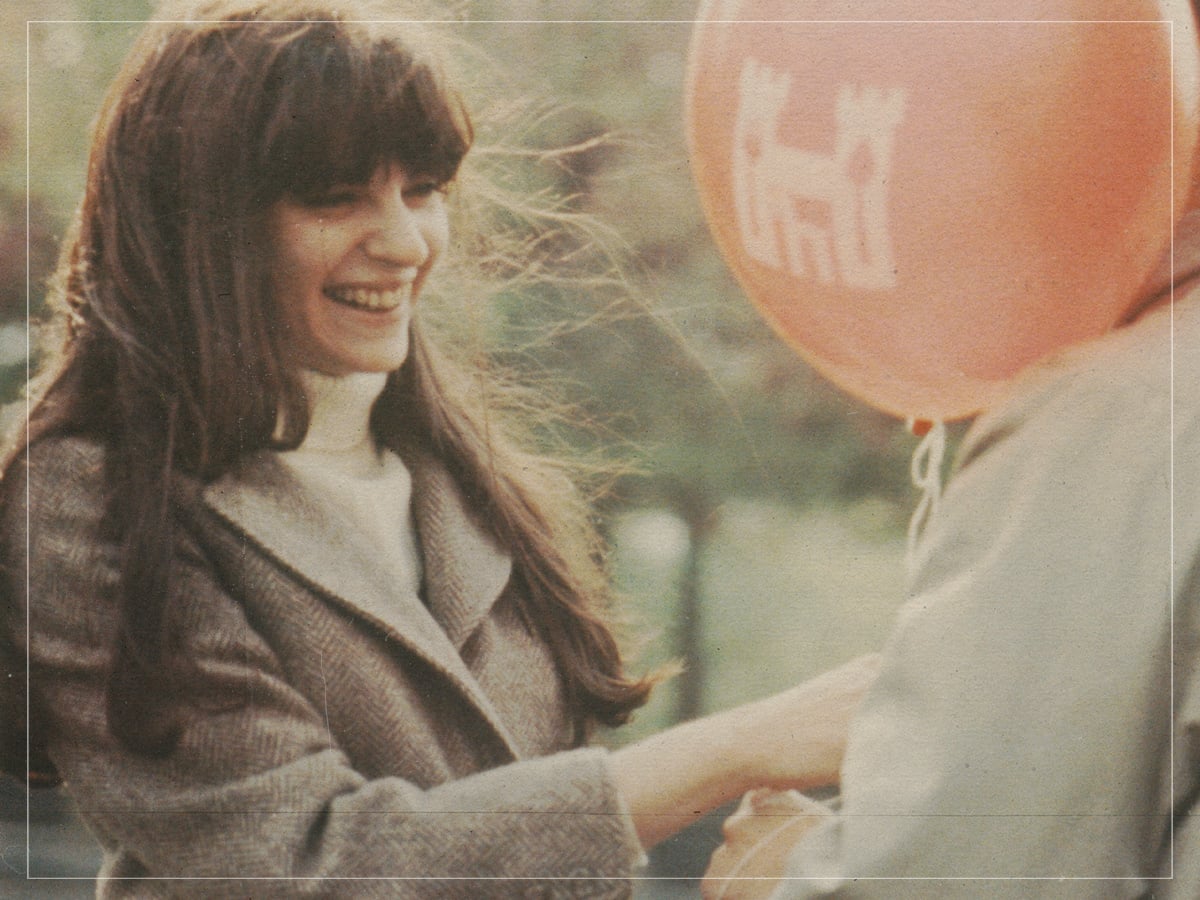
She stumbled through her unofficial audition for Atlantic’s Jerry Wexler and Ahmet Ertegun: she had never heard of the term demos before, opting to play songs for them in the moment, on their office’s piano. When they afforded her a session with Nesuhi Ertegun as her producer, she remembered it as a “disaster”, singing too softly or too loudly, or going “off mike”, as she recalled to Psychedelic Baby.
Still, there were elements of charm to her inexperience in the studio. Her songs showed clear promise, an attention to sonic detail and evocative lyrics that together formed a little world of her own. While she was initially signed as a performer, Atlantic instead kept her on retainer as a songwriter, and the transition was, seemingly, for the best. Guryan had always faced discomfort performing, preferring the solitude and intimacy of writing.
One night, for instance, while she was still a Boston University student, she attended a Miles Davis Quintet gig at the Storyville club. When the intermission pianist was a no-show, the club’s manager, promoter George Wein, asked Guryan to fill in. It took a drink and some convincing to get her behind the keys, and she reluctantly played her own songs, to which Davis himself put his hands on her shoulders and exclaimed, “Yeah. baby!”
While enrolled at the Lenox School of Jazz in Massachusetts in 1959, where her classmates included Ornette Coleman and Don Cherry, and Guryan was one of two women in a class of about 40 students, Guryan changed her major from piano to composition to avoid having her senior recital. Whether due to stage fright, insecurity with her voice, or otherwise, Guryan made it a point to avoid any sort of spotlight, a choice that would follow her even as her voice begged to be heard on its own.
As her confidence slowly grew, other singers recorded her songs, and she signed a publishing deal with John Lewis’ MJQ and became a secretary at Impulse!, a jazz label founded by producer Creed Taylor. The first major rendition of Guryan’s work was by jazz singer Chris Connor, who recorded her song ‘Moon Ride’ in 1958, while the young writer was still enrolled in school; Connor would also sing her version of ‘Lonely Woman’, a Coleman composition with Guryan’s lyrics, in 1962. Harry Belafonte was another musician to adapt her work early on, singing ‘I’m On My Way to Saturday’ for his 1962 album, The Many Moods of Belafonte. Later, in 1973, Cass Elliot would record Guryan’s song ‘I Think A Lot About You’ for her album, Don’t Call Me Mama Anymore.
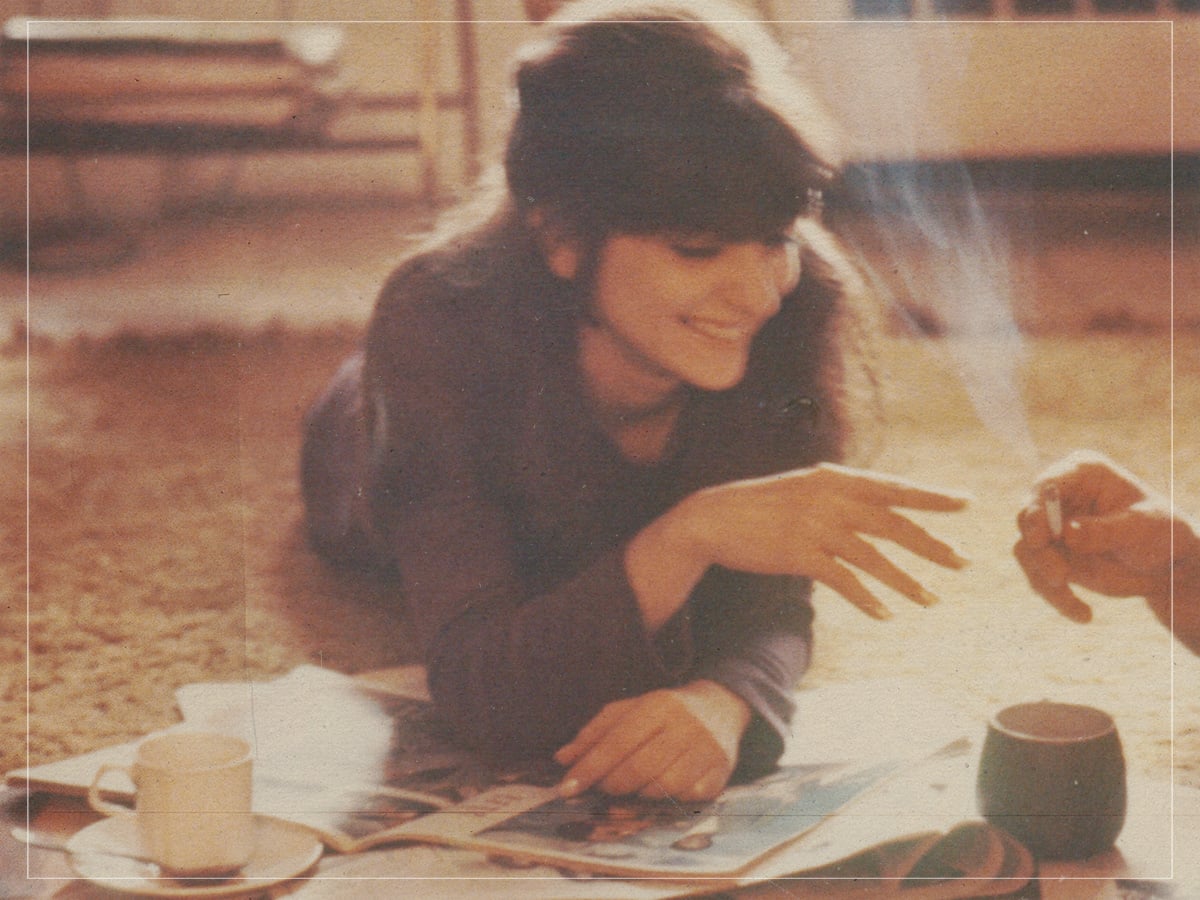
However, it was not until 1966 (some nine years after Guryan began working within music publishing and recording demos of her own) that she began to properly emerge on her own as a singer-songwriter. Residing in Manhattan’s West Village, she was visited by her friend and fellow songwriter David Frishberg, who brought with him a copy of The Beach Boys’ Pet Sounds. It was the first piece of modern pop music that Guryan felt connected to in a long time, and Brian Wilson’s writing style prompted her to evolve her own, and she began writing songs for what became her debut album, 1968’s Take a Picture.
Take a Picture, released on Bell Records, blended Guryan’s jazz foundations with upbeat psychedelia and lush melodies, heard best on tunes like ‘Sunday Morning’ (a song which previously was a hit for the band Spanky and Our Gang, and a hit with rewritten versions in French and Italian), and the sad lullaby of ‘Think of Rain’, written after Guryan heard Brian Wilson’s ‘God Only Knows’, in particular. Recorded with full orchestration, from flutes to harp, harpsichord, brass instruments and, of course, piano, the album captured a sweet nostalgia that hears Guryan sing with a vulnerability that is surprising yet welcome, given her relative shyness.
She received praise for Take a Picture, and what the album lacked in sales, it earned in critical regard. It was lauded as a promising debut, but the critics’ words were met with silence, as Guryan refused to tour in support of her work, and while she’d performed a few times and found joy in it, she felt that the long-term anxieties weren’t worth the hassle. Her refusal came from a number of reasons, aside from her relative stage fright, such as the demise of her first marriage to jazz musician Bob Brookmeyer, having seen firsthand the effects of relentless touring schedules and the resulting impact on their relationship.
In her own way, refusing to conform to the expected routines of a musician, writing in compliance with a label, going through the gruelling patterns of touring, and following the advice of promoters, managers, agents and the like, was a radical act from Guryan, one that saw her release an album on her own terms, and nothing more. She did not want her work to be dictated nor owned by anyone but herself, and she achieved that, even at the cost of her label’s support, who refused to continue promoting the album.
Guryan continued songwriting, working for April-Blackwood (the publishing side of Columbia) for many years and with David Rosner, her producer and husband, on the production side for other musicians. She also took up teaching piano, leaning into her academic side of studying the instrument to both teach and produce music books for students.
As the decades continued on from 1968, Guryan’s sole album was but a memory from a former life. “For years, I didn’t listen to the songs or play the album,” she told the Los Angeles Times in 2002, “Something like that becomes part of your past, and you just accept it.”
But then, glimpses of a revival of Guryan’s career began to show in the 1990s. She was receiving royalty checks from Japan for an album reissue, where she was given the nickname ‘The Soft Pop Queen of Japan’; Spain followed suit. She’d learned that physical copies of Take a Picture were selling for jaw-dropping prices on secondhand websites like eBay, which prompted the LP to finally be reissued in 2000. Her demo recordings began to slowly be collected online, and her songs began popping up in television series, film and advertisements.
In 2001, 25 Demos was released, from a collection of demos selected by Guryan and shown to Kevin Dotson (AKA Linus of Hollywood), who encouraged her to record them. The UK saw the release of Thoughts, which includes the same 25 demos, alongside two covers recorded by Guryan, which were released in the US as 27 Demos in 2014.
The British label Pure Mint Recordings released a brand new single, ‘16 Words’, in 2007, which Guryan wrote in reference to the then-US President George W Bush, utilising one line from his 2003 State of the Union Address for the entirety of its lyrics: “The British government has learned that Saddam Hussein recently sought significant quantities of uranium from Africa”. The B-side, ‘Yes I Am’, was written in anger directed towards Richard Nixon.
Perhaps most recognisably, her demo of ‘Why Do I Cry’ found a new home on TikTok, where Guryan became synonymous with the aforementioned melancholy most associated with Gen Z. This was yet another chapter in the routine resurgence of Guryan’s artistry, seemingly always lurking in the foreground of pop and jazz history but never quite reaching the surface.
A tribute album, Like Someone I Know: A Celebration of Margo Guryan, was released after her passing in 2024, hearing the voices of Clairo, Margo Price and more give renditions of her songs. Whether through the persistence of internet algorithms or modern artists paying homage to her brilliance, Guryan’s legacy is undoubtedly solidified in music history.
