


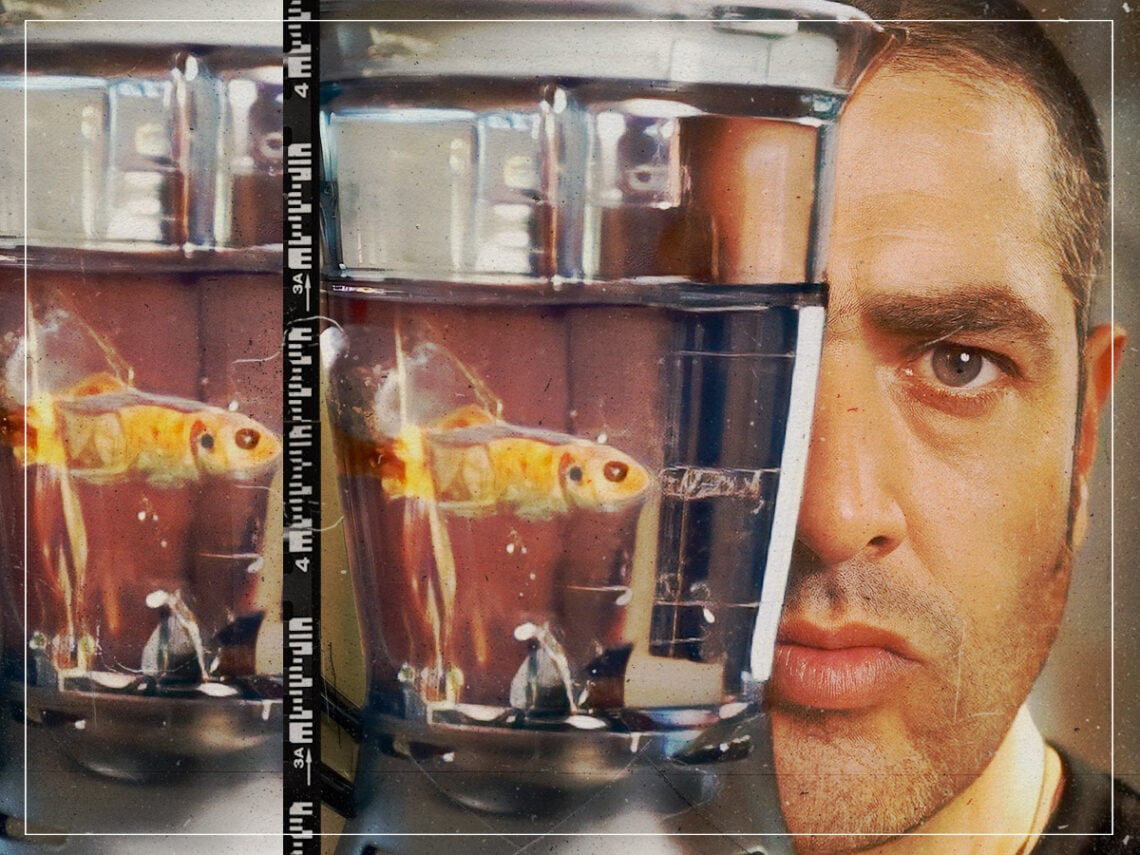
Marco Evaristti and the blended goldfish saga

If you look up the Moulinex Optiblend 2000, you’ll find it’s an incredibly well-reviewed food processor. Marco Evaristti, emboldened either by their cost-effectiveness or the shock-jock tendency of performance art of the time, proceeded to buy ten for his Helena & El Pascador installation. He lined them up at the Trapholt Art Museum, plugged each in, and filled them with water and live goldfish. He offered no instruction to the exhibition visitors, just the temptation of the huge yellow button that stood between them and an efficiently pulverised fish.
That most of the viewing party were journalists seemed to compound the temptation. The obvious uproar that would ensue was good content fodder but also a direct breach of animal cruelty laws. When CNN polled the public on whether such a thing could be considered art, over 30,000 people voted – a 72 per cent majority felt it wasn’t.
Evaristti was offering a base-level comment on hive mind psychology that forced onlookers to battle with their conscience. “It was a protest against what is going on in the world, against this cynicism, this brutality that impregnates the world in which we live,” he argued. As viewers mulled around the installation, that cynicism was crackling into the atmosphere.
After only an hour, someone cracked. Two fish were killed. Those present said that once the first fish was killed, the atmosphere became heavier – not because of the blatant cruelty, but because everyone else might rush to do the same once the first domino had fallen.
The police interruption stopped that from happening. They stormed in and demanded the blenders be turned off, which Peter Meyer, director of the Trapholt, refused to do. His subsequent animal cruelty charge was contested in a highly-publicised and lengthy trial, one that saw expert witnesses weigh in on how many seconds the blended fish would have been killed after. A representative from the blender company estimated they would have died with a second, which a vet corroborated.
Even when faced with a 2,000 kroner fine, Meyer didn’t relent. “It’s a question of principle,” he told the court at the time. “An artist has the right to create works which defy our concept of what is right and what is wrong.” A judge decided they were killed instantly and thus humanely.
Many animal rights groups have pointed out that the piece would have been just as effective if the blenders were unplugged, and many anti-censorship groups pointed out that Evaristti wasn’t the one who pressed the button and couldn’t be held responsible. The contentious nature of the piece bears obvious parallels to the performance artwork Rhythm 0, in which Marina Abramović also invited audiences to either help or harm in a surreal public experiment. The difference was that they were far kinder to the fish.
