


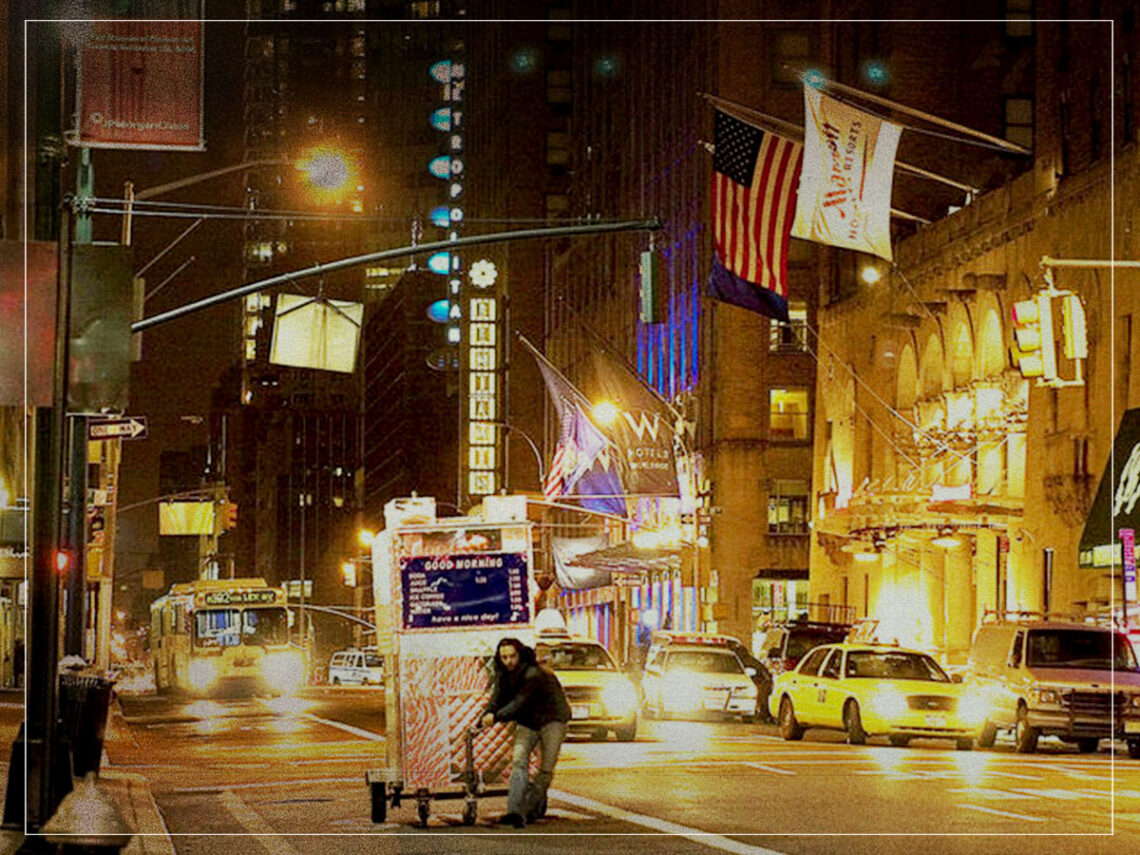
‘Man Push Cart’: a beautiful portrait of the immigrant experience

There are many untold stories that exist all around us, with the lives of everyday people often being far more interesting than the ones we see reflected in films. We pass our neighbours each day and are completely unaware of their own private journeys, becoming lost in the sea of faces that surround us, and sadly, very few of these stories are realised on the big screen. When it comes to the struggles and accomplishments of the immigrants who risk everything for better lives and opportunities, we see very little about the reality of this journey, with the press and media often painting it in a negative and reductive light.
But within the hellscape of bigoted journalism and increasing anti-immigration policies, there exists one beautiful independent film that captures the true triumph of this journey and the hope that exists on the other side.
Man Push Cart, directed by Ramin Bahrani in 2005, follows a former Pakistani rock star called Ahmad, who has immigrated to New York City, selling coffee and bagels from a push-cart. Each day is the same, and he wakes up early to push his cart along the busy streets of Manhattan to earn a living, trying to assimilate and find community in the lonely city. However, his repetitive routine becomes brightened as he finds one connection that makes it less lonely.
It’s wonderfully slow and tender, feeling somewhat akin to Paterson or The Bicycle Thief as it fleshes out the routines and rhythms of our day-to-day lives and the small moments that make the modern world more bearable. But what is truly special about Bahrani’s take on slow cinema is the way it aligns with a perspective we rarely see, showing the struggles of immigrating and waking audiences up to the respect that this journey deserves.
Bahrani also highlights the everlasting importance of kindness and how small deeds can go a long way. Ahmad is so isolated from the people around him that when someone extends a simple gesture of goodwill, it leaves you startled, showing how rare it is that we open our arms to the people who need it most.
It’s realist filmmaking in its most raw form, confronting us with the small-scale tragedies and quiet struggles of our neighbours and commuters, showing the experience in its most honest form that we feel more connected to the people it depicts. While some people have criticized it for its slowness, it is this quality that makes it crucial – giving time for us to truly sit in someone else’s shoes without glamourising it or making it more palatable. It depicts all of Ahamd’s hardships and anxieties without sugarcoating them.
It’s easy to look at an experience from afar and feel disconnected from it, but by placing us in the heart of Ahmad’s life and not letting us look away from his waking reality, we grow closer to the people behind these journeys, seeing more than a face in the crowd, and the bravery behind it all.
