Madness and the “collective rage of the Irish”: Introducing Getner

The genesis of a great band can be something simple. “Young Charles used to message Quentin about clothes on Instagram,” Getner tell me, the rest is history.
In Far Out’s chat with Jeanie Crystal of Jeanie and the White Boys, she put out a surprising rallying cry for more Liam Gallaghers. Essentially, she’s calling for men with energy and just the right amount of ego to flood back into music as a counter to the red-pilled world of Andrew Tate, stating, “We still need that male bravado. It doesn’t need to be erased from culture.”
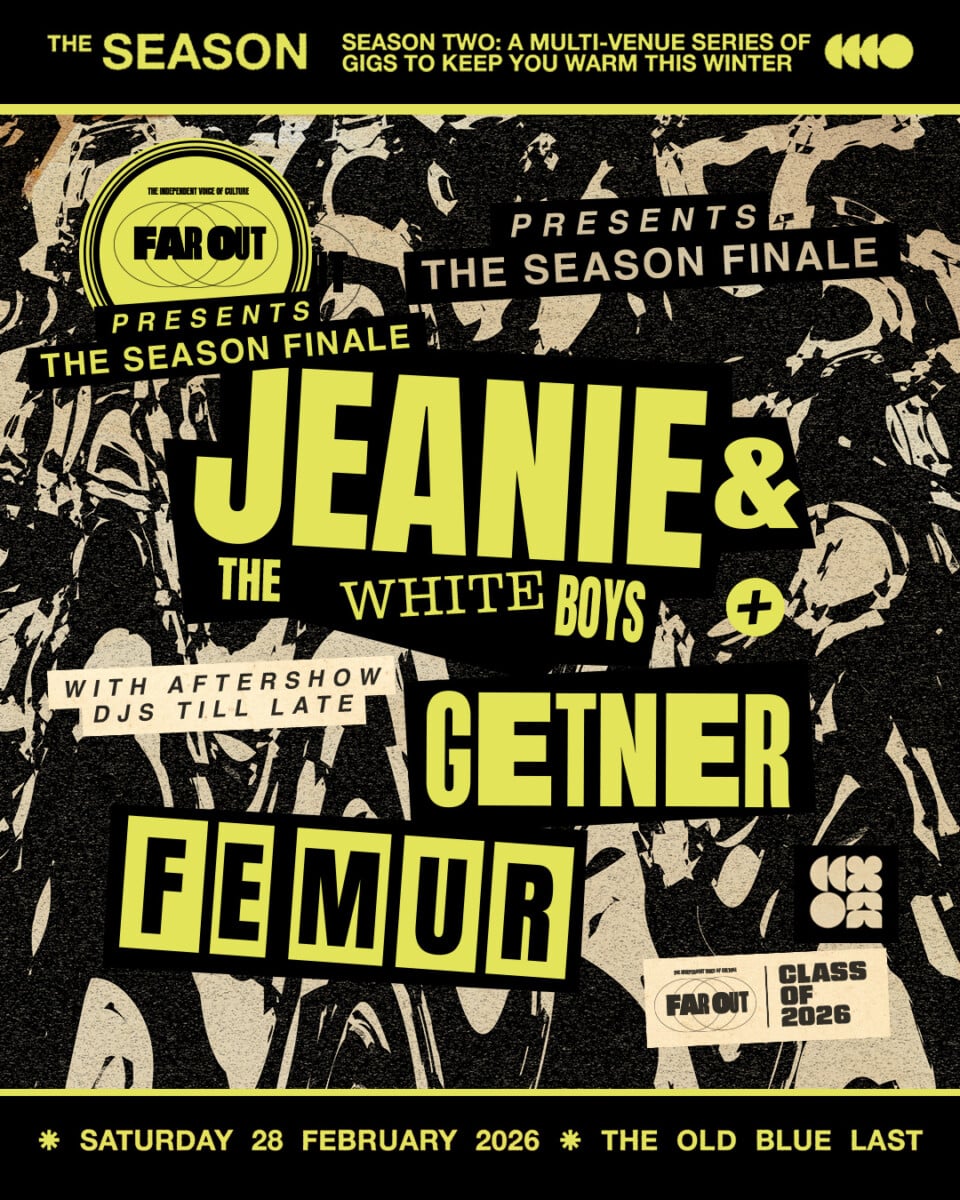
Prepping to share the same line-up at Far Out’s Old Blue Last gig, Manchester’s Getner feel like the answer to that call, and it all begins at, well, the beginning.
Getner’s origins aren’t a bunch of men shaking hands and deciding to be a success. It’s a story of a friendship group forming and tightening as the band explain, “Quentin and Ruairi knew each other yonks from the Derry scene, through other groups and projects and then from living in Manchester.” Having both landed in the same place, they started hanging out. Then you have Charlie, talking fashion with Quentin online, so then when Quentin initially just wanted a band to back up a solo career, he had two guys already there and keen.
“When we all met up in Ruairi’s grotty flat above Duffy’s Irish Bar in Chorlton for a jam, we immediately felt it was something different,” they explained, but what was different was simple – the craic. Adding another mutual friend, Will, into the mix, it was simply a classic combo of four lads, pints and instruments; the combination that has birthed some of history’s greatest acts, and the combination that Crystal would argue could genuinely save masculinity as long as friendship and goodness are intact.
When it comes to Getner, it is, and that’s proved by the vastly different musical backgrounds they all bring to the table. “Quentin was obsessed with Dylan as a folk singer,” they said, continuing down the list; “Ruairi is deeply influenced by MF Doom, girl groups of the 1960s, Fontaines DC and the Irish contingent. Charles is a lover of Frank Zappa. Will is a Beatles and Steely Dan nerd.” So at the table we have folk, rap, art-rock, trad music and beyond.
Two things sat in the centre of the Venn diagram. The first was a joint love for “the loudness and brashness of the new wave of punk in the UK and Ireland.” The second was simply enjoying hanging out, as they said, “We’ve got really lucky with who we have in the band.”
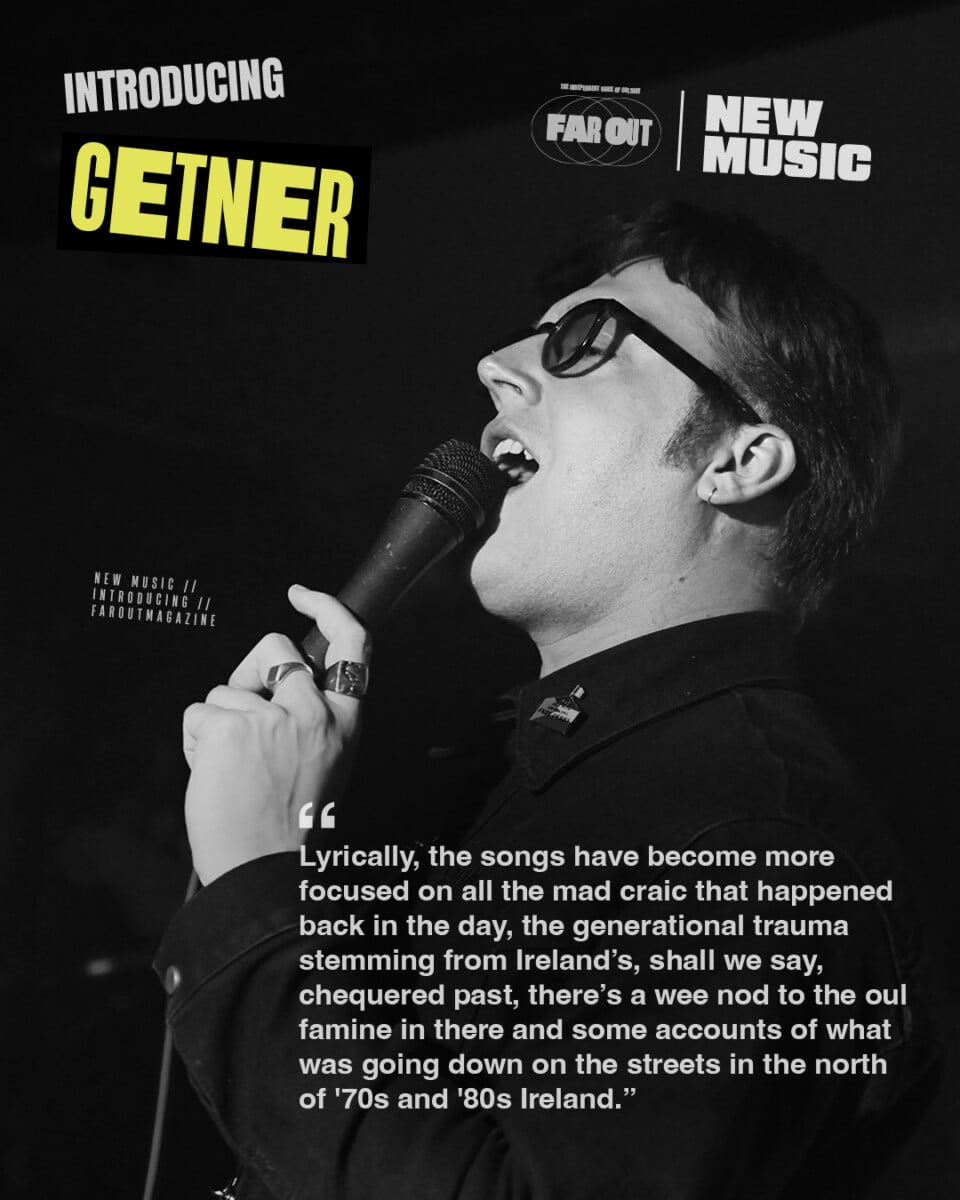
When that foundation of a good time is there, the teething of figuring out your sound isn’t quite as excruciating. Instead, it’s just fun as they’re more than comfortable in the knowledge that “it’s certain to change over time.” But for now, the band have found their feet as a group, fuelled by a kind of positive rage, explaining, “Our sets are a lot louder, faster and above all else, sweatier than they were before. Lyrically, the songs have become more focused on all the mad craic that happened back in the day, the generational trauma stemming from Ireland’s, shall we say, chequered past, there’s a wee nod to the oul famine in there and some accounts of what was going down on the streets in the north of ’70s and ’80s Ireland.”
Despite only two members being Irish, Getner are very firmly NOT an English band. “The Irishness kind of has its hands on the wheel at the moment, all four of us share the same sentiments with it, even though Charlie and Will are both from this side of the water,” they said, adding, “We’re four working class fellas so the oul duel-origin thing doesn’t really enter into it with us” as they said both Charlie and Will will forever “consider themselves Lancashire and Yorkshire men respectively, before they consider themselves English.” For all four of them, the grand traditions of protest music that run through their respective backgrounds converge in this band.
So too do the traditions of live music and the importance of the pub and its spontaneous jam sessions serve as a bedrock for working-class music throughout history. That’s part of the reason why, currently, the band have no songs out, prioritising playing live first and foremost.
“Playing live is the most important thing to us,” they said, adding, “Being a live act that people will remember and want to go seen again has always been our focus.” They want to do it the old school way – building a following through shows before tackling the recorded industry, mostly because that’s by far the most fun bit. “The reason that we practice is to be on stage, no matter if it’s in some corner in a pub or a lethal venue. It’s the best feeling in the world,” they said, before caveating, “Just about a touch above having a ghost wipe. Or that first sip of a cold pint.”
Manchester makes that easy for them with the vast array of great venues, as they shout out “Eagle Inn, Gullivers, Castle Hotel, Britons Protection, and Rat and Pigeon,” and a strong team of band’s representing the city, with their current favourites being “Yaang, Westside Cowboy, Holly Head and the rest of our Akoustik Anarkhy family, Brown Wimpenny, Scatterchild, Deleter,” declaring them, “All legends.”
But on February 28th, they’ll be down south in the big smoke, joining Jeanie and the White Boys and Femur for The Season Finale at Old Blue Last. What can be expected? “Madness… and the collective rage of the Irish people.”
Tickets are on sale now for The Season Finale, curated by Far Out.