


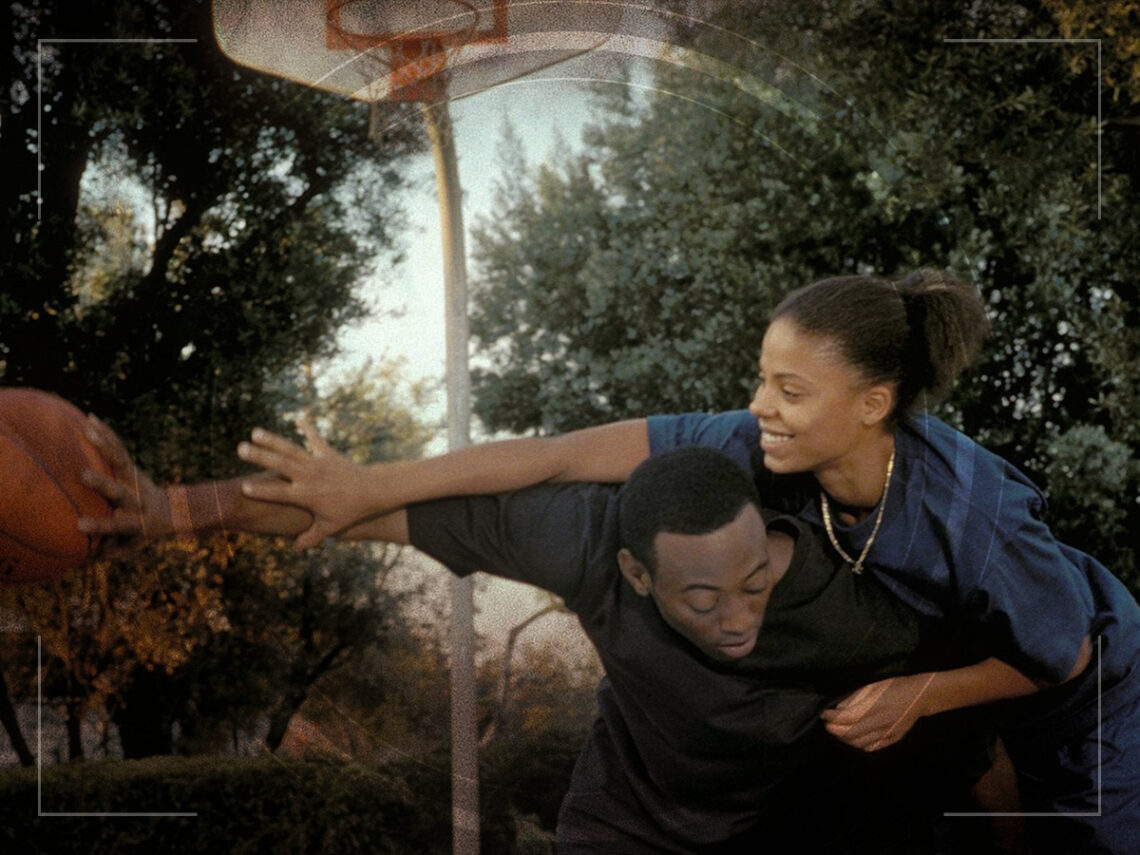
‘Love and Basketball’: a delicately radical love story

Love. What a fine emotion. We love to watch people falling in and out of it on screen, with decades of easily solved misunderstandings and romantic quandaries becoming the ultimate cure-all to our own heartbreaks and dating dilemmas. We look to relationships in films for guidance on how to navigate our own, as if Hollywood were ever a good benchmark for what should be considered normal. Regardless, it becomes a form of hope and comfort, encouraging us to aim for a fuzzy and romantic way of living that, even if unrealistic, allows us to briefly view our trials and tribulations through rose-tinted glasses.
However, the genre is very limited in its scope and diversity, with decades of love stories that usually focus on white characters and exclude portrayals of Black love and relationships, with even the likes of Denzel Washington sharing how producers were extremely reluctant to cast him as a love interest or within romantic comedies, despite his keeness. Dating quandaries and dilemmas onscreen seldom extend to Black characters, something that began to change with Gina Prince-Bythewood’s perfect film, Love and Basketball.
Directed in the year 2000, Love and Basketball charts the relationship between Monica and Quincy, two kids who grow up in the same neighbourhood and are madly in love with basketball. Their relationship takes many twists and turns over the years, beginning as enemies, then friends, and finally turning into something more, following them throughout their adult lives as they try to balance their ambition and sports careers with their relationship.
Prince-Bythewood captures the rites of passage associated with coming-of-age stories in a gorgeous and deeply nuanced way. She crafts a tale centred on the pillars of the romance genre while infusing meaning through the contrasting experiences of both characters as a result of their upbringings and gender, something that manifests through their differing experiences as professional basketball players.
This is perhaps what is most striking about the film, with a story that brings all the highs of the ‘will they, won’t they’ trope while also being rich in meaning and authenticity. It all leads to a grounded and tender story that spans the trajectory of their lives and experiences.
Quincy comes from a well-to-do family in the suburbs, trying to follow in his dad’s footsteps to become an NBA player. His parents are madly in love, the kind of chemistry that feels rare for a couple who are married and well into late adulthood. His dad is a very macho guy, seemingly perfect in his presentation of masculinity and achievement of the American dream.
Monica’s parents are a more traditional couple, something that breeds friction from the beginning, given that Monica is not a traditional “girly girl”—she is a tomboy, hates wearing dresses, and loves basketball. While her parents are proud of her for excelling at sports, her mother often berates her for not fitting into the prescribed notions of femininity, exasperated at her lack of enthusiasm for styling her hair or dressing up. Monica is also often teased by others in her family for not being feminine enough, not feeling comfortable in certain clothes, and only feeling truly herself while playing basketball.
But over the years, Quincy and Monica begin to battle against pre-conceived ideas about how they should behave as men and women, ideas perpetuated by their upbringings, society, and particular family units, causing rifts in both their careers and relationship with each other. Monica cannot understand the choice that her mother made to be a housewife, feeling judged for not wanting the same life as her, but also struggling to connect to someone who wanted a life so different to the one she chose. Her entire life is surrounded by people questioning her talent and ability to succeed as a female athlete, as well as her gender presentation.
But what is so refreshing about Monica’s character, and something that was truly ahead of its time given its release date, is how assertive and headstrong she is in pursuing her goals and blocking out this judgment, purely focusing on her passion and ignoring the pressure from others to conform. We know this must bother her, but she never lets it show, so absorbed by her sport that she doesn’t care. Ultimately, this is what leads to her success, wherein she fulfils her childhood dreams of being a professional basketball player while also finding a way to balance her relationship with Quincy and not let her career take over entirely.
On the other end, Quincy’s journey is slightly different, and one that only elevates the progressiveness of the story as a whole. Over time, the relationship between his parents begins to crumble, and Quincy struggles with the idea that his once-perfect dad is actually not that great of a husband, with his mum being viewed as a trophy wife and becoming miserable after he begins cheating on her. After crafting his entire image and reputation on that of his father’s, Quincy has a huge existential crisis about the kind of man he wants to be and whether or not basketball will make him truly happy.
This period in his life causes a rift in his relationship with Monica, with their differing levels of ambition leading them to break up. However, this time apart allows both of them to truly reflect on the values that they want to carry into the rest of their lives, with the brief spell of confusion creating clarity on what they truly want. Quincy decides to quit basketball entirely and focus on becoming the family man that his father wasn’t, even settling down and getting engaged to another woman.
However, in one truly perfect scene, Prince-Bythewood reunites them in an all-or-nothing basketball match on the court they first played together as children, with the rules of the game being that if Monica wins, they will get back together, once and for all. It’s one of those breathtaking romantic moments that is so full of heart and longing, with intense stares leading to the realisation of what they desire in life.
The film ends with Monica on the court, playing professional basketball, while Quincy and their child sit on the sidelines cheering her on. In her pursuit to realise her dreams, Monica had inadvertently denied herself the ability to be soft, closing herself off to experiences that might distract from her quest to be a serious athlete. On his journey to be a basketball player as respected as his father, Quincy forced himself into being the kind of man he never wanted to be—someone who fails his family and disrespects his wife. However, he redirects his life towards a newer and softer form of masculinity, becoming the father and partner he was always at heart and realising that his dreams of being a professional basketball player belonged to a different kind of man, a man he had left behind.
Love and Basketball is a beautifully heartfelt and layered love story that looks at the cost of ambition and what it means to go on the quest to find the life that is meant for you. There isn’t an all-or-nothing rule applied to their lives and future together; in fact, they both get everything they wanted and more, making it one of the most enchanting and quietly revolutionary love stories of all time.
