


The Jades: The unlikely tale of Lou Reed’s doo-wop beginnings in music

Perched on a chair in a darkened room, Lou Reed holds a sheet of paper and unflinching announces, “I increased the length of my penis by three inches in one week; girth by two inches. My wife is delighted and so am I.” That’s not the sort of thing you’d associate with doo-wop.
Reed might have been jokingly reading porn-ads for an HBO documentary, but it speaks volumes that the famed broadcaster called upon the most odious individual in rock to do so. Reed established himself as the snarling epitome of scathing subversiveness, with an attitude prised from the pages of William S Burroughs’ Junky, yet despite the odds, he did, indeed, begin his journey in music as part of The Jades.
Prior to meeting Angus MacLise, Andy Warhol, John Cale, Sterling Morrison and the rest, Reed grew up in Freeport, Long Island and learned to play the guitar while listening to rhythm and blues on the radio. He was enamoured by the newfangled sounds of pop, before getting his hips swinging as a member of a doo-wop band.
“The Jades wasn’t a band, it was just one guitar and two other guys singing,” Reed later said. “I was in the background. I wrote the stuff, I didn’t sing it. We would play shopping malls and some really bad violent places. I was always, like, tremendously underage, which was pretty cool.”
While he dismissed his vocal contribution, audio has since arrived online of a certain ‘Lewis Reed’ stepping up to the microphone as part of the Jades. Reed’s then bandmate and classmate Phil Harris, explained that “one evening, at Lou’s house, we started fooling around with some lyrics and during that evening, both ‘So Blue’ and ‘Leave Her for Me’ were written” after learning about their mutual skills during a school show.
“Lou and I met while we were in high school in our senior year. We were in many of the same classes together and quite a few times we went over to his house to hang out,” Harris recalls. “I don’t think that we met prior to our senior year, but we were probably in some of the same classes together without realising it,” he explained.
From the get-go, it seemed clear that the would-be Velvet Underground man had knack for invention. “He was very good at arrangements,” Harris recalled. And it also seemed clear that he preferred the role of the ‘cool guy in the background’, already drawn towards the shadows. This made The Jades a somewhat curious bunch – curious enough that they would soon land the chance to have a stab at recording their songs.

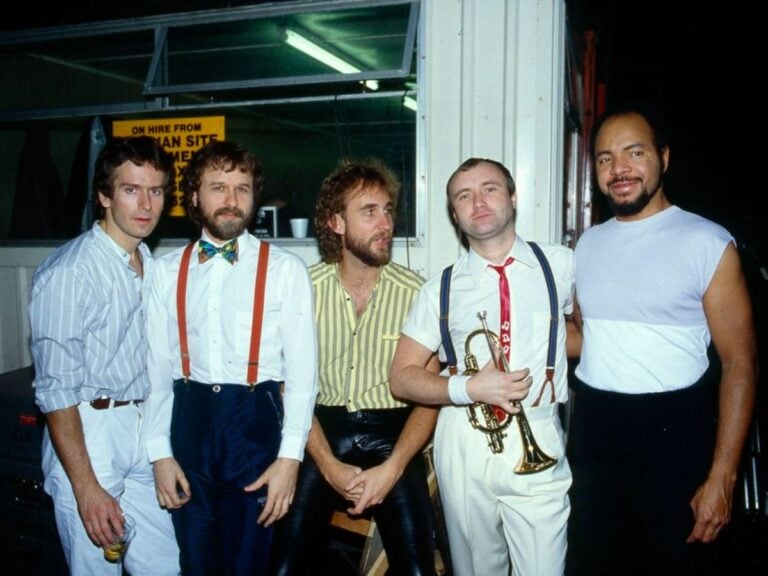
Bizarrely, the teenage group would be given a virtuosic house band that included King Curtis to play with. Too young to be overly daunted, they rattled through their two tracks, standing on boxes to reach the microphones. It was a very wholesome affair, in stark contrast to what lay ahead for the ‘dangerous’ Lou Reed.
They were 16 when the songs saw the light of day in 1958. Reed would fondly recall his first glimpse at fame, explaining, “Our big moment came when Murray the K played it, but he was sick and someone else stood in. He played it once. I got royalties of 78c. We were still in school. We’d open supermarkets, shopping centres, things like that. We had glitter jackets. It was what was called style”.
While all of this seems wildly incongruous with the ‘Vicious’ singer, there are definite tendrils that stretch from The Jades right through to his revolutionary future. Reed wrote about the gritty realities of New York in the late 1960s, and in the late ‘50s, the Jades songwriting was similarly simple. “You just thought of an experience that you might have gone through, and write it down,” Harris propethically recalled.
Then, there was the dalliance with danger that attracted Reed to being in the band in the first place. The idea of being a kid in places he shouldn’t have been clearly held a distinct appeal. And it also gave him the slightest whiff of success, but not enough that he would go chasing it. Beneath the glitter jackets, the shopping centre gigs, and the chaste harmonies, were the early beginnings of Reed’s fascination with character, distance from the spotlight, the quiet urge to push against the surface, and seeking 78c for your honest wares rather than wild adulation for insincerity.
While he may have become a mythologised beast, hired to read porno-ads with straight-faced disdain, his suburban youth was somehow both more sanitised than many have mentioned – drawing attention to his stint in a mental hospital receiving shock treatment – and yet it was also a clear precursor to the wicked wit that lay ahead, and rendered Reed a legend.
