


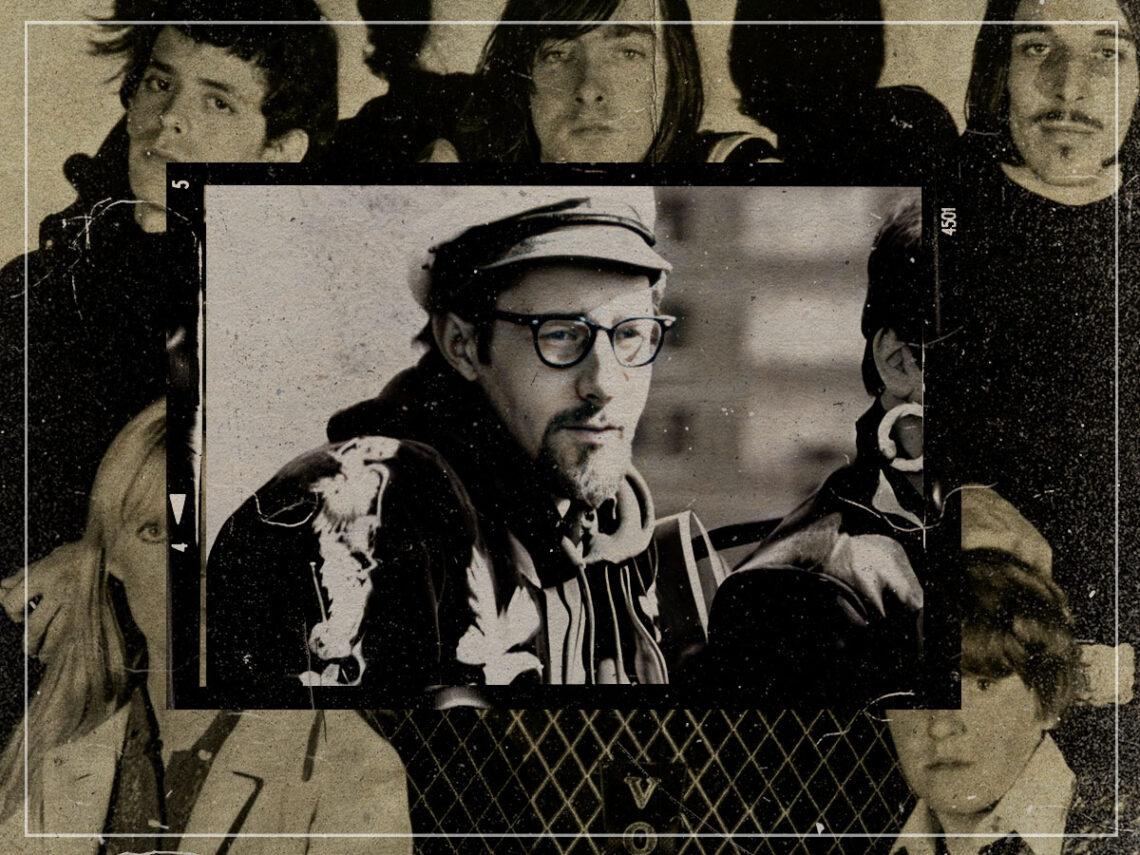
Angus MacLise: The forgotten founder of The Velvet Underground

New York City, January 16th, 1966: It’s a cold afternoon in the metropolis, and invitees are hurriedly flocking into the warmth of the Delmonico Hotel. The annual gala for The New York Society of Clinical Psychiatry is about to begin. Rather than summon a leading psychologist from Europe or someone else tied to the society’s endeavours, in an indulgent move, they have opted to book the bespectacled pop artist Andy Warhol as a keynote speaker.
The irony of this is that Warhol was never one for public performances. Thus, in lieu of a captivating speech, he presented a coterie of cronies from the Factory and a radical band who certainly weren’t befitting of a dinner party, the little-known Velvet Underground. This was perhaps the first notable time that the duo came together since Warhol had decided to manage them.
A year earlier, in 1965, the filmmaker Barbara Rubin had dragged Warhol down to the bowels of a New York dive bar to take in a gig. He was instantly captivated by the rhythmic iconoclasts casually making open references to hard drugs and sadomasochism. By all accounts, he also seemed to feel a kinship with Lou Reed’s nonchalant Downtown fucklessness.
Shortly after, he decided to approach them with a proposition. As a hot New York artist seemingly seizing the zeitgeist, Reed and the band had little say in the matter. They accepted his management offer, and his first move as manager was to instate Nico as the lead singer. In an interview a few days later regarding his Factory enterprise, he announced: “We’re sponsoring a new band. It’s called the Velvet Underground”. His intent with them was “to create the biggest discotheque in the world”.
They got to work and were quickly assimilated into Warhol’s grand vision of a touring art collective known as The Exploding Plastic Inevitable. These shows featured an art exhibition, screenings of experimental movies, a parade of Factory girls dancing, poetry, and ground-breaking strobe shows. They were, in short, mayhem, and now they had a band to add to that carnage. This has always been considered the origin story of VU, a band whose enigmatic leader allowed them to pioneer indie music but whose quirks inadvertently hemmed them in, subsumed as a mere glug in the combustible cocktail of the Factory, and failed to push them into the top 100 of the charts.
However, there is an earlier chapter that has long gone unchartered, one that includes the forgotten Angus MacLise. In many ways, this is the most significant chapter in their story, too, because it shows that, if anything, Warhol tempered the avant-garde ways of the act towards something more commercial rather than the other way around. MacLise, now divorced from the VU story amid the sands of time, embodied the bold, weird, counter-counterculture intent behind the band’s inception.
Before Moe Tucker joined the group, MacLise was their drummer. “Angus was one of the greatest drummers of all time and one of the greatest poets of all time,” composer La Monte Young would proclaim in praise of the singular anti-star. Although he was classically trained, he disavowed traditions to such an extent that many audiences simply assumed that he was self-taught. However, Young’s nod to his poetry also tells you that drumming was far from his only priority.
In the late 1950s, MacLise moved to Paris with his friend Piero Heliczer, where they founded the publisher Dead Language Press in 1958. He used this venture to exercise an influence on culture by printing pioneering works from his peers he admired, as well as his own poetry. This created a sort of cult collective, not too dissimilar from the clubhouse art movements of Dadaism or the Russian absurdists, whereby art became a communal pursuit. His works were frequently handwritten in his unique calligraphed style, waxing mystically as follows: “No one is here now, to her I’m in the voidness of whatever else is existence…”
However, as the sixties got swinging, the draw of New York’s blossoming underbelly beckoned, so MacLise and Heliczer returned to the US. Here, he moved the broader cultural shifts of the zeitgeist moving away from solely working on the printed press and dabbling in avant-garde music, performance art, and independent theatre. It was during this time that he became associated with Ben Vautier.
Vautier ran Laboratory 32 (Le Magasin), from where the art Fluxus movement arose. The movement was centred around the mantra that “art must be new and bring a shock”. Vautier mused, “What is culture? Culture is a fairytale that we have created. It can be manipulative.” Adding, “The purpose of culture is to amuse poor people and rich people alike”. The melting pop of weirdness he created on these principles saw MacLise rub shoulders with Yves Klein, John Cage, George Macunias, and Yoko Ono.
An off-shoot of this collective was The Theatre of Eternal Music. Formed in 1962 by La Monte Young, the group looked at musical minimalism with Young offering up the instruction, “Draw a straight line and follow it.” Into this world of weirdness came John Cale. The pair became friends, and Cale extended an invitation to MacLise to join a band he was starting with a fellow called Lou Reed. With the addition of Reed’s old pal Sterling Morrison, the original four-piece was founded, and they went by the name Falling Spikes.
However, this name didn’t seem to match the wider intent of the avant-garde group. They wanted to reflect the demimonde of society and espouse it bluntly in a radical way, wildly differing from the airbrushed hand-holding platitudes being played on mainstream radio. So, when MacLise came across Michael Leigh’s book with the synopsis, “Swingers and swappers, strippers and streetwalkers, sadists, masochists and sexual mavericks of every persuasion – all are documented in this legendary expose of the diseased underbelly of ’60s American society,” he figured its title, The Velvet Underground, would be perfect for the group.

Now, the four-piece began to take shape. Cale and MacLise brought a minimalist, improvisational tone to rock ‘n’ roll thanks to their time in The Theatre of Eternal Music, and this was fused by the literary bent of all the members. They were all set to be the eponymous ‘ahead of their time’ artists. But as we all know, MacLise never went along for the ride. Why? Well, as it happens, ‘time’ would be a central issue on that front, too.
By this point, MacLise had long been part of the bohemian world and stuck to their time-keeping, or lack thereof. As the Velvet Underground grew serious, it quickly became clear that MacLise was not a serious artist. He would turn up to band practice three days late, solo for an hour at casual get-togethers, and when it came to their first gig, he apparently flew off the handle when he heard that they had been formally booked and, as such, had to start and stop on time. He then even quit when he found out they were being paid for their art. As Reed would later say, he was a “dream person”, and the realities of being in a band made it untenable for him, so he moved to Nepal.
While his life after his Velvet Underground departure was eventful, with the lapsed drummer moving to Berkley, becoming embroiled with the Floating Lotus Magic Opera Company, mixing with Timothy Leary, and dabbling in occultism, it is his Nepalese chapter that best defines his dreaminess. He had met the love of his life, Hetty, while in Berkley and together they had a son named Ossian Kennard MacLise. When he was still an infant, the family moved to Auroville, the famed ashram in Pondicherry.
It was here that a “rippling energy” was reported as emanating from the boy. It was sensed that he had profound Buddhist powers. So, the family went on a pilgrimage to Nepal, and when he was only four years old, he was recognised that he was the reincarnation of a Buddhist saint. Hetty received a letter from His Holiness the 17th Gyalwang Karmapa, and she later recalled: “It said that Karmapa had meditated on our son, and there was very good reason to suppose that he was an incarnate tulku lama.”
Continuing: “I got that far, and I said, ‘Good God!’ Ahbo said, ‘What’s wrong?’ ‘Well, I don’t know. He says that Karma Tsultrim’s a tulku. That he thinks there is good reason to suppose, but it is not definite.’ We went on reading, and it said, ‘You and Angus must sign this paper. It is very dangerous for these tulkus to be wandering about, and he won’t recognise him or give the name unless we sign the paper saying you will never take him from the sangha.’ So we did this. We figured we couldn’t ruin the kid’s destiny and anyway, nothing may come of it.”
And so, MacLise lived out the rest of his days with his wife and his son, the saint, in Nepal. He helped out with a bookshop in Kathmandu and continued to publish poetry, adrift in his own dreaminess. Eventually, that dreamy manner of drug-addled wandering resulted in Hypoglycaemia, tuberculosis and malnutrition. He died at the age of 41 in 1979, seemingly barely aware or bothered by the profound wave of avant-garde rock that he first helped to ripple into existence, a man fit to be the protagonist of a Velvet Underground song.
