


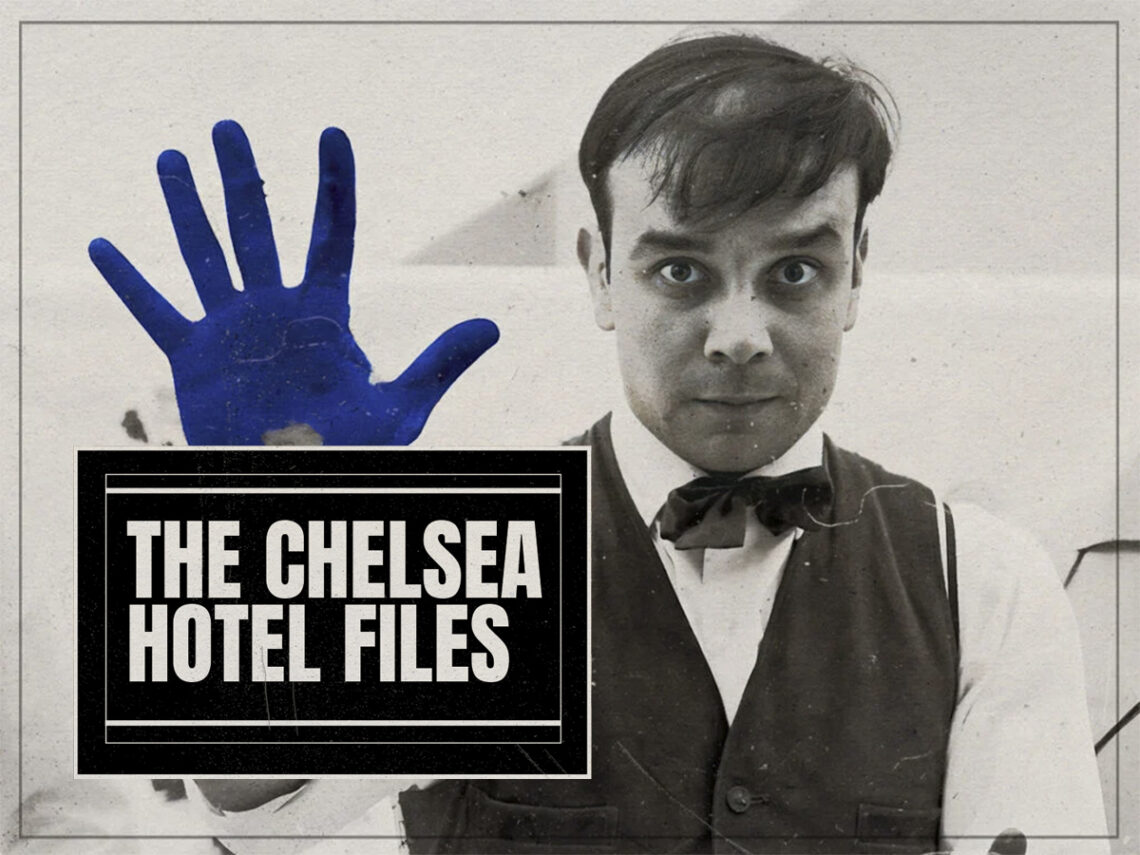
“Long Live the Immaterial!”: Yves Klein’s Chelsea Hotel Manifesto

New York’s Chelsea Hotel is a fascinating cultural phenomenon. From almost the first moment it opened its doors in 1884, there are stories of strange goings on or artistic anecdotes from within its walls. In the 1960s especially, it housed so many famous names, becoming a home to some of history’s best artists as they made their masterpieces. More of a creative meeting ground than any traditional resting place, Yves Klein solidified its cultural position with a manifesto.
Really, the Chelsea Hotel was a coterie, defined as “a small group of people with shared interests or tastes, especially one that is exclusive of other people”. As the residents not only shared ideas but also shared space, food, friends, lovers and labour, regularly helping each other out during times of strife or sickness, they were united by art, specifically art made within the same context. As so many of the hotel’s inhabitants captured the place within their work, they became a distinct collective.
In 1961, the artist Yves Klein put that idea into words when he wrote The Chelsea Hotel Manifesto. Klein isn’t known for his written work. Instead, he’s best known for his signature blue tone, which he created and filled canvases with. As a precursor to artists like Andy Warhol or any number of modern artists who are faced with comments like “I could’ve done that”, Klein’s work believed in the idea of ‘art for art’s sake’, or the school of thought that says anything is art if you declare it to be. It was a type of art that refused to be bogged down by tradition or traditional modes of delivering meaning or emotion. It was fresh, vibrant and rebellious, so you would have thought that he would fit right in at the hotel.
However, at the Chelsea, the residents largely subscribed to the opposing school in which art should mean something and could make a difference. Bob Dylan was writing his protest songs while Allen Ginsberg read his howl of a generation. The beats were tacking the decline of society, the punks were raging against the system, and artists of all mediums were really trying to say something. In that atmosphere, Klein seemed to get defensive. “I would never have believed, 15 years ago at the time of my earliest efforts, that I would suddenly feel the need to explain myself,” he wrote after listing his various achievements as if displaying his credentials.
“It dismays me to hear that a certain number of them think that I represent a danger to the future of art,” he continued, hitting out at those who thought his art to be pointless or mocking. But he defends his work, quoting his earlier thoughts regarding his looming blue canvases, saying, “I think of those words I was once inspired to write. ‘Would not the future artist be he who expressed through an eternal silence an immense painting possessing no dimension?’ Gallery-goers, like any other public, would carry this immense painting in their memory.”
For Klein, the thought that people will see and remember his paintings was enough, that alone gave his art worth and weight and should silence the critiques. As he writes in The Chelsea Hotel Manifesto, he really is making a case for why art purely existing as art is good enough. He claims that what some people see as nothingness is where he sees life. “In sum, my goal is twofold,” he wrote. “First of all, to register the trace of human sentimentality in present-day civilisation; and then, to register the trace of fire, which has engendered this very same civilisation – that of the fire itself. And all of this because the void has always been my constant preoccupation, and I believe that fires burn in the heart of the void as well as in the heart of man.”
“Having rejected nothingness, I discovered the void,” he said, separating the space he plays in from the idea of meaninglessness or pointlessness. Instead, Klein’s world is individualistic, internal and spontaneous. He claims every artwork is merely a “Trace of the Immediate”, born from a split second of inspiration and then forever living in the void it leaves when it’s gone. Whether writing a lengthy protest piece or painting a solid blue colour on a canvas, Klein believes art is nothing more than exactly what it is: the reaction to a thought, but unable to keep that thought present and alive.
At its core, the long, sprawl manifesto calls for an end to any traditional ideas of meaning and a final disconnect between the worlds of meaning and worth. Klein makes the point that meaning is an individual and introspective thing based on an intangible idea and built on split-second thoughts or lived experiences. Those hazy ideas can’t be aligned with the world of traditional art, the value of physical things or the monetary or social worth often associated with it. “Long Live the Immaterial!” he declares as his closing life, choosing to stay in the world of loose ideas rather than stringent meaning.
Whether the rest of the residents would have agreed with Klein’s manifesto is a debate in itself. By taking the name of the hotel, he also takes the cultural weight of all its residents’ reputations and creations, borrowing the existence of their coterie and applying it to his laid-out beliefs. Maybe the entire thing is simply addressing his neighbours, telling the activists and the punks to broaden their minds and see beyond his blues. Or perhaps, just as his argument suggests, the manifesto is merely another “trace of the immediate”, given the title of the place he found himself in as he wrote it.
