


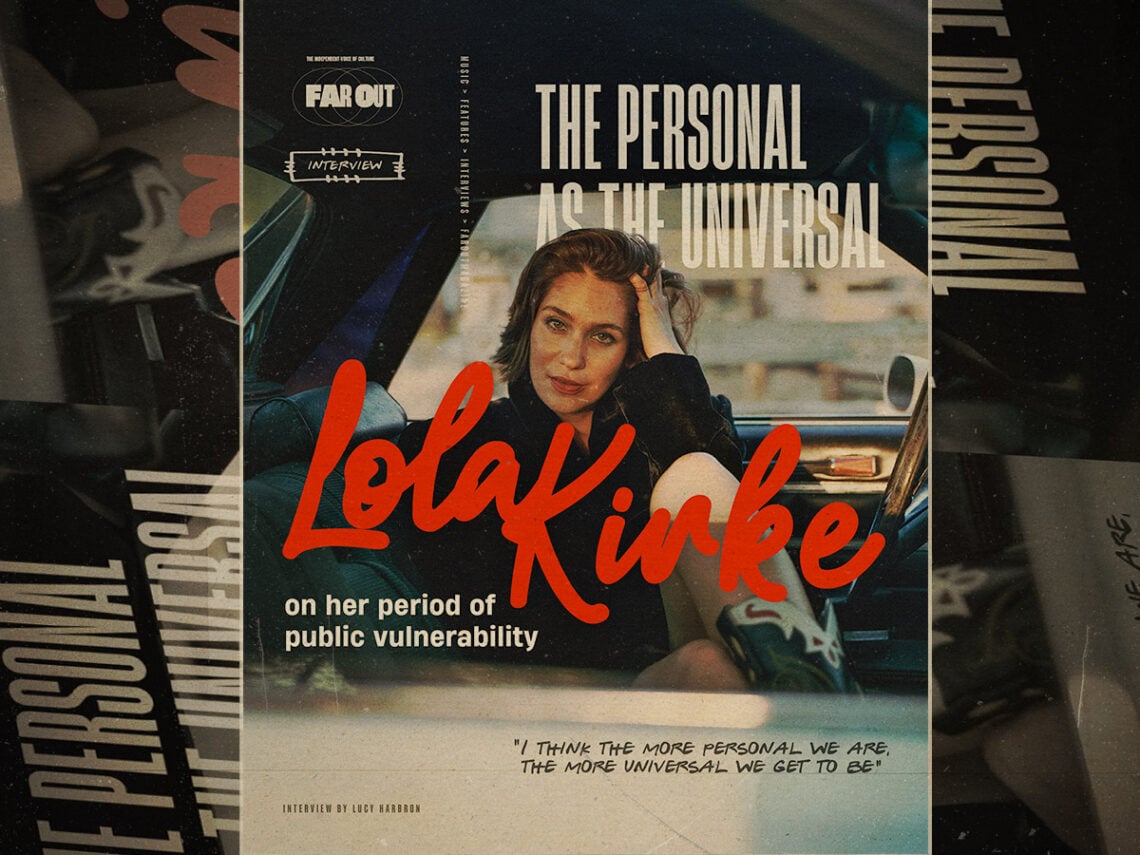
The personal as the universal: Lola Kirke on her period of public vulnerability

On my way to meet Lola Kirke in Soho, I really only had one question: how does this feel? Within the span of just a few months, the musician, actor and now writer has put out Wild West Village, a book of deeply intimate essays about her life, and is about to release Trailblazer, an album that is undeniably her most personal to date. It’s a lot to be sharing in a short time, and so my first, and really the only question I’d written down, is, “How does it feel? I imagine it feels revealing?”
“I think that that’s a really great word for it. I think I didn’t appreciate how vulnerable I would feel releasing these at the same time. I thought I’d just get laid,” Kirke says, and we laugh. I already know this conversation is going to be easy.
Not to instantly make the piece about me, but as someone who has been a writer for a lot of my life, specifically writing about my own life, I can’t help but be aware of how my view on this particular kind of vulnerability is swayed. Partway through our chat, Kirke and I spend a good while laughing about how we don’t really have any secrets.
When your artistry becomes so tied to your inner world, when confessional work is the thing that inspires you and powers you and seems to naturally kind of flow out of you, the conversation that people often have about the difference between art that reveals the self versus exploiting the self essentially loses meaning. Given that Kirke is currently on a release cycle for two projects that deal in depth with her intense feelings of being an outsider in the conventional world, as well as revelations about her high-profile relatives, it is clear that to her, too, the type of public and artistic openness that would scare a lot of people doesn’t really effect her.
“I don’t know where the line is,” she says on the topic of exploitation versus honesty.
“I like a lot of writing, whether it’s music or songwriting or anything, because it’s brave. I think sometimes that bravery is because they named the unnameable, and I’m like, ‘Oh, wow. I related to that, and I never, ever thought I would hear about that.’”

But we’ve all been tricked into thinking that deeply personal or honest work stands at odds with relatability. People believe that to be relatable, something must be broad or nonspecific. Yet again, for people moved by confessional works, time and time again, the reminder comes that it’s actually the opposite, and that’s a reminder Kirke has been holding closer than ever at this moment in her career.
“I think I have really taken to heart this idea that you write what you know,” she says about the decision to lean fully into writing pretty much solely about her own life. In both her book, which she isn’t calling a memoir but it realistically is, and her album, Kirke is the subject.
Each chapter and song shines a light on something specific and all hers: her father revealing she has siblings she didn’t know about, her sister, actor Jemima Kirke, showing affection amidst tumultuous sister relationship, the oddness of growing up in a deeply privileged, excitedly creative family that many would yearn to be within, but constantly feeling somewhat sad that she missed out on a typical childhood. Neither project shies away from the mirror or meanders off course on a mission to be more broadly relatable because Kirke knows people will still connect.
“The more truthful people are about what really goes on inside them, the more I can see myself in it”.
Lola Kirke
“I think the more personal we are, the more universal we get to be,” she puts it so succinctly. “I feel really interested in telling the stories that only I can tell because I believe that in that way, I can be the most useful to other people. I think that that’s what storytelling is all about. It’s about making people feel less lonely, building connections with people, and giving people things as a gift. And I think you can only do that when you’re being as honest as you possibly can.”
Her ethos is perfectly clear: “I think that what that’s all about is that at our core, we’re all actually quite similar,” she says, adding that by merely sticking true to the stories and lessons of her life and letting the truth of those emotions lead, she knows she’s doing what she should, stating, “This is the way that I can be the most useful.”
It was an all-in commitment to her own story that set her free. Part of the reason my only real question was, “How does it feel?” is because, just as Kirke is releasing these projects somewhat simultaneously, she made them that way, too. While she was writing Wild West Village, Kirke was also writing and recording Trailblazer. To add to that already insane and overwhelming schedule, she was also shooting Sinners, the upcoming horror flick for which she spent months of her life doing night shoots, all while trying to complete these other projects.

That’s the sort of busy schedule that would kill off anyone. While we talk about creativity being a muscle to exercise, running three creative marathons all at once is more likely to result in injury than any kind of elevation. However, as Kirke worked on these two personal projects, she found her goalposts changing. Usually, projects would come along with an overwhelming hunger for and stress about commercial or cultural pay-off in terms of more obvious success markers that felt less important.
“I think that there’s been a part of me that’s kind of always angled for a certain kind of professional success and believed doing this type of thing would bring that on,” she said. Again, not to make it about me – but I get it. There’s a strange thing that happens in your brain when you write personal stuff: there is always a voice in your head telling you that the deeper you dive, the more you can get out of it.
No doubt given the nature of Kirke’s family, with her father being a founding member of Free and Bad Company, her mother being the owner and designer behind Geminola, a boutique popular with New York’s creative elite and her sisters, Jemima and Domino, also being in the public eye, she was aware that being willing to talk openly about these figures and crazy stories like hanging out with David Bowie at a party when she was a kid would undeniably bring in new attention. Kirke isn’t shy about growing up as the kind of kid who wanted fame and success. But right as she started working on these projects, the desire changed.
“More so, it’s kind of encouraged me more towards seeking personal success instead,” she said. “It’s always been like, I want to be an even bigger artist than I already am, but really, the more art I make, the more I realise, no, I want to be an even better artist than I already am.”
That’s something to aim for. “While I don’t know that what’s true to you necessarily always, you know, yields tremendous success in a certain way, I do think getting in that habit will make you a better artist, and a better artist, in so far as that you have a better sense of who you what you want to do,” she explains, and on Trailblazer, it’s heard.
Shaking off the shackles of strictly making a country album to instead allow her to merge country, blues and pure rock and roll to accurately soundtrack these personal stories, it’s her best music to date, perfectly accompanied by Wild West Village, a book in which she is as honest, brave and truthful as she vowed and aimed to be.
