


For and Against: the resurgence of country music

As artists like Beyoncé and Post Malone begin releasing country music, and the genre starts to climb the charts worldwide, steadily becoming once again one of the most popular genres in the world, people remain divided on whether or not this movement is a good thing.
With that, here is some context: The Industrial Revolution was supposed to kill music. Inspiration for songs came from naturally occurring sounds, such as birdsong, and when those noises were replaced with the banging of steel on steel, people believed the way we interpreted music would change. Sweet-sounding melody would fall through the cracks of time, becoming a footnote in audio history. Music survived.
Then, when the electric guitar was invented, people saw that as the downfall of the music. Music was an expression of emotion, and how it was conveyed started and stopped with how artists used their instruments. If you were happy, light notes accompanied, sad meant solemn playing, and anger meant fast and hard. The instrument was an extension of the body, both the physical and spiritual, and that was the beauty of the art form. When the electric guitar came about, emotion could suddenly be conveyed by turning an amp up and using various effects. For many, this was the beginning of the end. Music survived.
Then, along came the synthesiser, which would change music forever. It arrived in the 1970s, shortly after the Vietnam War, when everything in American history felt bloodied and broken. The synth proposed a brand-new sound that would see all music that came before crumbling into the dust. Equally, given how the synth could replicate the sounds of all instruments, session musicians thought their jobs were in jeopardy. Music survived.
Every time people have believed music is on its way out, the art form and industry haven’t only survived, they have created movements. The electric guitar brought with it rock music, which has, in turn, given us punk and heavy metal. The synth changed the parameters of sound, allowing people to expand the bubble provided by standard instruments and create something new. This led to further technological advancements in music that spurned movements such as electronic music, dance music and hip-hop.
The point is that every time somebody thought the music industry would be set back, it took strides forward. However, the difference between the above-referenced changes and the resurgence of country music is that each of the above developments has ushered in a new part of the future, whereas country is leaning into the past. So, is this the official beginning of the end? Is the arrival of the country music resurgence a good or a bad thing for music? Let’s discuss.
Dale: In prosecution of the movement
Don’t let supposed progression get in the way of something inherently terrible. Country music is and always has been the laziest genre out there, based on a four-chord structure with the loosest narratives attached to the worst choruses; the last thing the world needs is more of it, let alone a full-blown resurgence.
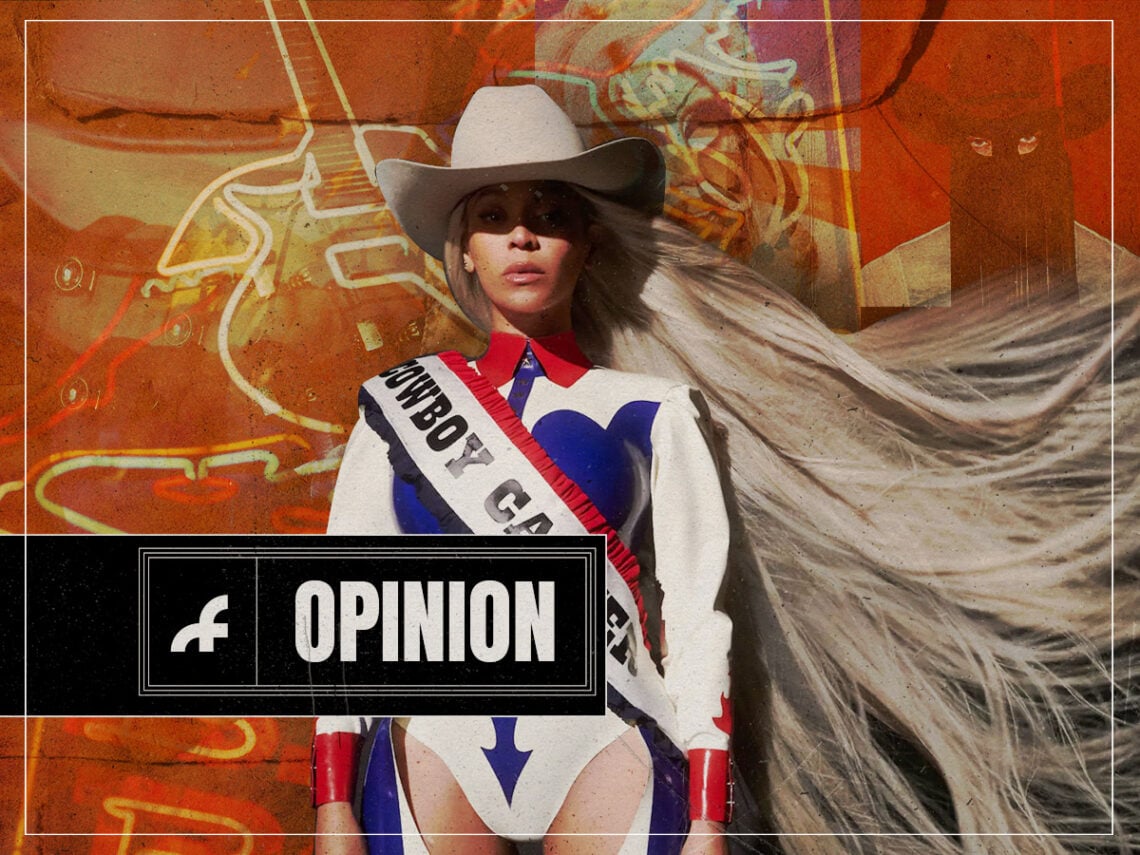
When Beyoncé announced she was making a country album, opinions were divided. As the first black woman to reach the top of the Billboard Hot 100 Country Charts, a genre which has a history entrenched in racism and misogyny, there were unsurprisingly a lot of people who scathed the milestone as not in the spirit of the genre. For instance, KYKC, an Oklahoma Radio Station, when asked to play the hit single ‘Texas Hold Em’ replied, “We do not play Beyoncé on KYKC as we are a country music station”.
Naturally, the public was angry about comments like this as one camp argued Beyoncé grew up in Texas, has always stayed true to her cowgirl roots and has as much a right to play country as anyone. In contrast, others criticised the music, saying she’s not a country music star. What was surprising was the lack of people complaining about the song because country music is shit and shouldn’t be touched with a ten-foot lasso.
As I sat there, looking at my phone, scrolling through comments from both sides of the argument, racism and sexism running riot, all I could think about was, “Oh fuck, is the soundtrack to the apocalypse really going to be country music?”
Of course, it’s not just Beyoncé at the forefront of country’s resurgence; she’s just one of the highest-profile examples of it. People from various backgrounds with different views are championing country music, taking something that previously had quite a one-dimensional mindset and expanding upon it, being more diverse and inclusive in the process. That all sounds great, and it would be great if there were some diversity in how stuff sounded. Country has always been a bland genre, and regardless of the good intentions of some of these new artists, it doesn’t change the fact the music is still garbage.
The second life of country shows a lack of originality and nothing more. Nothing else is required within the genre other than a different message, but rebellion in music is so much more than words and the people performing. Sounds shouldn’t be recycled in the face of progress; all a listener will get from this is a repetitive rhythm and four chords. Let’s skip it and line dance to the next movement, one with substance and actual creativity.
Kelly: In defence of the movement
American white men adorned in suede attire, cowboy boots, sipping whiskey and singing about women they lost because they treated ‘em badly – if this was the country music revival, then it is better to just leave it where it is. Why would you want another resurgence of something that is inherently bad? Well, that’s the thing – it isn’t a resurgence; this is a reinvention.
Before going into the details as to why a country reinvention is not only welcomed but healthy and necessary, let’s first remind ourselves of the inherent issues at the crux of traditional country music. Firstly, as aforementioned, earlier iterations of the genre largely centred around – and were dominated by – white male anguish. The full spectrum of players in the genre was, of course, much more than just that, but the entire movement’s exclusiveness when it came to representation was always a more overarching issue of both the music itself and America at large.
Now, country music, in a broader sense, isn’t for everybody, and I’m talking musically: while my colleague Dale argues about it being something of a lazy genre, that’s a fine perspective to have, especially considering the subjective nature of music tastes in a more holistic sense. However, it’s also important to note that the entire music industry is founded on revolutionising earlier tropes. As such, the country revival is not only a must but is actually healthy for music.
Allow me to elaborate: the first iteration was drenched in American white nationalism and, by extension, racism and homophobia, among other things, whereas the resurgence is fighting for greater diversity and effectively reinventing the entire movement to suit the contemporary landscape better. Of course, the music itself might not be everybody’s cup of tea – but how do we improve the sound of something and push boundaries if we’re not willing to revisit earlier innovators and challenge them with the benefit of contemporary standards and a new subset of talented musicians?
Not all of the country music is good. In fact, a lot of it is lazy, dated, and, let’s face it, boring. However, new players like Orville Peck, Maren Morris, Trixie Mattel, Tracy Chapman, Tenille Townes, and even Beyoncé are working hard not only to craft genuinely good music but also to challenge the deeply problematic institutions the entire genre has been built on.
Stylistically, the core of country music has always drawn from several genres, like southern gospel, blues, American folk music, and others. So, to call all of it overly simplistic might be too much of an overstatement. The resurgence is not just a simplistic return to traditional country music; it has years and years of musical innovations to draw from, focusing on the core of country to create something truly mystical.
And so, ultimately, two things prove the necessity of modern-day country music: firstly, the need to reevaluate and re-establish the parameters of who is “allowed” to be involved in the movement, and secondly, the need to give the genre another chance under these newly available circumstances to truly thrive as music for people, from whatever walk of life they may come from.
