


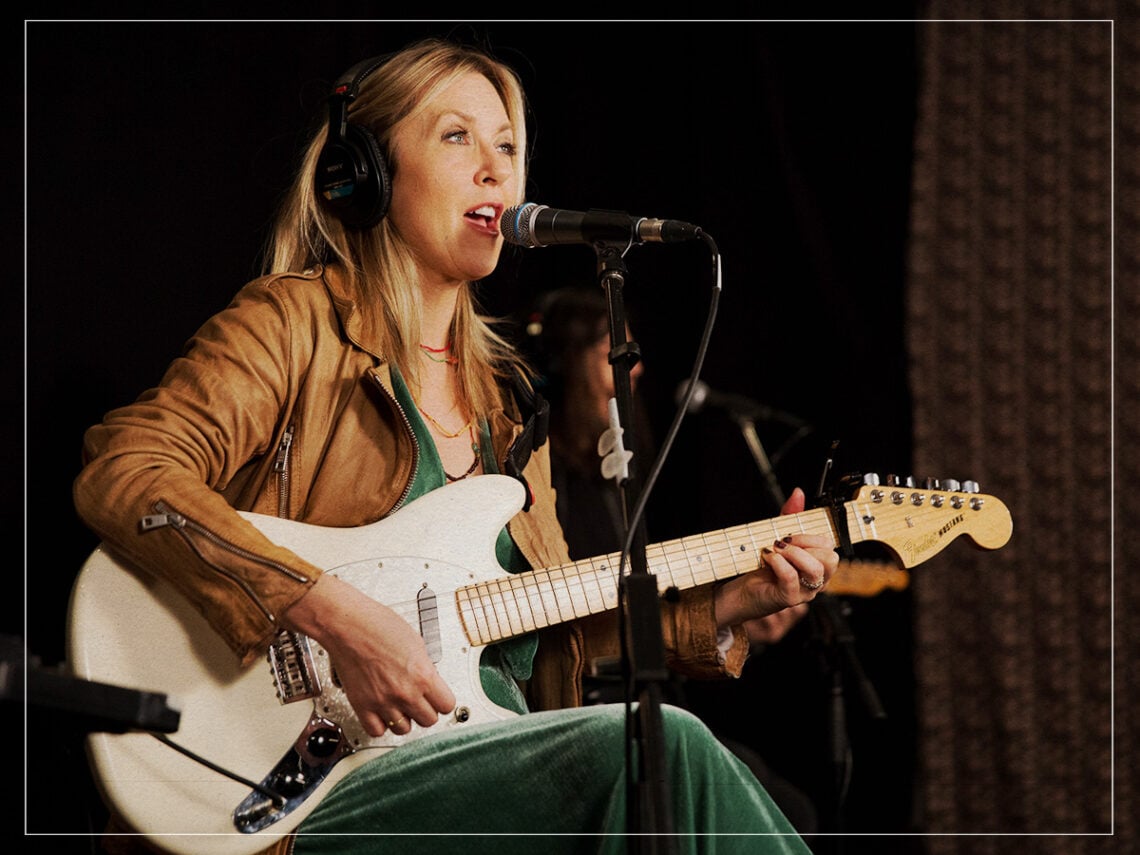
Liz Phair on the perfect “gateway drug” album to alternative music

With its disorienting blend of grunge-lite guitars, steady drums, lo-fi atmosphere and her frank and unapologetic lyrics and singing voice, Liz Phair’s 1993 debut Exile in Guyville catapulted her into indie stardom and the centre of the alternative scene.
Her music inspired a whole host of singers who came after her. Straight away, you could hear echoes of Phair’s style on both Alanis Morrisette’s excellent Jagged Little Pill album from 1995 and on Fiona Apple’s 1999 masterpiece When the Pawn… but the influence that she had on the generation of indie women who grew up on her music is even more overt.
There is a clear influence from Exile in Guyville on Courtney Barnett’s work, and you can hear traces of it in Sharon Van Etten’s catalogue, too. You can catch glimpses of her sound in works by Phoebe Bridgers, Soccer Mommy, Mitski, Julien Baker and Japanese Breakfast, among others.
Singer and guitarist Snail Mail even started out her career in a tribute band to her hero called Lizard Phair, before moving on to working on her own material (which itself draws inspiration from Exile). The pair were interviewed together by Pitchfork in 2018, and in a mutually appreciative conversation touched on a range of topics including the way that they both write bold but emotionally open, bare and honest lyrics.
“Intimacy—real honest intimacy—is one of the most radical things you can do right now. It’s like an endangered species to connect to your feelings and actually be present,” Phair said in the interview.
Phair may have opened many doors in the minds of the women who listened to her music in the 1990s and paved the way for them to write about their own feelings, urges, and experiences in whole new ways. However, in a later conversation with Pitchfork in 2023, she shed light on the artist who had done the same for her in the late ’80s when touring her latest album Sister with her band.
Remembering of the time that “I have left the suburbs. I have left my bouncy, flunky hair and my frosted lipstick behind. Basically, I inverted myself: I became the opposite of everything that I was before. If I had been a bright and sunny blue-eyed blonde, I was suddenly pale and angry, my hair was lank and maybe not washed. Where I had worn super figure-hugging clothes and been ultra-cute at all times, I now bought second-hand thrift store stuff that was baggy, and I wasn’t wearing a bra.”
“There was this huge disparity between what girls were raised to want and what the world was offering us,” she added. “It was my gateway drug into alternative. I went to Cleveland to see Sonic Youth play and shoved myself right up to the front. I was feet away from Kim Gordon, and she was the epitome of self-possession. She was both incredibly tough but also incredibly fragile. And I saw this new way of being feminine within an attitude that made me feel safer out in the world. I had a toughness about me after that, and it worked better for me.”
That push and pull between toughness and fragility, coarseness and gentleness, tenderness and rage, is the central axis on which Exile in Guyville pivots and is the key to all the heart and soul in the album. It is also one of the main threads connecting all of the great music that Phair has made herself and which she has subsequently inspired in others.
