


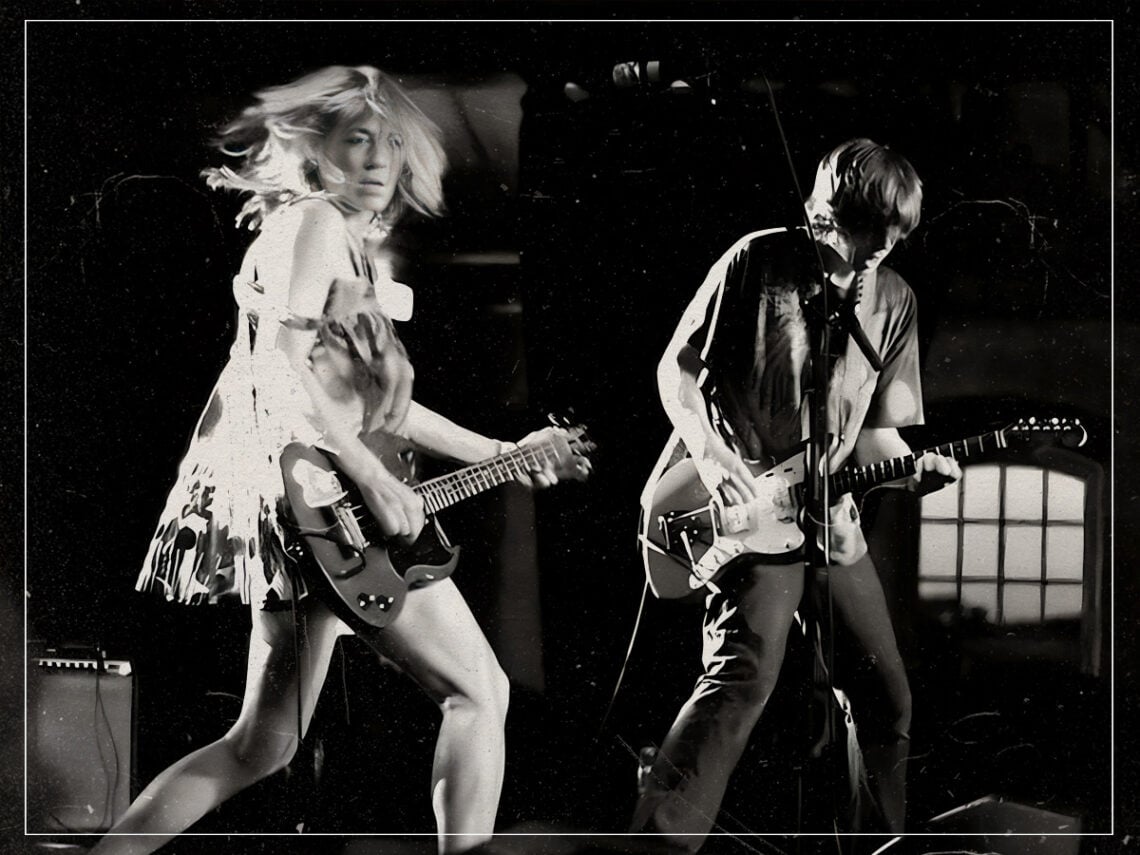
The story of Sonic Youth and Neil Young: “I felt good that we could actually shock people”

It took a special breed of classic rock star to survive the 1980s. Countless artists at the top of the world the previous decade had all commercial and critical clout ripped from them by the decade that taste forgot. By the end of the decade, with alternative culture creeping toward the mainstream, laying wood in wait for Nirvana’s spark, there were basically no classic rockers who kept any sense of cool whatsoever. Thanks to Sonic Youth, one of the very few who did was Neil Young.
The irony is, of course, that being cool had never, ever been something Young had strived for. If he did, he probably wouldn’t have spent that much time sporting mutton chops the size of an average forearm. Even he wasn’t immune to the commercial and critical slump of the ’80s, releasing records like Trans and Everybody’s Rockin’ that got him in legal trouble with the head of his record label for being “not commercial” and “musically uncharacteristic of previous recordings.”
That said, if anything will get you brownie points from a band as proudly uncommercial as Sonic Youth, who covered the Young track ‘Computer Age’ for a 1989 compilation record, it’s screwing over David Geffen. By the time Young reunited with Crazy Horse and began reconnecting with his rock side at the start of the 1990s, he knew what band was going to join him on those legendarily noisy shows. He tapped up Kim Gordan and Thurston Moore’s band of alt-rock miscreants after he discovered their 1986 record EVOL, zeroing in on the song ‘Expressway to Yr Skull’ as the best guitar song ever written. High praise indeed, I’m sure you’ll agree.
Although Young was a huge fan of the band, the same couldn’t exactly be said for many of his audience, left baffled by the feedback-soaked intensity of the Youth’s support slots. This was, in true Youngian contrarianism, entirely the point. In an interview with Melody Maker in 1991, Young said, “I didn’t want acts that people were going to say ‘Oh, I can take them or leave them.’ I wanted to get somebody that people were going to love or hate. And I think we did a good job there. Sonic Youth are way out there on the cutting edge with what they’re doing.”
The tour wasn’t plain sailing for the Sonics either. They had declined the initial offer when they were going to be third on the bill behind World Party (imagine Britpop, but if Oasis were Keane), but when they were offered the main support slot, they decided to take part. Even then, Young’s crew kept them playing much quieter than they preferred and were going to walk until they asked Young about it face to face.
Once those kinks were ironed out, The Youth had nothing but positive feelings about the tour, with Kim Gordon telling Alan Foege in his book Confusion Is Next: The Sonic Youth Story: “The Neil Young tour was the first time I really felt like we were suddenly confronting the mainstream. We really had this pretty much redneck, conservative audience. It was interesting because it made me feel like we were performing for the first time. I felt good that we could actually shock people. It made us feel really young.”
As if that wasn’t enough, the band put a cheeky nod to Neil Young in their 1992 album Goo, on the song ‘Crème Brulee’, Kim Gordon deadpanning, “Last night, I dreamt I kissed Neil Young / If I was a boy, guess it would be fun.” It was one of the stranger forms of immortality for Neil Young, but one he’d cherish above many others.
