


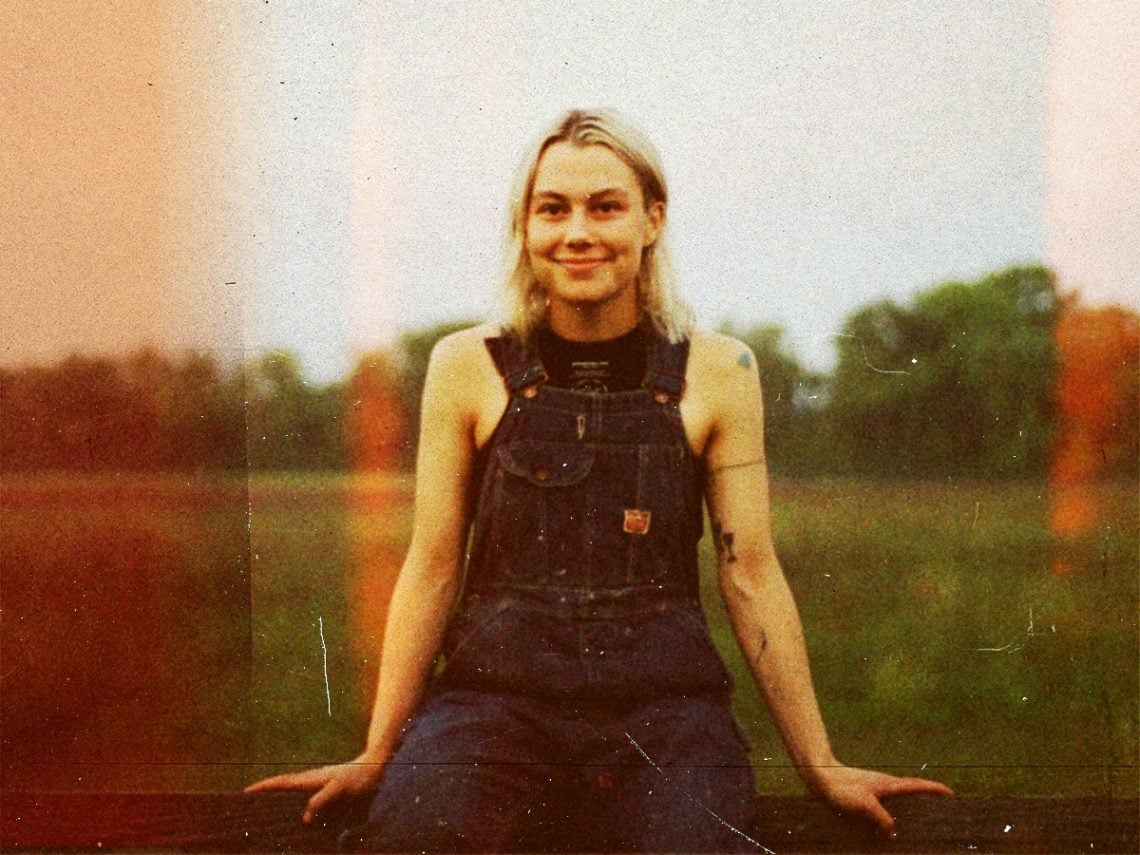
“Little pictures”: How an Elliott Smith quote shaped Phoebe Bridgers’ songwriting

So often, songwriting, or any form of creation, is talked about as if it’s divine. Inspiration strikes from seemingly nowhere like a gift from above, or the muses call down to the artist, compelling them to create. That can be assigned to god or any idol. But for Phoebe Bridgers, her divine influence takes the form of another musician; Elliott Smith.
When it comes to her music, from its very origin as a young singer-songwriter through to her latest, critically acclaimed album, Smith appears like a spiritual guide. He’s her guiding light who taught her how to write and continually inspires her lyricism. “What if I told you I feel like I know you / But we never met?” she sings on ‘Punisher’, the title track of her sophomore album, which is dedicated to Smith, his memory and the kinship she feels with him. Bridgers carries Smith with her, with his legacy cropping up time and time again in her work.
But that’s all because she is a loyal and dedicated student of his teachings. “I was in eighth grade,” she remembers, recalling the first moment she heard Smith. “My friend Carla Azar showed me ‘Kiwi Mad Dog 20/20,’ which is on Roman Candle. It’s a super weird one to start with because it’s instrumental. Later, another friend showed me ‘Waltz #2,’ which became, and maybe still is, my favourite song of his — I think it just exemplifies his writing. Then I went super deep.”
Then, when Bridgers started writing her own music, she found that his hand seemed to be on her pen, too, as she kept one piece of advice close to her heart. “Elliot Smith said that his songs are like little pictures, and that was always really attractive to me,” she said, “It really does kind of feel like little pictures or a little snapshot of an emotional time.”
Even back on Bridgers’ first song, ‘Waiting Room’, which she penned at only 16, that advice comes true. In the track, she codifies a series of images that all spell out utter devotion. “If you were a waiting room, I would never see a doctor / I would sit there with my first-aid kit and bleed,” she sings, using these snapshots, as she calls them, to capture a moment of unabashed emotion. There’s also the kind of specificity and spontaneity that Smith’s advice advocates for as she sings, “And I can wish all that I want, but it won’t bring us together,” pointing to a personal conflict but not overexplaining it.
From there on, Bridgers whole discography appears as a series of “little picture” just as her idol taught her. ‘Kyoto’ remembers a moment on tour to consider familial relationships. ‘Graceland Too’ pins a story of pure friendship to a place in Memphis. ‘Scott Street’ turns a sombre walk into a hugely emotional snapshot of regret and pain. It’s a similar feeling that Smith’s own music captures as he routinely used specific stories or scenes to tell bigger emotional tales, making it obvious exactly where Bridgers learnt it from.
It’s impossible to understand Smith’s impact on Bridgers, who reminds her fans of that time and time again. At any chance she gets, the modern artist talks about all the things she’s taken from her idol, stating, “It’s like The Beatles to me, and I mean that in every way”, as she declares him to be the biggest and more important artist in her eyes.
