


Hear Me Out: Why ‘Liability’ is still the best song by Lorde

To me, the pop world of 2025 is the house that Lorde built. Of course, the charts today are a broad church, and there are few artists who can claim a similar level of influence. It’s difficult to find a place in pop culture that hasn’t been coloured by your Gagas, Beyoncés and the like.
However, everyone from Taylor Swift to Chappell Roan owes a debt to the woman born Ella Yelich-O’Connor in Auckland, New Zealand, who turned the pop charts on their heads when she was only 16. After all, there’s a reason why the charts are a more exciting place than they’ve been in years.
It’s not that the current crop of pop stars are just inherently “better” than whatever was colonising the airwaves of previous decades; music’s never as simple as that. It’s that these performers, such as Sabrina Carpenter, Charli XCX, Billie Eilish, Doechii, Victoria Monét and countless others don’t seem to be pop stars first, but artists first.
Especially compared to the lifeless, musical Soylent Green being pumped out by the likes of Teddy Swims and Benson Boone, each of the pop girlies of the moment possesses an unmistakable artistic voice—one that starts with their songwriting and encompasses their whole stellar presentation.
Full disclosure, someone very special to me would hunt me for sport if I didn’t also give Lana Del Rey her deserved flowers for shaping this era of pop music. However, while ‘Video Games’ had a similar effect on a creative level, ‘Royals’ was the first time it became clear that giving very young women this degree of artistic control wouldn’t just create great art, but successful art.

2013 was a long time ago, and the years may have dulled its effect somewhat, but ‘Royals’ was colossal upon release. The song topped the Billboard Hot 100 for nine straight weeks. It was certified diamond by the RIAA, one of only 168 songs in history to do so.
The track’s success wasn’t just measured by its position on the Billboard Year-End charts but the Billboard Decade End charts as well. It has a place on the Billboard All-Time Hot 100. ‘Royals’ is also not the song we’re going to discuss today; while I like it quite a bit, my personal favourite off the debut album Pure Heroine is ‘Tennis Court’, but ‘Royals’ is up there.
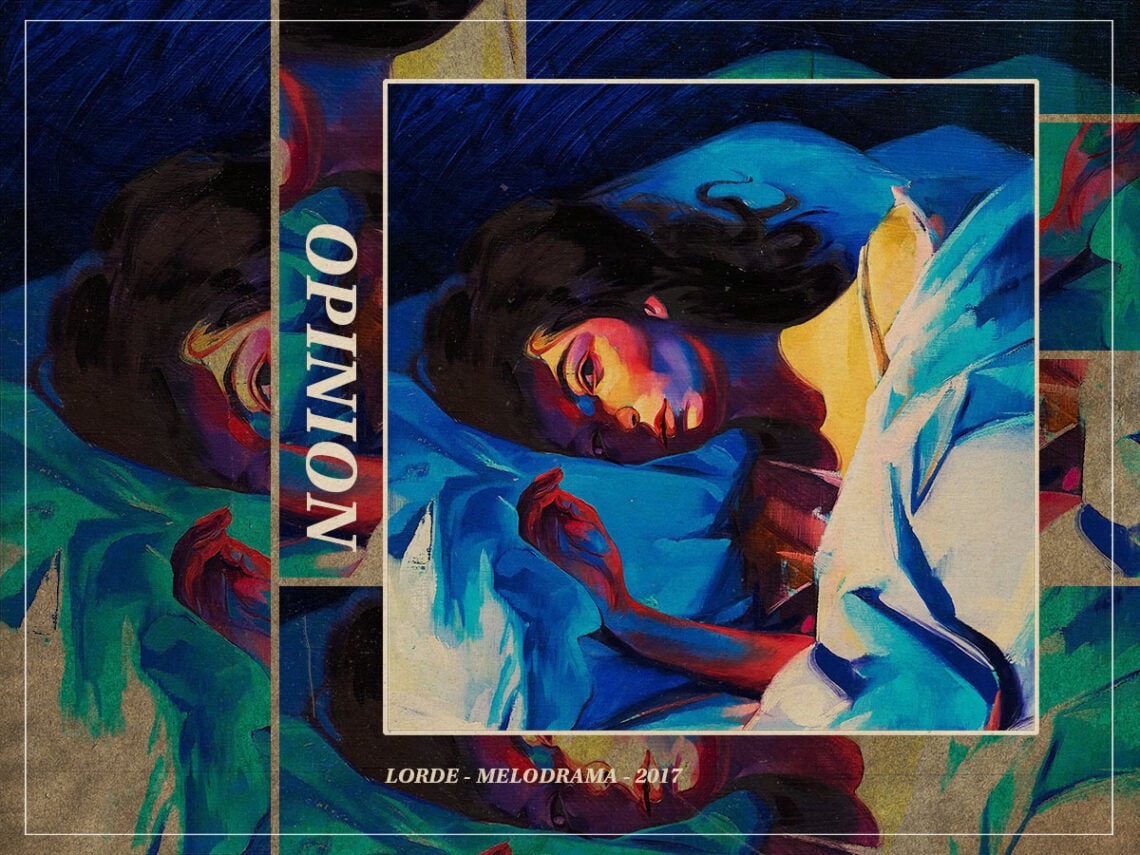
No, the song I want to talk about came afterwards after she cashed in the blank cheque from her mammoth single. From a commercial standpoint, it bounced horribly, but creatively, it led to one of the best and most influential albums of the decade. Melodrama is an absolute masterpiece. A gorgeous and vulnerable breakup album that exalted Lorde, without the shadow of a doubt, as one of the greatest songwriting voices of her entire generation.
This record came from an artist whose breakthrough was shockingly early, whose music sounded like modernity and youth in its purest, slightly terrifying form, and whose icy, unblinking demeanour spoke to her inner strength and poise. Yet, despite all that, the high point of her best album, and thus, her whole career, was a piano ballad.
Pure Heroine is the sound of utter confidence and self-assurance of someone with nothing to prove; whether you have completely figured your way out or are in the process of it, that feeling of youthful invincibility that comes with the journey fuels the album. Melodrama is the sound of realising just how much you still have to learn about yourself. Worse than that, ‘Liability’ is the sound of the painful acceptance that everyone sized you up accurately years ago, and you were more or less the only person convinced of your own façade.
In an interview with Zane Lowe around the release of Melodrama, Lorde spoke of what had inspired the song. She said, “I had this realisation that because of my lifestyle and what I do for work, there’s going to be a point with every single person around me where I am [there’s] gonna be attacks on them in some way. If it is having to give up a little portion of their privacy or their life becoming more difficult or whatever—it was just this moment of sadness, and I remember it so vividly.”
As a moment of sadness, the emotion is perfectly transcribed into song. Where Lorde previously had sung with heavily reverbed, hushed vocals, ‘Liability’ is almost uncomfortably intimate. Every hitched intake of breath. Every break of her voice on each magnificent “na-na-na-na-eh-eh” that ends the chorus. Every tremor of her rich, expressive vocals does what Pure Heroine couldn’t—let the listener in.
The listener is left to grapple and empathise with someone who is, yes, a world-conquering pop star but also a young woman. Still all of 20 upon its release (bloody hell), she is still vulnerable and messy, the way we all are around that age. It’s more than the music as well; it’s also the truly powerful lyrics to boot.
“The truth is I am a toy that people enjoy / ‘Til all of the tricks don’t work anymore / And then they are bored of me” is a gut-punch of a line in the first place. That it’s followed by “I know that it’s exciting running through the night, but / Every perfect summer’s eating me alive until you’re gone / Better on my own” touches upon something very tired and raw indeed, almost a call back to how different things are from the steely resilience of Pure Heroine.
We’d all like to believe we’re like that, and yet there’s a damn good reason that I’m not the only one who loves this song over a great many released in its decade. Lorde herself put it best in an interview with 60 Minutes, where she discussed the people who felt seen by ‘Liability’. She said, “That song really surprised me because it appealed to a lot of young people, you know, and people have said to me that’s exactly how I felt at highschool.”
Relatability is an absolutely nightmarish balance to strike, especially for a female pop star, where the pressure to be a role model is constant and overwhelming. Too much of it and you come across a try-hard. Too little of it and you’re accused of being aloof. Yet also, acting like your experiences as a multi-millionaire pop star are at all relatable to others might paint you as the kind Lorde was criticising in ‘Royals’.

It can leave you wide open to coming across like Taylor Swift on ‘You Need to Calm Down’, where she had the sheer gall and gumption to pretend to know exactly what the LGBTQ+ community goes and is going through, simply because people are mean about her online, too. ‘Liability’ is the exact opposite, with Lorde presenting her emotional truth and letting the listener come to her, rather than relentlessly shouting just how relatable and down-to-earth she is.
Lorde herself is aware of this fact. Later in that same 60 Minutes interview, she says the fact that people relate to her songwriting on ‘Liability’ “is so cool because even though I am in this quite specific situation myself, other young people can relate to what it is that I’m feeling.” We don’t just have to listen to her on this fact, because we have living proof of this from another celebrity source.
Actress Hunter Schafer, star of Euphoria, co-wrote an episode for the TV show, including a dramatic montage concerning her character Jules’ relationship with her best friend/lover Rue, played by Zendaya. Schafer had a choice of what song to soundtrack this montage with, and there was only one option for her. In an interview with Entertainment Weekly, Schafer elaborated on what the song meant to her, saying, “The platform that the show has given me to be able to make connections with artists who I’ve admired for so long—and ask for them to contribute—it still blows my mind. I mean ‘Liability’… Lorde was my first true music love. Pure Heroine changed my life, and Melodrama deeply, deeply just hit for me when it came out.”
Schafer took to Twitter after the episode aired and answered fan questions about the episode. The first came from user @tqrningblue, who asked, “I just wanted to say that a warning was necessary when y’all opened the episode with ‘Liability’, I literally wasn’t ready.” To which Hunter responded, “I know. I’m sorry… the song goes hard, I’m sorry!” Truer words, Hunter. Yet, despite all the sadness, there is an element of resilience to the track.
It’s more than navel-gazing or self-pity; it’s radical self-acceptance. I think the strength that comes with that is also what makes the song resonate with so many. In the Zane Lowe interview, Lorde said this was absolutely intentional, recounting, “The song kind of ended up turning into a bit of a protective talisman for me. I was like, you know what, I’m always gonna have myself, so I have to really nurture this relationship and feel good about hanging out with myself and loving myself.”
Yes, it’s ‘Royals’ that had the barely matched chart success; however, I don’t think the track or the album it belongs to is the lasting legacy of Lorde. To me, it’s ‘Liability’, a song that says to the world, “I hurt and am hurt in return, and while I’m trying to mature, I have to accept that about myself before I can.” It’s a radical and brave message from a radical and brave song. One without which we wouldn’t have the thriving, exciting pop scene of today.
