


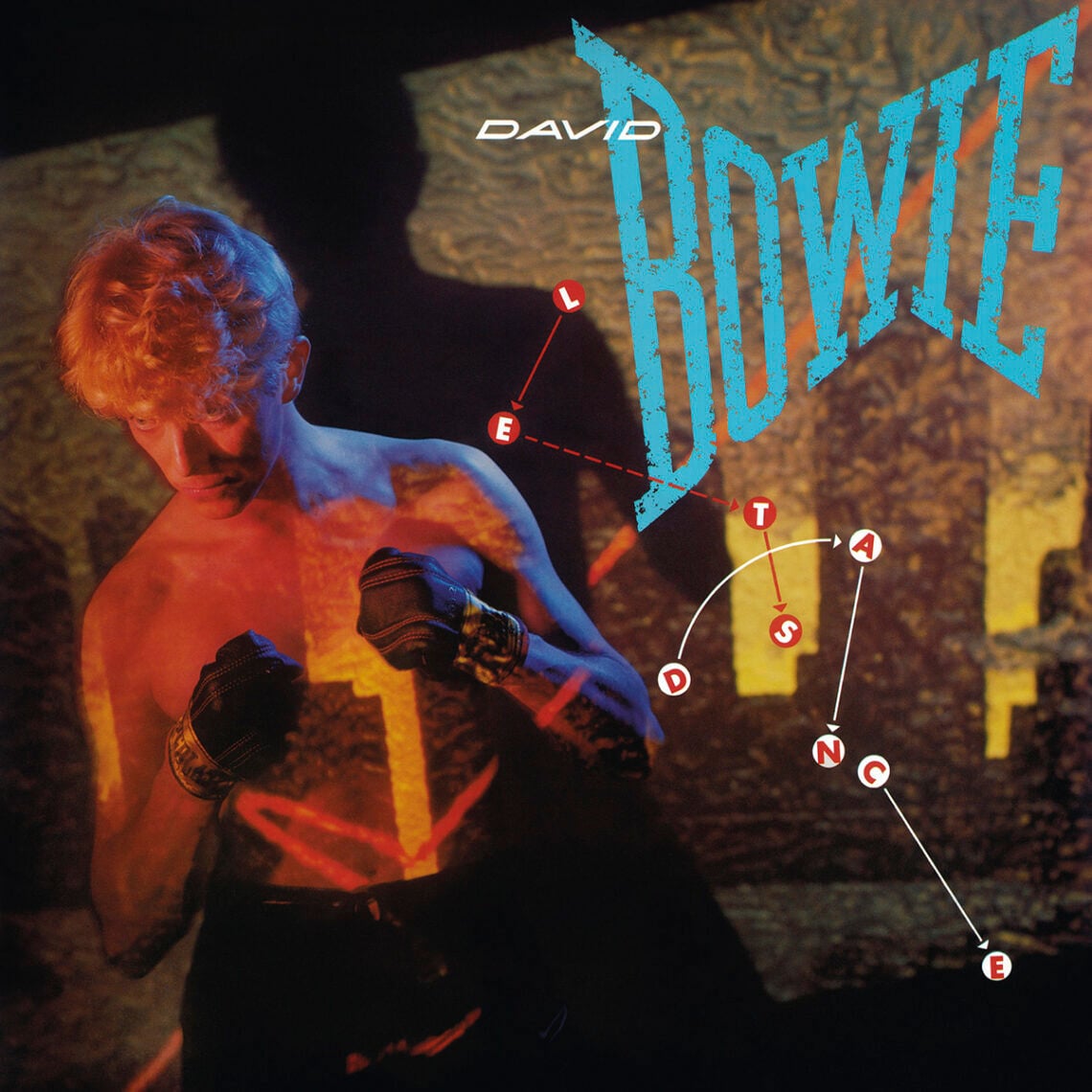
‘Let’s Dance’: the worst decision David Bowie ever made

In 1983, David Bowie had slowly weaned himself off the Berlin era and was ready to start anew, which meant hitting the big time.
For all that Bowie was viewed in iconoclastic prisms, the often overlooked factor that made him this way was dominantly the fact that he was permanently enigmatic and elusive. The length of his career was a constant dip and dive into the light and back into the shadows, cultivating an excited fanbase in doing so, eager to chase down his every move.
But by the same token, this is precisely what made his moves to create Let’s Dance so strange, in the context of everything else he ever was. Suddenly, the Starman found himself in the prime of the charts, a space he would never normally occupy with his singles, and he was the definition of an ‘80s commercial king.
Of course, this could never be a suggestion that Let’s Dance, in itself, was a misjudged step in the road. The sheer timelessness of the album’s first side alone, consisting of ‘Modern Love’, ‘China Girl’, ‘Let’s Dance’, and ‘Without You’ back to back, is testament to the greatness of its pop power, and the enduring hits that would last Bowie the rest of his lifetime.
Yet therein somewhat also lay the problem. Bowie barely wanted anything to last him perhaps longer than a few years at a time; bloody Ziggy Stardust, undoubtedly his most iconic persona, faced the chopping block after only one album. The concept of having a longstanding hit was not only foreign but also a little fear-inducing.

The type of numbers that Let’s Dance left in its wake, to the tune of 10.1million sales and weeks spent at the top of the charts, was inevitably something that many artists would dream of and attempt to capitalise on, but it had quite the opposite effect on our favourite peripatetic rock star. It plunged him into an absolute state of disarray, quite frankly.
In a lot of ways, the album was essentially a rod for his own back, since it was only natural that record labels would see that storming success and want to continue on the same trajectory. With most other musicians, that state might have been perfectly agreeable, but they had Bowie to contend with; he was never going to make things easy.


The following double dirge of his next two albums, Tonight and Never Let Me Down, were products he lambasted as a sign of the depths to which Let’s Dance had hellishly driven him in its aftermath. He later told Rolling Stone with regards to the former album, “It didn’t make me feel good. I felt dissatisfied with everything I was doing, and eventually, it started showing in my work”.
He summed the whole issue up by adding, “The next two albums after Let’s Dance showed that my lack of interest in my own work was really becoming transparent”. This is ultimately the argument for the case in a nutshell, that despite the 1983 chart-topper seemingly representing a high point, it was almost like falling off the edge of a cliff in terms of managing its effects.
In this respect, it really does call into question whether Let’s Dance was actually worth it in the first place. Granted, fans enjoy the songs, and it opened Bowie up to a whole new range of audiences to marvel at his artistry, but the shockwaves were so cataclysmic that it almost derailed the rest of his career entirely.
People often cite the disastrous ‘90s outfit of Tin Machine as the lowest point in this downward spiral, but if you look at it in the context of the nuclear bomb that was Let’s Dance, it could actually be reframed as a rebellion. That’s not to say that the music was any good, but the whole point was that it took Bowie a period of simply being weird, without condition, to make him see the light again.
You can’t help but think, if the lights of the pop juggernaut never came calling, or if Bowie never became so close to Nile Rodgers, or any other links in that chain of events, that his career may not have teetered on the brink of oblivion during that time as much as it did. Of course, it would be hard to picture his back catalogue without it, but it certainly gets the cogs of hindsight turning.
It’s difficult to definitively know whether Bowie himself looked back on Let’s Dance and viewed it as a catalyst of contempt or creative crucifixion, but whatever the case, you can’t listen to those songs now without an ominous sense of foreboding, as if he were dancing himself all the way into obsolescence.
