


Let your heroes die: Allowing AI to aid grief is an insult to those you mourn

Like so many things in music, this all started with The Beatles.
People will get mad at me for saying it, but all the AI abominations that are currently plaguing the musical space were effectively given the green light the moment The Beatles made ‘Now and Then’. The positive reception that the song received always baffled me. Yes, it sounds great, but it shouldn’t exist.
Artificial intelligence, by its very nature, doesn’t belong anywhere near the creative world. The reasons why we listen to music may vary, as we have go-to songs that can make us laugh, cry, and all things in between, but the factor that connects this spectrum of emotion is the human experience. Music acknowledges emotions that we might otherwise keep to ourselves, and that’s why, in order to work effectively, every single aspect of it needs to come from a human.
Speaking specifically of love, sociologist Thomas J Scheff explains in his book, What’s Love Got to Do with It?: Emotions and Relationships in Popular Songs, why we connect with music so well when we’re smitten.
“In [many] years of teaching college students,” he wrote, “I couldn’t help but notice that for many of them, popular songs held a special meaning, as they did to me when I was their age…”
Scheff continued, “Popular love lyrics present a picture of an imagined social-emotional world, and modern societies tend to ignore this world. Since modern societies are highly individualistic, the nature of relationships usually takes a backseat. Modern societies focus on the self-reliant individual.”
Here, he speaks specifically of love, but his logic applies to a lot more than that. No matter how open a person we might be, the majority of our lives are spent in our own head, and so the moment you have a song which seems to force its way in there and resonate with what were once isolated thoughts, you latch onto it with everything you have.
The beauty of music is in humans who have never met finding comfort in one another through rhythm and melody, and the moment you remove the human element from the creation of music, you are undermining the art form in its entirety. This is why The Beatles should have never used AI in the creation of their song ‘Now and Then’.
The justification that the majority of music lovers used when listening to the song was that the band’s use of AI was fairly minimal, as it was only adopted to isolate John Lennon’s previously recorded vocals and recreate them. That rationale may be fair, but as every societal construct will tell you, the slippery slope of what’s right and what’s wrong is difficult to stop yourself on the moment you start falling down it.
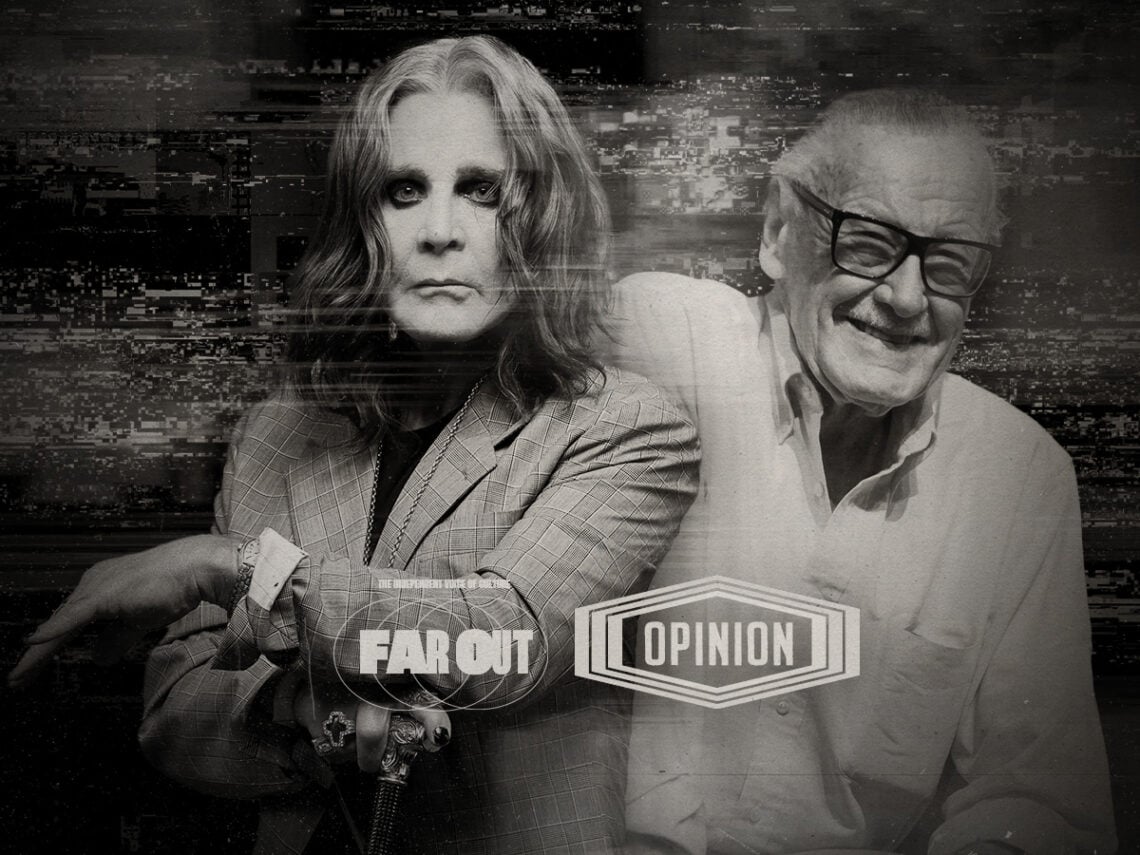
We justified this use of AI because, for a brief moment, our heroes were still alive, and since the release of that track, the means by which people continue to try and honour the memory of their heroes is becoming more and more disturbing. From Rod Stewart using AI footage of musicians who have been and gone, taking selfies at one of his gigs, to the Osbourne family confirming they will be bringing the ‘Prince of Darkness’ back to life as an AI hologram, it seems appropriate to emphasise something which I always thought was obvious: you need to let your heroes die.
“You know what they never tell you about legends? They outlive the page,” were the words of an AI-generated Stan Lee, the founder of Marvel Comics. Yes, the AI curse has even reached your favourite superhero writer, as a deal was struck with ElevenLabs, which gave them permission to add his voice and likeness to their marketplace. It means that despite passing away in 2018, people are still going to be able to imagine he’s here, as everything about him is recreated using tech.
The same thing is happening to Black Sabbath frontman, Ozzy Osbourne, who hasn’t even been dead a year, and already his family have teamed up with a company called Hyperreal, which will bring back to life a digital version of the singer. Sharon Osbourne seemed particularly excited by the news, as if what they’re creating isn’t a disgrace to the legacy of one of the biggest musical icons of all time.

“You can ask Ozzy anything, and he will answer you in his own voice, and the answers will be what Ozzy would have said,” she said, as if promoting a Tamagotchi, “We’re going to take it all around the world. People can talk to him, and he will talk back.”
Jack Osbourne is also excited by the news, adding, “It’s kind of scary how it’s really very accurate. He will exist digitally as himself for as long as we have computers. Technology has come such a long way to where it’s almost drag and drop.”
How don’t any of them see that this is an insult to both the legacy of these legends and the people who they moved when they were alive? The reason why their deaths were so devastating to so many is that they had managed to tap into the human psyche in an unprecedented way: Stan Lee made outcasts feel like they could be heroes, while Osbourne showed you that you didn’t have to fit the mainstream mould in order to be accepted.
Their minds were beautiful things, and they broke through different barriers when creating art, all of which helped them shape the artistic world around them, and helped people essentially feel less alone. The idea that you can boil their essence down into code and display it as a hologram is an insult to both them and those who love and were touched by them
Ozzy Osbourne and Stan Lee are already going to live forever, because their work exists in those they inspired and what they are now doing with their lives. Whether that connection is easy to see, because that person went on to make music or write comics, or whether it’s more implied because they gave someone confidence to be themselves, we don’t need AI holograms to remain connected with the work of such great artists.
You ruin this attachment to their work when you don’t just let them die, and they stop being legends of their craft, rather reduced to being fairground attractions and assets, completely soulless. If we don’t get over those who have come before, we can’t pave the way for other, newer people to do great things in novel ways, so if you really want to honour your heroes, keep their memories intact and ensure their legacies live on in an authentic way, the solution is simple: when it’s time for them to die, let them, and may they rest in peace.
