


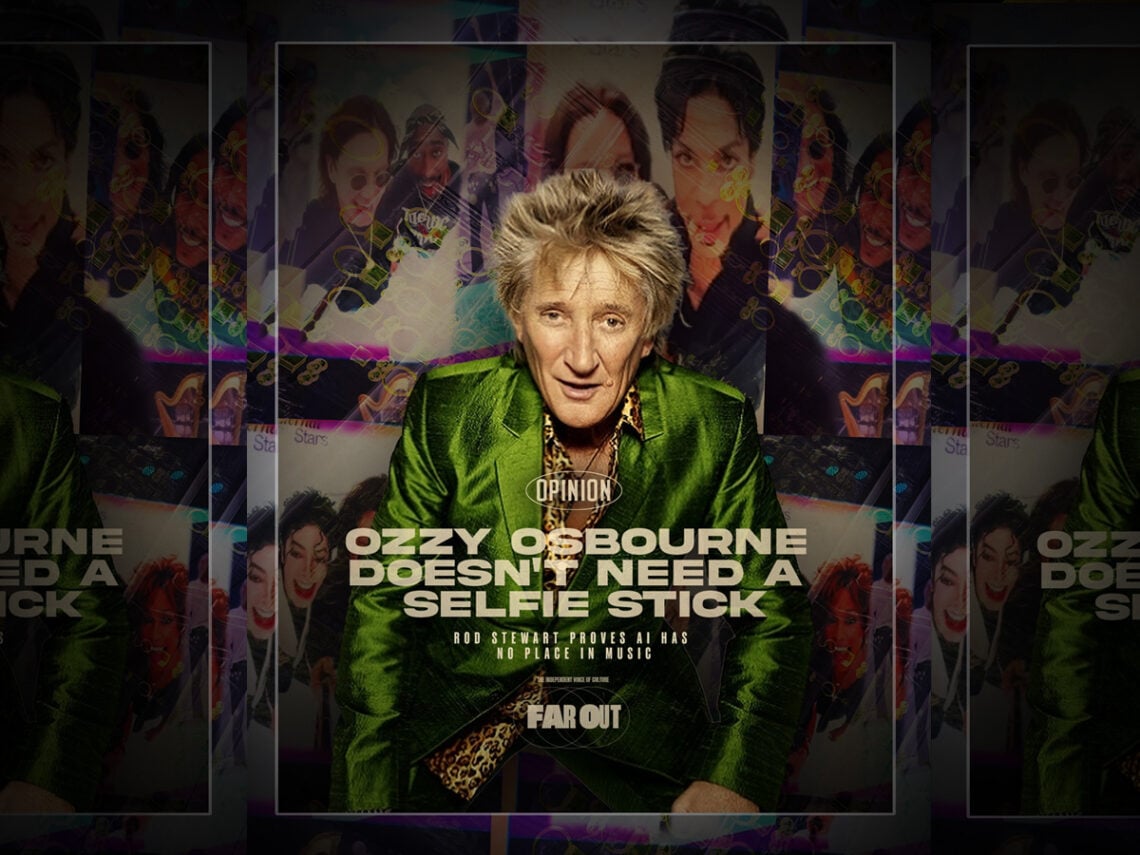
Ozzy Osbourne doesn’t need a selfie stick: Rod Stewart proves AI has no place in music

When Ozzy Osbourne died, it didn’t surprise anyone to see that a flood of tributes came in wishing the ‘Prince of Darkness’ and his family the very best. Given how much Osbourne impacted music and the people who listen to it, this was to be expected.
With Ozzy Osbourne, it wasn’t just that he made good music, but he and his Black Sabbath bandmates were responsible for starting a revolution. They were the band that built the foundation of heavy metal, which means that every branch of alternative and weird music stems back to those four blokes from Birmingham.
The loss of an artist who carried such magnitude impacts people on a profoundly deep level. People don’t just quite like their music, but their music has been a massive part of their lives, equally, some of their best memories, the friends they’ve made and the way that they live their lives have stemmed from this artist who means a great deal to them.
The next time a celebrity dies who you may not have been a huge fan of, and you are rolling your eyes as people share tributes on social media, just remember how much of an obscene impact those celebrities can have on people. We mourn the musicians and artists we love as though they are friends and family, because on some level, they are.
I’ll be keeping all of this in mind when I progress to talk about Rod Stewart and the strange tribute that he shared at a recent show to Ozzy Osbourne and a number of other musicians who have sadly passed away. Full disclosure: it’s weird. Additionally, though, I think it’s equally a reflection of people’s attitude towards AI in art as well, but before dissecting all of that, it’s worth clarifying that it probably came from a good place.
No one understands the profound power that musicians can have on people quite like other musicians. They haven’t just had positive memories established because of the power of music, but they’ve also started their own career because of the power of said music. Rod Stewart wouldn’t be doing the job that he’s doing without being influenced by the musicians that he equally adores. Subsequently, when Osbourne passed away, he saw it appropriate to put together a tribute for him. What’s wrong with that?
Well, the problem comes when you look at the nature of the tribute itself. While most other musicians would opt to cover one of Osbourne’s songs or share a story about the singer in between tracks before dedicating a number to him, Rod Stewart decided to share an AI-generated video which showed Ozzy Osbourne posing for selfies with other musicians who are no longer with us.
The Prince of Darkness bizarrely posed with the likes of Kurt Cobain, Michael Jackson and XXXTentacion as they held selfie sticks and smiled in a place that resembled heaven. The sentiment is nice, but the video came across as creepy, strange, and generally in poor taste.
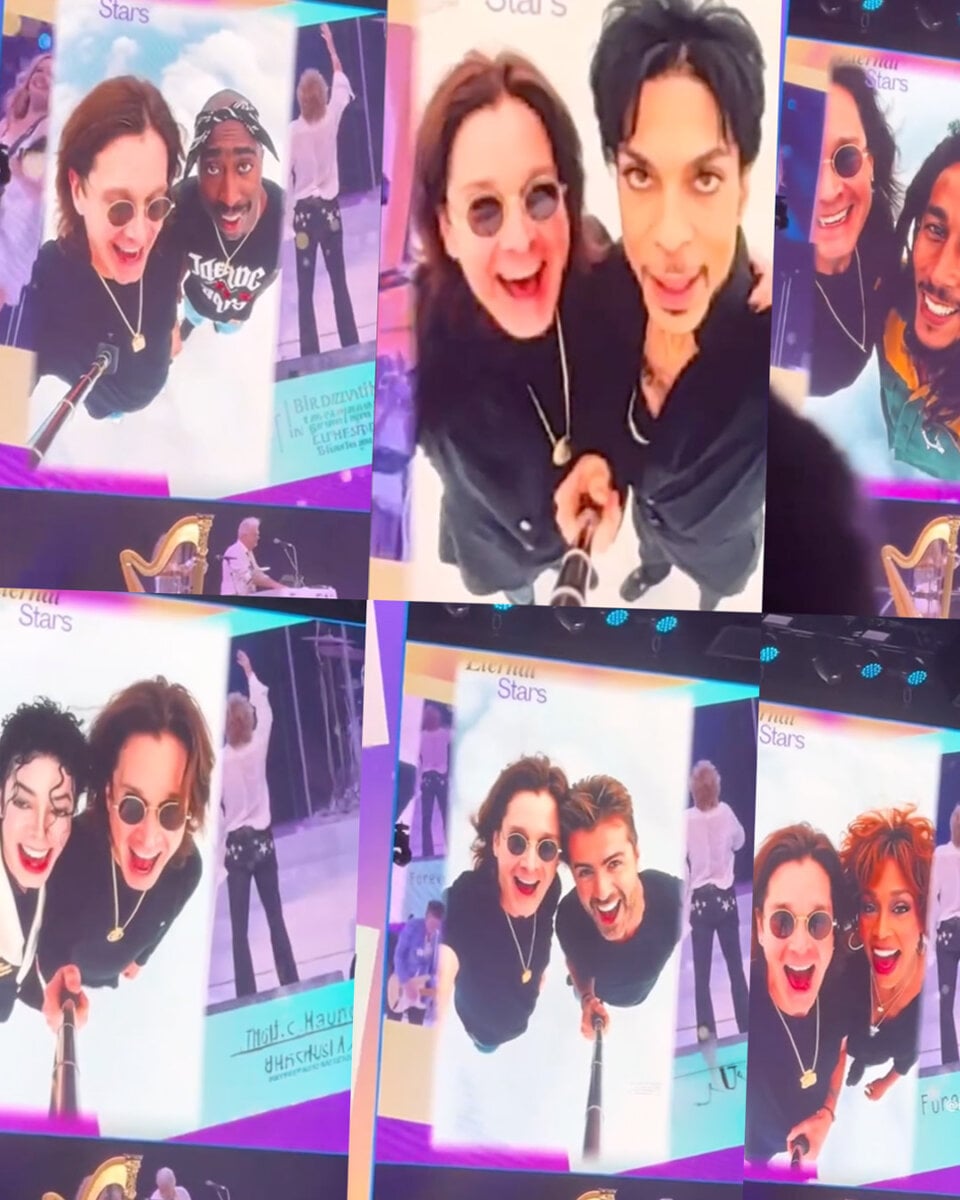
With this video, Rod Stewart indirectly proves that AI has no place in music, or in any of the arts, for that matter. The reason is because of the knee-jerk reaction we experience when watching this strange PowerPoint presentation of the deceased. While we can recognise the sentiment behind it, it almost triggers an uncanny valley feeling in the viewer, who understands the message but is put off by its almost humanlike quality. It’s so close to what we would recognise as art, but the moment it is recognisable as AI-generated, our spine shivers, and it rubs us the wrong way, regardless of the reasoning behind said AI-generated content.
If you lost a loved one and a friend gave you a card to say commiserations, you would thank them for it. If you then opened the card and saw that the inside text was quite clearly the result of a prompt from ChatGPT, the card loses meaning somewhat. Equally, suppose a musician wants to implement a killer guitar solo into the bridge of a song and uses AI to do it, while you might still recognise the artistry in being able to pick a section of a song that needs a solo, the fact that it wasn’t created by a person makes that artistry paper thing.
We mourn Ozzy Osbourne because of the connection we felt with him and his music. We mourn all of the dead artists on that presentation because of how they and their music made us feel. The moment something steps in that severs that human connection, we are unable to connect with that music in the same way. Rod Stewart should understand this, but he seems to have been drawn in by the unrelenting allure of AI.
The concept of artificial intelligence is something that has been a twinkle in technology’s eye for a long time, but only recently has that twinkle grown into a beacon of light for people to genuinely follow. Upon reading this article, you are probably picking out words and phrases and questioning whether or not a computer wrote them. Don’t worry about it, I’m not offended, but that wouldn’t have even crossed your mind a couple of years ago. AI has skyrocketed from an idea confined to sci-fi to a very real part of our lives, and we’re still working out how it fits into the grand scheme of things.
This means that there will be a process of trial and error, and Stewart has very much found himself on the error side of the equation. Like many people who are only just coming to terms with AI’s potential, Stewart has felt compelled to use it in the same way a child feels compelled to drag their parents to the nearest toy store and buy whatever game is popular. This results in things like that presentation, which came from a genuine place but looked strange and alienated the audience.
I’m not one of those people who scorn AI and say that it has no place anywhere. Its potential is massive, and it can have a range of benefits. However, when we talk about the arts, which require human connection in order to be effective, AI has no place, and in his excitement to use it, Rod Stewart seems to have proven that.
The be-all and end-all is that no one will mourn a computer program shutting down in the same way they would mourn Ozzy Osbourne’s passing, and the ‘Prince of Darkness’ has no business holding a selfie stick.
