


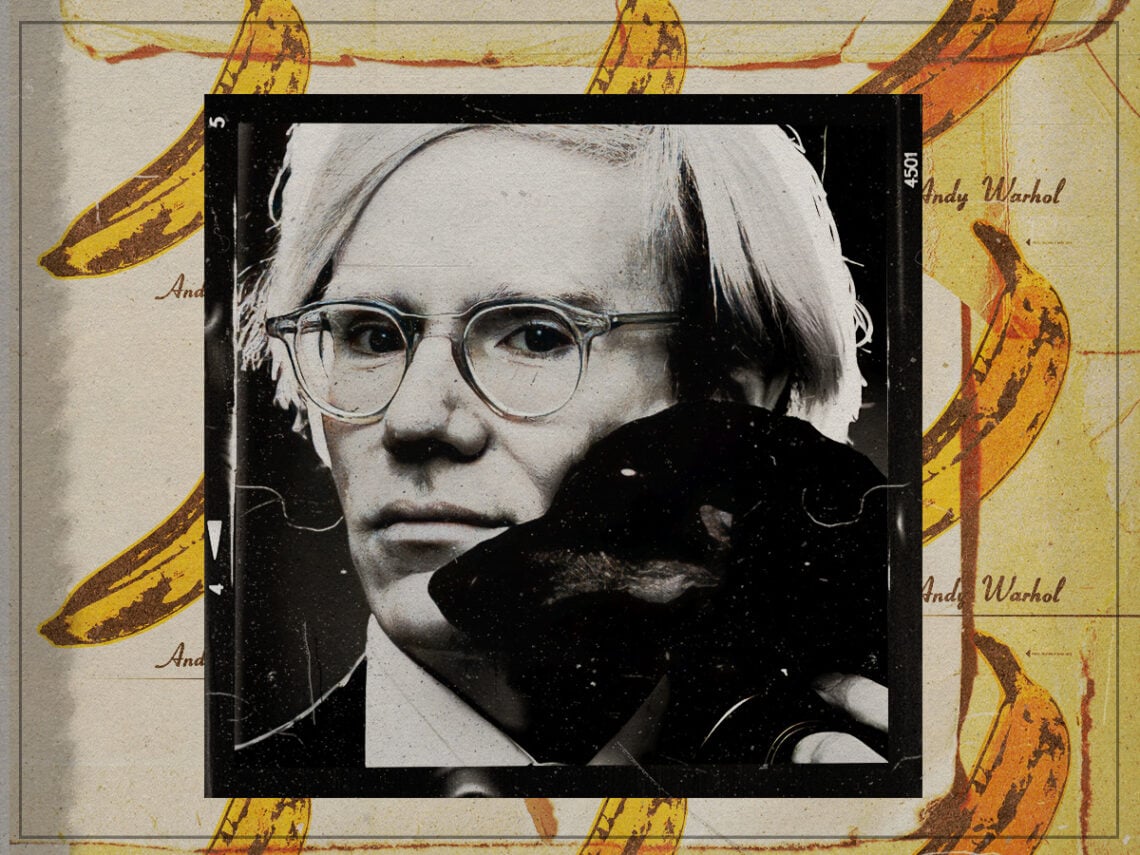
The legacy of Andy Warhol: mundanity as an artistic exploration of human nature

One of the most renowned quotes attributed to Andy Warhol that undoubtedly emerges after a simple search reads: “Making money is art and working is art and good business is the best art”. Infamously fixated on commerce and wealth, Warhol constructed a realm tailored to his advantage. Yet, beneath the veneer of materialism lay a figure whose creative prowess was completely infinite.
Leading the charge in the pop art movement, Warhol’s creations transformed the ordinary into extraordinary spectacles, igniting extensive discourse on the essence of art. His groundbreaking ideas regarding the parameters of fine art blurred the distinction between commercialism and artistic expression, presenting everyday items as though they were masterpieces of ingenuity.
Rooted in consumerism, Warhol’s art encapsulated quintessentially American themes such as wealth, celebrity, domestic life, and politics. This enduring relevance stems from his paintings and silk-screen prints serving as a timeless reflection of American society. This combined social and monetary aspects prevalent in the country at the time, alongside the burgeoning capitalist culture that categorised mass consumption.
Many artists strive to excel in their craft, often gaining recognition after a single defining piece resonates with a select group of industry critics. However, for Warhol, this drive was instilled in him from a young age. Growing up in Pennsylvania, Warhol was exposed to a blend of artistic sensibility and immigrant experience. Raised in a working-class household by Slovakian immigrant parents, Warhol’s early exposure to the vibrant tapestry of urban life would later inform his unique artistic vision.
After studying commercial art at the Carnegie Institute of Technology, Warhol embarked on a successful career as a commercial illustrator in New York City. During this time, he began experimenting with techniques that would come to define his distinctive style. Drawing inspiration from the burgeoning consumer culture of post-war America, Warhol sought to elevate everyday objects and images to the realm of high art.
In 1962, Warhol debuted his iconic Campbell’s Soup Cans series, a groundbreaking exploration of mass production and consumerism. By elevating the mundane to the status of art, Warhol challenged conventional notions of artistic value and redefined the art world’s boundaries. The series catapulted Warhol to fame and established him as a leading figure in the burgeoning pop art movement.
“What’s great about this country is that America started the tradition where the richest consumers buy essentially the same things as the poorest,” Warhol once said, demonstrating his interest in the behavioural aspects of consumer culture and how people from different backgrounds connect with objects. Even through his 1960s “screen tests”, Warhol examined the relationship between his human subjects and the camera, enjoying the different ways people responded to being filmed in a considerably awkward fashion.
Over time, these tests revealed the ways in which a person’s personality could shine through on screen despite the constraints of the format. Warhol conducted these experiments in his New York Factory, inviting numerous famous faces to participate. Many were eager to join, considering it a flattering invitation. Among the notable participants were Bob Dylan, Lou Reed, Nico, and the surrealist artist Salvador Dalí.
Dalí’s participation was particularly memorable for Warhol. By this point, Warhol should have been accustomed to the various responses elicited by such intense setups. However, Dalí took complete control of the process, defying many of the established rules. He recorded with the camera upside down and even disappeared from the frame entirely midway through the test, leaving Warhol astonished by his unconventional approach. Even in the search for mundanity, Warhol could still be surprised.
To many, Warhol’s creations were nothing more than mere pretence. Why an artist would feel the need to print multiple, varying images of Marilyn Monroe might be as confusing as why the same artist might craft a car crash scene adorned with silver paint. Warhol’s work with The Velvet Underground might have been his most famous, and yet he was still criticised for creating art that didn’t have much to say. Perhaps it was his fascination with advertising that confused some, with his art appearing as an odd, uncanny valley aesthetic combining marketing and creativity in a way that distracted from its beauty.
In a sense, it’s entirely logical. Warhol famously professed his affection for “boring things”, and while his album artwork introduced a distinct conversation about the intersection of music and erotica with art, this sentiment was a significant part of his allure. He had a knack for taking the ordinary and transforming it into something extraordinary, challenging consumers to reconsider their perceptions. In his view, at least, if you didn’t appreciate it, you simply didn’t grasp its depth.
