


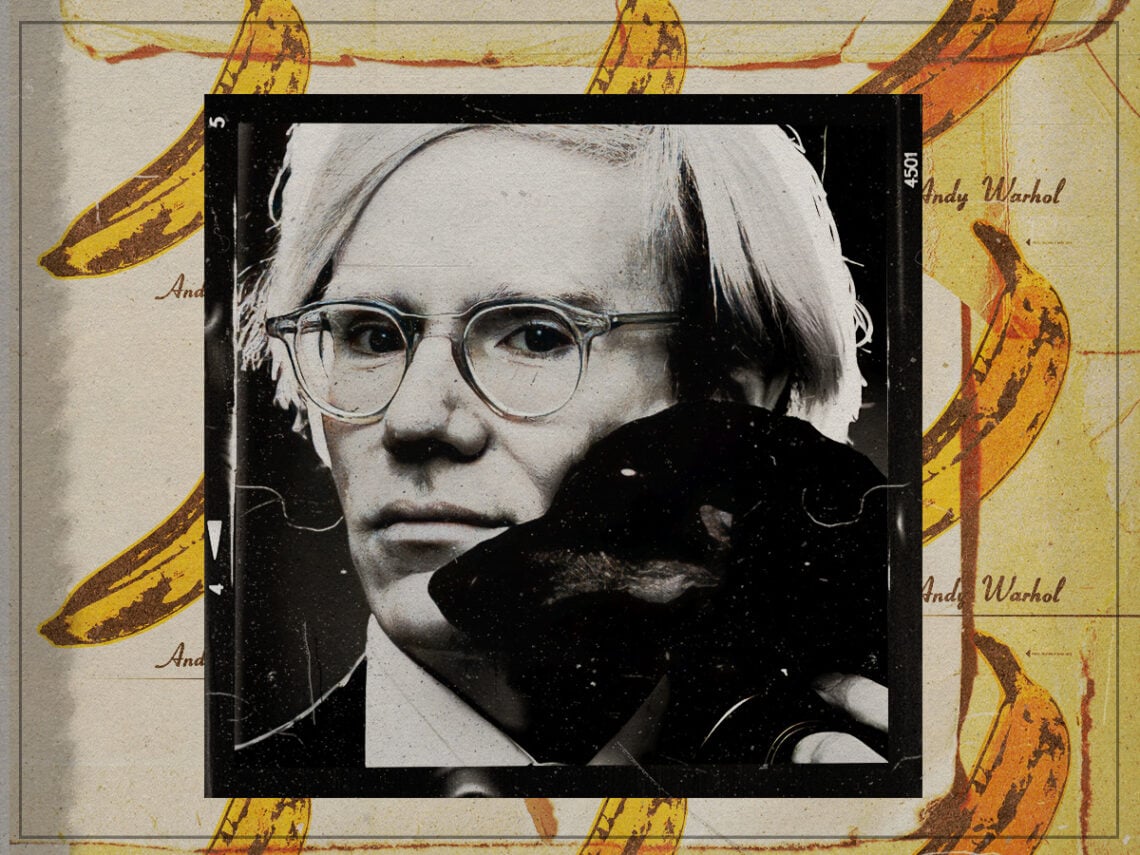
The story behind Andy Warhol’s banana

“Taste the whip, in love not given lightly,” instructed Lou Reed in ‘Venus In Furs’. Appearing on The Velvet Underground & Nico, the album was laced with subversive themes like BDSM and drug use and needed cover art that spoke to the erotic tone of Lou Reed’s vocals. Andy Warhol, the Velvet Underground manager and pop artist, was charged with creating it.
Warhol had long made a spectacle of the mundane, somehow managing to elevate soup cans until they were considered high art reproductions that rallied against capitalism. A former commercial artist, he borrowed heavily from the shiny veneer of advertising; his works always inherently linked to consumerism right down to the two-dimensional finish. That could be applied to people, as it was in 1962’s Marilyn Diptych or even Coca-Cola bottles. But the Velvet Underground were selling something else entirely on their 1967 album: sex and submission.
Warhol’s approach to the album art abandoned the conceptual nature his pop art usually took, instead opting for heavy innuendo. It was minimal, as pop art was, a simple banana on a white backdrop, a winking reference to the sexual themes of the album. Early on in its release, copies were invited listeners to “peel slowly and see”, and after they peeled the vibrant yellow banana skin, a fleshy-toned one was revealed.
Warhol, who once proclaimed to “love boring things”, somehow conjured one of the most iconic artworks ever to grace an album out of a still of fruit, imbuing it with a daring sense of sexuality. But that was so typical of his style, making the mundane intriguing by flattening its likeness into cartoonish depths. If it had been a still life of a banana done by a realist painter, all the innuendo would be there, but none of the wit. It was his trademark style and one of the first to truly meld art and pop culture. As Lou Reed once pointed out: “The banana actually made it into an erotic art show” once.
His work encouraged tangible interactions with the record, and his mere association with it was seen as a win by the record company – who gladly footed the bill on the stickers covering albums because Warhol was such a cult figure. His cover art seemed to surpass the success of the album, which didn’t do as well as was hoped commercially, making only $22,000 in royalties from 1967 to ’69.
But just as the music did, Warhol’s artwork remained a testament to the brilliance of that album. Throughout his art career, Warhol seemed to possess a gift from premonition. Decades before the social media age took hold, he popularised the term “15 minutes of fame”, years before the phrase even had any cultural relevancy.
On a similar note, the cover art, while not entirely appreciated by audiences upon release, is widely considered one of the most iconic of all time. He would go on to recreate its sexual imagery on The Rolling Stones’s 1971 album, Sticky Fingers. It was strikingly similar, complete with a suggestive bulge and a zipper that could be pulled to reveal underwear that mirrored the banana peel. This time, though, the world had caught up to Warhol’s genius, and he was nominated for a Grammy for it.
