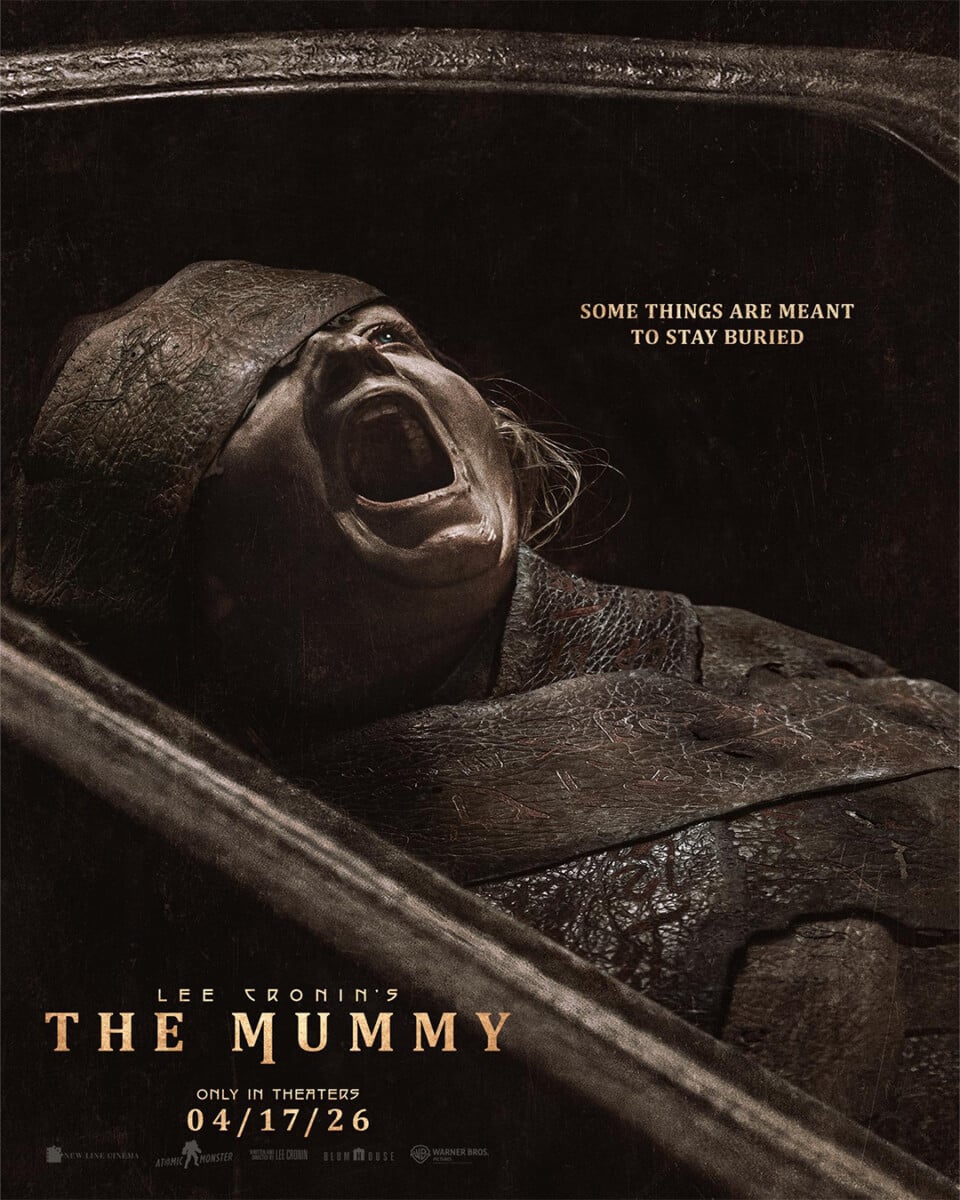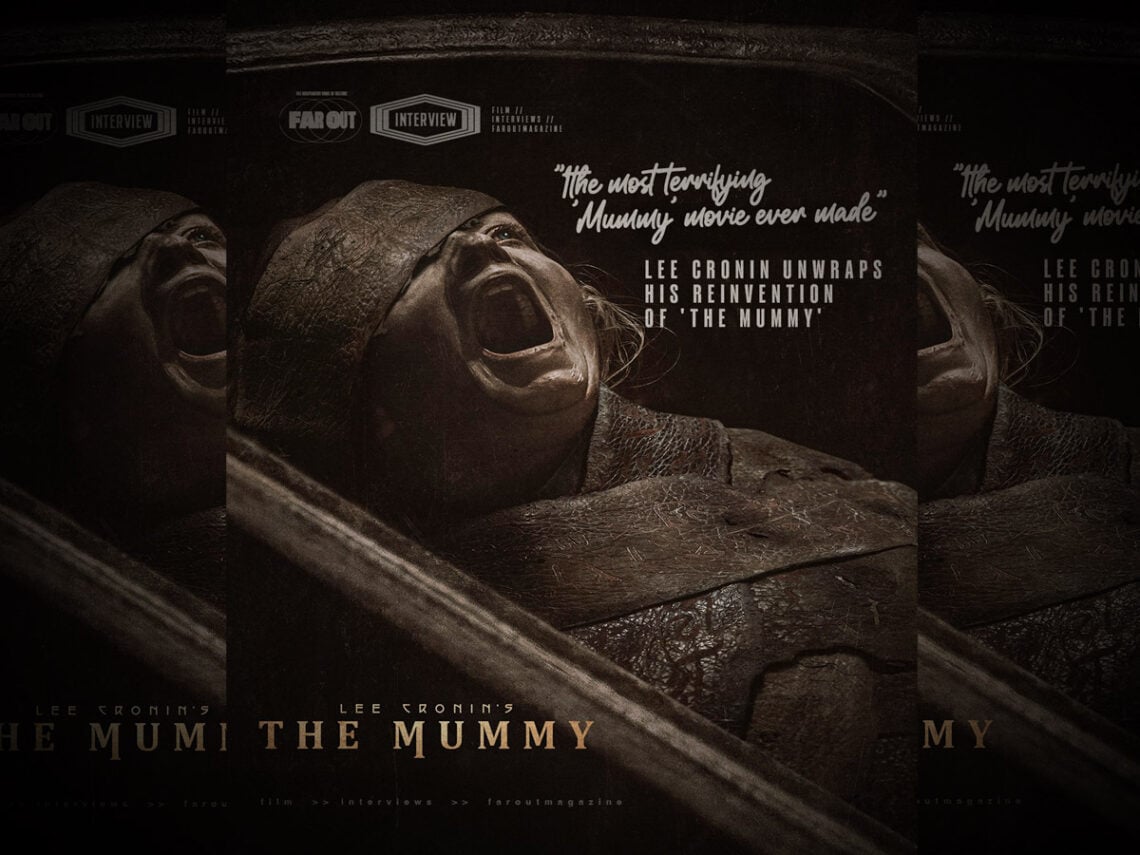
“Hopefully, what we’ve created is the most terrifying ‘Mummy’ movie ever made”: Lee Cronin unwraps his reinvention of ‘The Mummy’

Almost a century after Boris Karloff first shuffled onto the scene in 1932, The Mummy remains one of the most recognisable entities in fantasy cinema, with Lee Cronin the latest to apply a fresh coat of paint to the concept, or bandages, to continue the theme.
However, this isn’t your typical Mummy movie. Yes, it features Egyptian mythology, curses, sarcophagi, and all the other trappings that audiences have come to expect, but it’s been a long time since the titular creature served as the focal point of an all-out, no-holds-barred, hardcore horror flick.
The most recent iterations of the concept were big, bombastic, action-packed blockbusters, but as you’d expect from the filmmaker behind the unnerving supernatural story The Hole in the Ground and the blood-soaked legacy sequel Evil Dead Rise, Lee Cronin’s The Mummy, to use its full Sunday name, has its sights set squarely on scaring the absolute shit out of the audience when it releases on April 17th, 2026.
The writer and director has said in the past that Evil Dead was a franchise that he’d always dreamed of taking a crack at, and having now moved on to another legendary horror property that’s over twice as old in Hollywood terms and with even more history, it was worth asking if he’d felt the same way about The Mummy.
“It’s a great first question, because it gets right to the core of many things around this movie,” Cronin opined. “It was an organic journey. It was not a burning desire, but after having made Evil Dead and having always harboured ambitions to make an Evil Dead movie, I wanted, and part of why I didn’t do an Evil Dead sequel, I wanted my next movie to bring me step out of my comfort zone in some way, to explore some lore that I was maybe a little bit less familiar with.”
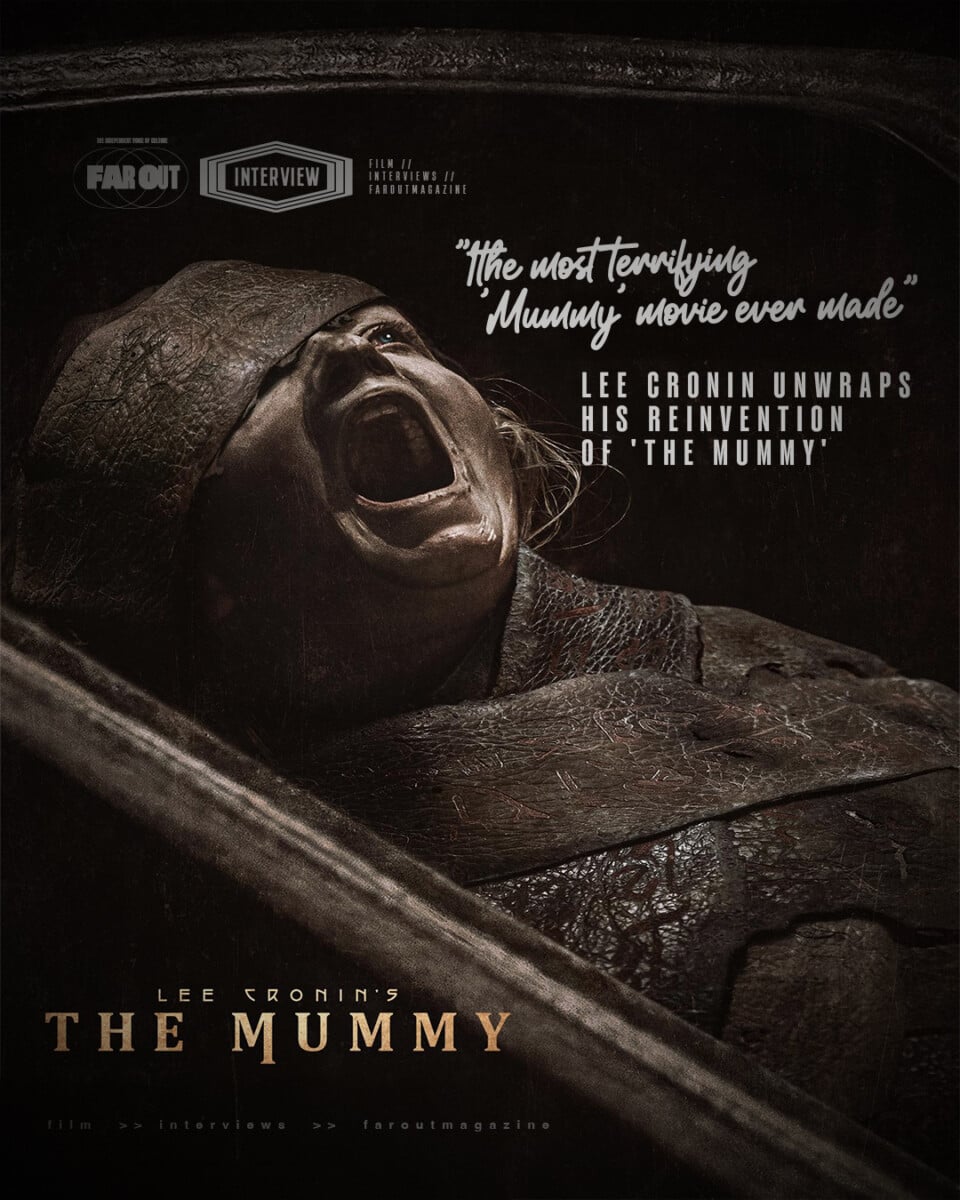
There are no fewer than two Evil Dead Rise sequels happening, in fact, with Sébastien Vaniček’s Evil Dead Burn arriving this summer and Francis Galluppi’s Evil Dead Wrath currently in production, but Cronin fancied a change of pace. After a conversation with a friend, producer, and fellow horror aficionado, he settled on injecting new life into one of pop culture’s most famous undead figures.
“As a kid, I was big into Egyptology, and still maintain that interest, but I just wanted to find a different route through,” he explained. “And it kind of was organic, in the sense that it started with a conversation between myself and James Wan, and we were just discussing different things, like, ‘You know, what do you think about this?’ ‘And what do you think about that?’ And he’s like, ‘What about The Mummy? What do you think?’ And as soon as I say that, I go, ‘Hmm, maybe I could.'”
Wan’s suggestion was a simple one: “What about a really scary Mummy movie?” The gears started turning in Cronin’s head, and a couple of weeks later, he pitched the Conjuring creator and Atomic Monster head honcho “a really cool angle,” and then they were pretty much off to the races.
“It was actually kind of that simple,” Cronin conceded, before harking back to his previous feature. “Like, with Evil Dead, I had many frames of reference, and I want to bring my own fresh take on it, and modernise it and bring it out there for a new audience. And we succeeded in doing that”.
“With The Mummy, I was more interested in telling quite a different story.”
Lee Cronin
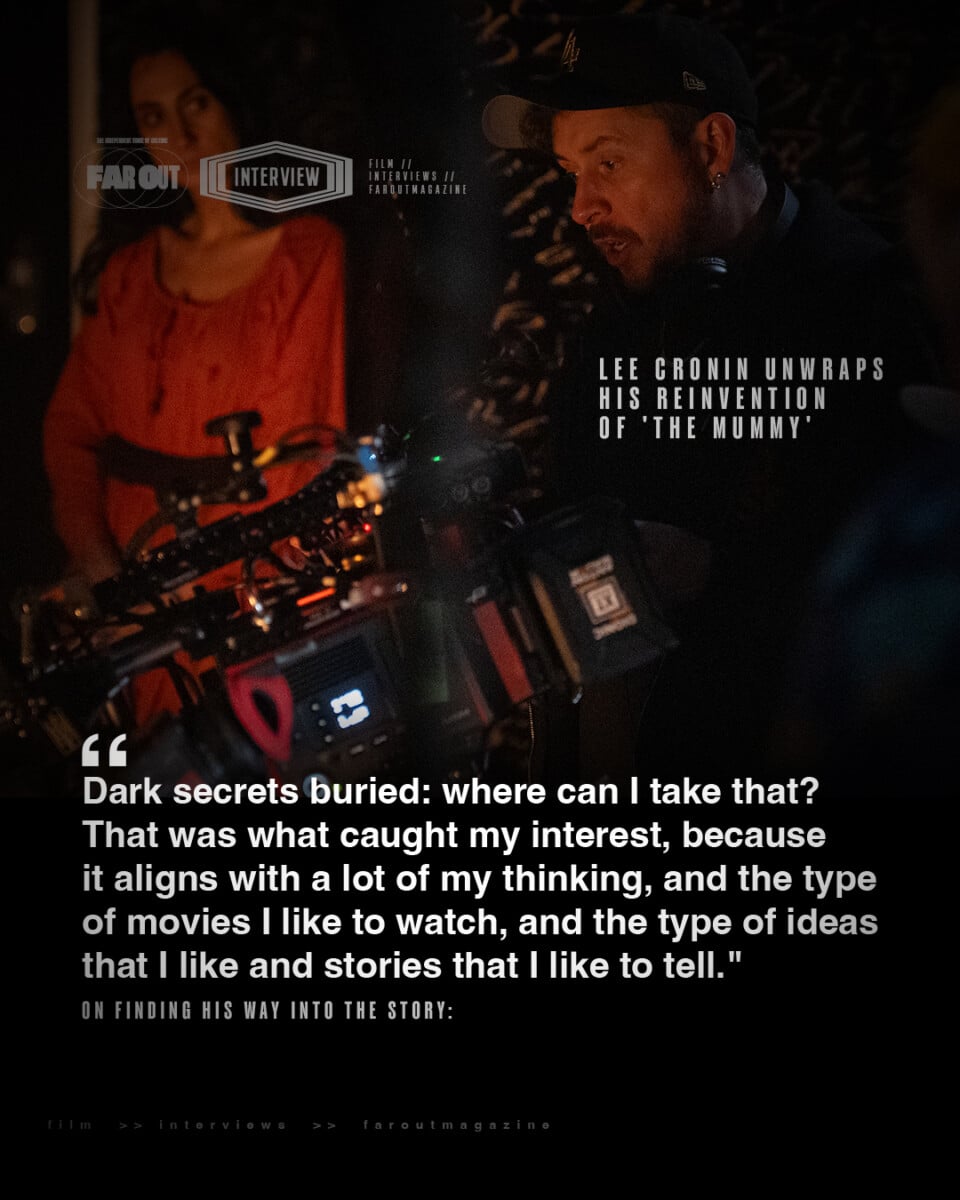
There have been plenty of Mummy movies, more than a dozen of them, but he wasn’t interested in referencing any of them. Instead, he was more drawn to three words that informed his entire approach: “Dark secrets buried: where can I take that? That was what caught my interest, because it aligns with a lot of my thinking, and the type of movies I like to watch, and the type of ideas that I like and stories that I like to tell.”
When the average modern moviegoer thinks of The Mummy, the first thing that will come to mind is either Brendan Fraser or Tom Cruise, for better or worse. It’s become a running gag on social media that the former is not in Lee Cronin’s The Mummy, while the latter’s ill-fated attempt proved to be such a disaster that it killed the planned Dark Universe at the first hurdle.
In a way, though, that could be beneficial for Cronin. After all, the most recent iterations have been defined by their action sequences and big-budget sheen, whereas his version is almost the polar opposite in every way, and anyone who’s seen the trailer should have a decent idea that they won’t be getting explosions, chase scenes, and well-timed quips, or at least you’d hope so.
“I think it’s always great to have a point of difference when you’re trying to tell a story and put a movie out there, especially in the current times where we’re vying for people’s attention, and that was, again, part of the attraction, which was to subvert expectation,” Cronin acknowledged. “I think it’s always really fun as well.”
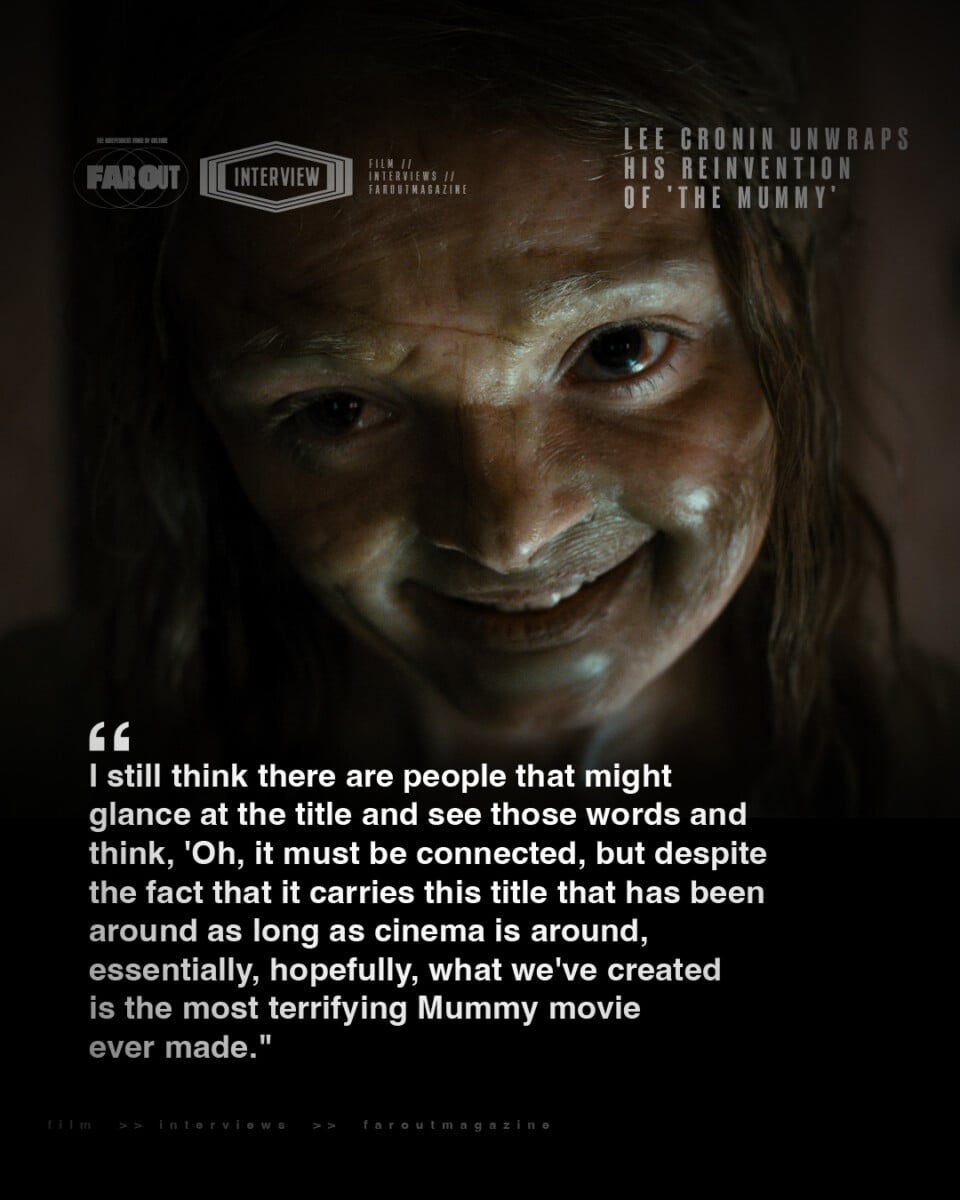
Still, he’s not taking it for granted that everyone will understand that his Mummy is its own thing. “I still think there are people that might glance at the title and see those words and think, ‘Oh, it must be connected,'” he suggested, and he’s probably right. “But despite the fact that it carries this title that has been around as long as cinema is around, essentially, hopefully, what we’ve created is the most terrifying Mummy movie ever made.”
At the end of the day, Cronin is telling a family story. Obviously, it’s not a conventional one, with Jack Reynor and Laia Costa’s Charlie and Larissa Cannon still reeling from their daughter’s disappearance eight years earlier, when she vanished without a trace in the desert. However, Natalie Grace’s Katie returns, only for her parents to realise that she’s come back as something very different, and altogether more haunting.
It’s a unique approach to the accepted mythos, in that the plot hinges on the mystery of how this everyday girl was mummified and why, playing with the preconceived notions that the process was only reserved for those at the upper ends of the Egyptian social hierarchy, providing gaps that Cronin could explore and exploit while remaining true to the mythology that’s baked into The Mummy‘s DNA.
“That is spot on,” he agreed, with Far Out evidently hitting the nail squarely on the head. “Literally, what you just said, there was a conversation I had with one of my development colleagues when I was breaking the story, which was when you say to someone, ‘Think about a mummy’, you think about a pharaoh, a prince, a queen, people in the upper echelons of society.”
Flipping that on its head, the director wanted to focus on a regular person and a regular family, albeit with deep ties to the past. “Within this movie, the story takes place in the now, and also takes place eight years earlier,” he teased. “But those two places we tell this story have a connection to family, heritage, running back 3,000 years, so it still carries that weight of history all the way through.”
“One I love to hammer home was a different reason for mummification, a different reason not to just send you on your merry way into the afterlife with your gold and your cats,” Cronin continued. “And what if there was mummification for a different reason? And I was able to find that gap and create my own lore.”
With that in mind, there are certain obligations that need to be met and boxes that need to be ticked, whether that’s mythological, fantastical, or even narrative, when you’re dealing with something called The Mummy; otherwise, you’re better off calling it something else. It was in between those spaces that Cronin wanted to operate, without deviating too far from the bare bones that make The Mummy what it is.
“I think it’s important that you lean into the pre-ordained language that exists, especially within cinema, but we never made decisions just to take a left-hand turn in any way, shape, or form,” he clarified. “One of the key ones early on was that I knew I wanted to set it in the US.”
The filmmaker was “always attracted to New Mexico,” too, for two unexpected reasons. “I remember when I was watching Breaking Bad and Better Call Saul, I just loved the colour palette in those shows,” Cronin revealed, with Walter White and Saul Goodman providing some unlikely inspiration.
He knew he “wanted to keep it dry and dusty,” which is par for the course with The Mummy, and he knew “we needed to have a sarcophagus,” which, again, is almost obligatory. “We also have a pyramid in the movie,” he added, which is another foregone conclusion, “And I wanted to lean into it being made out of basalt, which is a stone that would have been used when we think of sandstone, or that dusty look.”
“And there’s creepy crawlies,” he said, with particular glee. “I think there’s got to be creepy crawlies in a Mummy movie, but there probably have to be creepy crawlies in a movie that I make as well. I was very aware of those things and the importance of how bindings play a part in a story. And all of these, I don’t know if it’s the right word, ‘tropes’, but just these identifiers.”
Cronin had previously described his film as “one part Poltergeist and one part Seven, but put through my lens,” and as much as Amblin meets David Fincher in a Mummy movie is one hell of an elevator pitch, the trials and tribulations of Cannon family were the anchor that kept the story grounded, even when the supernatural shit begins to hit the fan.
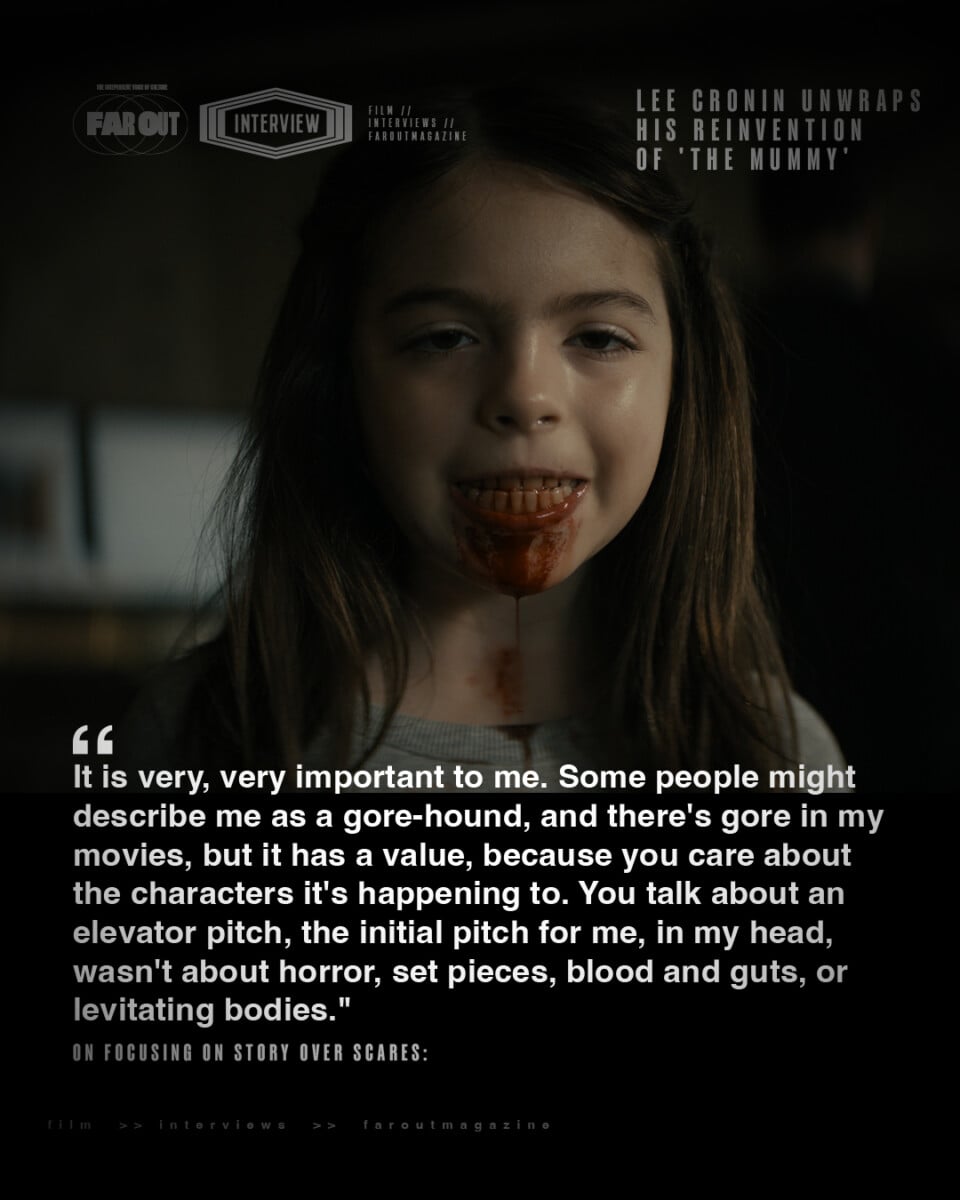
“It is very, very important to me,” he declared. “Some people might describe me as a gore-hound, and there’s gore in my movies, but it has a value, because you care about the characters it’s happening to. You talk about an elevator pitch, the initial pitch for me, in my head, wasn’t about horror, set pieces, blood and guts, or levitating bodies.”
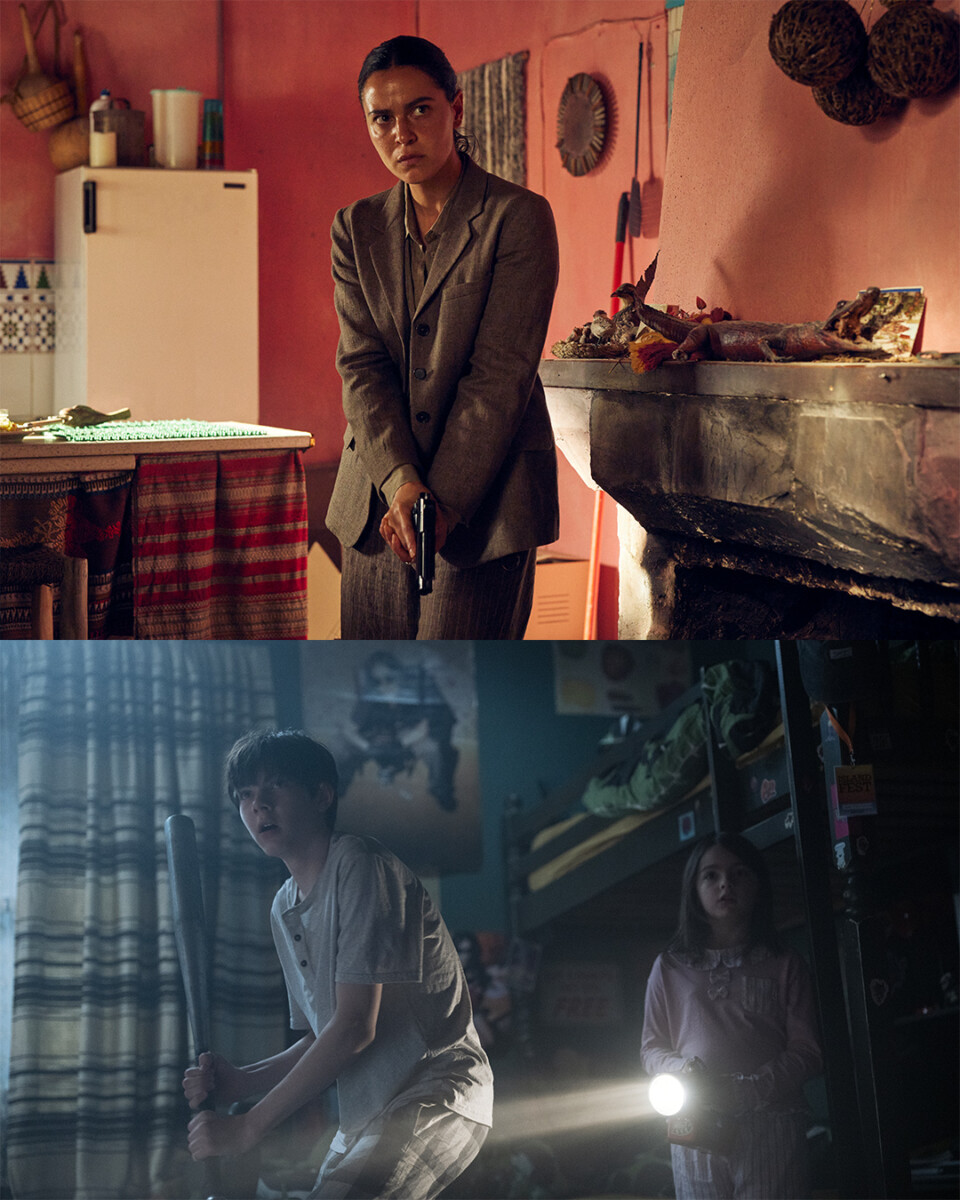
The Mummy has those things, make no mistake, but that wasn’t what drew Cronin in: “What it was about was, imagine you lost a child, and you had this dark hole of grief that existed because you don’t know where they were. And then imagine you got them back, and when you asked the question, ‘Where did you find them?’ And the answer was, ‘Inside a 3,000-year-old sarcophagus.'”
“That was the starting point,” he continued. “What does that do to people? And it leans into the notion of human trafficking, before it becomes a horror movie. Why was she inside this thing? So getting all of that humanity correct is what then gives you the platform to pull those characters into a nightmare. Ultimately, what I’m trying to create is a visual nightmare, a really dark dreamscape for people to get sucked into.”
“If you want to really scare people, you’ve got to identify with real people, and then suck them into this crazy place.”
Lee Cronin
Cronin’s mission statement was simple, then. To that end, he wants The Mummy to be playing to packed houses, full of people lobbing popcorn in the air when at every jump scare, but that wasn’t all.
Through casting, dialogue, and dialect, the filmmaker also wanted to provide a sense of authenticity and historical accuracy, whether that was through utilising multiple different languages onscreen or recruiting Egyptian actors like May Calamaway, May Elghety, and others as part of the cast.
“If you just try and be honest about the authenticity and let that take care of itself by making the call that this is the way you want it to be,” he agreed. “And then when it comes to the spectacle, I think it’s all about that, tick, tick, tick upwards, like you’re on a roller coaster, right? But the authenticity was very important to me, because I just felt like, again, I want everybody to be real. And it was really fun bringing in these incredible Egyptian actors. We’ve got a number of them in the movie.”
That meant that Cronin had to “learn to direct a little bit in Arabic, and also in Spanish,” with The Mummy unfolding in three languages across three timelines. However, he knows who he’s making it for. “When it’s all distilled down, it’s an event movie,” he said. “It’s going on opening weekend, watching in a dark room with lots of people, screaming and shouting. All of the decisions I make are ultimately pointing toward that experience.”
Even if you’d never heard of The Mummy, as far-fetched as it may be, the marketing has made it perfectly clear what’s in store for audiences. Alongside Wan and his Atomic Monster, Jason Blum also produces through his Blumhouse banner, with New Line Cinema reiterating in the trailer that it’s the studio that brought you Zach Cregger’s Weapons. Throw in the director of Evil Dead Rise, and nobody should be under the illusion that the film will be anything other than white-knuckle horror.
On the other side of the coin, rattling off two of the biggest and most successful names in the genre, Cregger’s Academy Award-winning smash hit, and Cronin’s widely acclaimed and box office-busting reinvention of Sam Raimi’s Deadite saga in the same promo will generate sizeable expectations, something that the director was fully aware of and not shying away from.
“I think you have to pay attention to the people you’re working with,” he conceded. “The broader group of people that you’re working with is important, given the opportunity that it is. And I obviously had a great experience with New Line Cinema on Evil Dead Rise, and with the wider Warner Bros family, and obviously have a very strong working relationship with them.”
So strong that his Wicked/Good production company has a first-look deal with the studio, and they’re “developing many projects together.” Blumhouse and Atomic Monster are first-time partners, but Cronin knows that “their standing within the genre speaks for itself.” He wouldn’t get into bed with them “for the sake of it,” but he did with The Mummy, because “it was the right project with the right people.”
As mentioned earlier, anyone who makes a movie about a mummy is limited in what they can call it to get the point across to audiences. Karloff starred in The Mummy, Fraser starred in The Mummy, and Tom Cruise also starred in The Mummy. With this one officially known as Lee Cronin’s The Mummy, what is it about the film that will leave audiences in no doubt that it really is Lee Cronin’s The Mummy?
“I think the spectacle, the terror, the dark humour, and the overall thrill ride, I think, makes for a very, very unique cinematic experience, or at least, I really hope that that’s the case,” he replied. “And I do think it smashes domestic familiarity up against a really, really dark investigation and the slow, deliberate unwrapping of a secret.”
With Fraser and Rachel Weisz confirmed to be returning as Rick and Evie O’Connell in the summer of 2028, audiences won’t have that long to wait for their next fix of The Mummy. However, Cronin has made it perfectly clear that if everything goes according to plan, his is the one you won’t be able to get out of your head.