


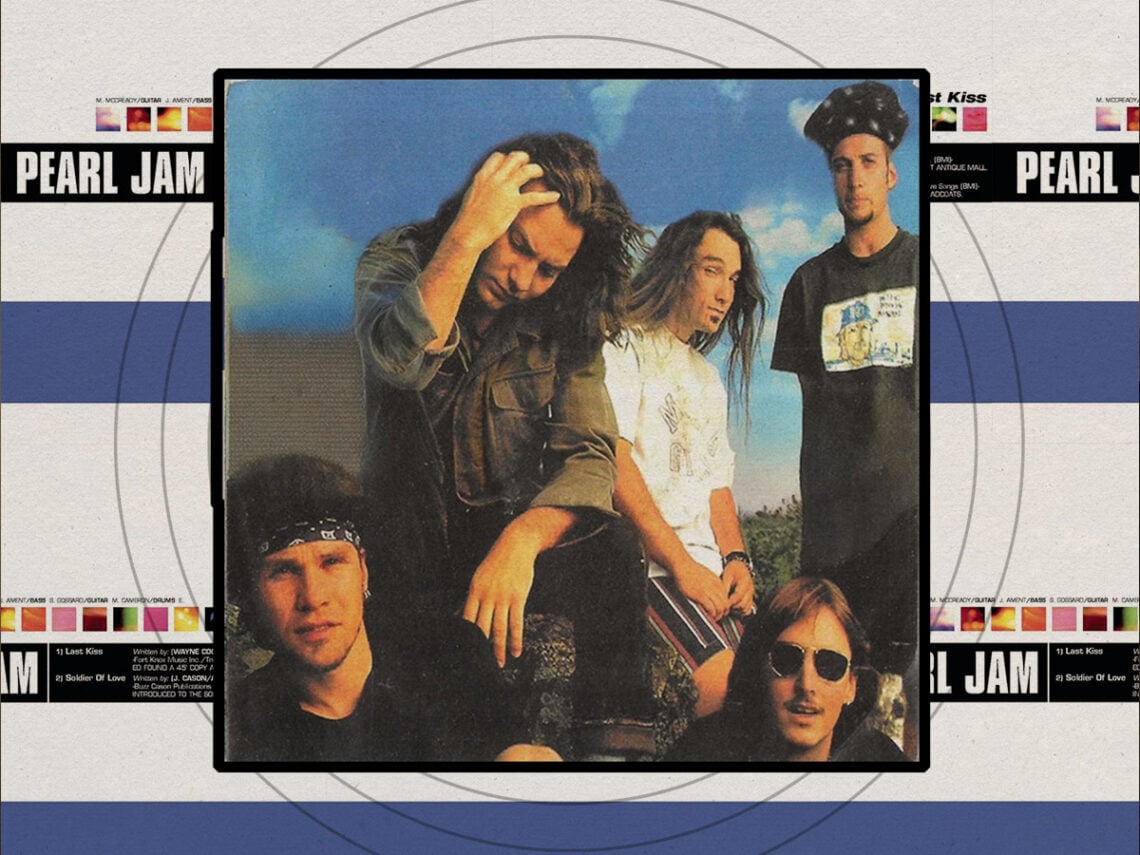
‘Last Kiss’: How Pearl Jam turned a forgotten 1960s death disc into their biggest hit

The rather macabre teen tragedy sub-genre of American pop music fizzled out at the end of 1964, after the Texas band J Frank Wilson and the Cavaliers reached number two on the Billboard chart with the song ‘Last Kiss’, a sweet tune about a fella mourning the loss of his girlfriend after a car wreck. A few weeks later, in a seemingly unrelated event, a boy named Eddie Vedder was born in Evanston, Illinois.
Little Eddie probably heard ‘Last Kiss’ on the radio at some point during his infancy, but suffice it to say, it didn’t stick in his baby brain. In fact, despite ultimately deciding to become a songwriter himself and routinely venturing into the subjects of death and teen angst in his music, Vedder wouldn’t recall properly listening to the Cavaliers’ version of ‘Last Kiss’ until around 1998, when he stumbled upon a copy of the original seven-inch single at an antique shop in Seattle.
Once he got home and gave it a spin, Vedder was transfixed and had to listen to the song again. And then again.
“Well, where oh where can my baby be?” goes the chorus, “The Lord took her away from me / She’s gone to heaven, so I got to be good / So I can see my baby when I leave this world”.
In its own time, ‘Last Kiss’ was somewhat of a derivative track at the tail-end of a trend. When singer J Frank Wilson describes peeling out on a rain-slicked road with his girlfriend riding shotgun, “the crying tires, the busting glass / the painful scream that I heard last”, he’s exploring similar territory to early 1960s hits like Mark Dinning’s ‘Teen Angel’, Ray Peterson’s ‘Tell Laura I Love Her’ (also a number one in the UK for Ricky Valance), and the Shangri-La’s ‘Leader of the Pack.’
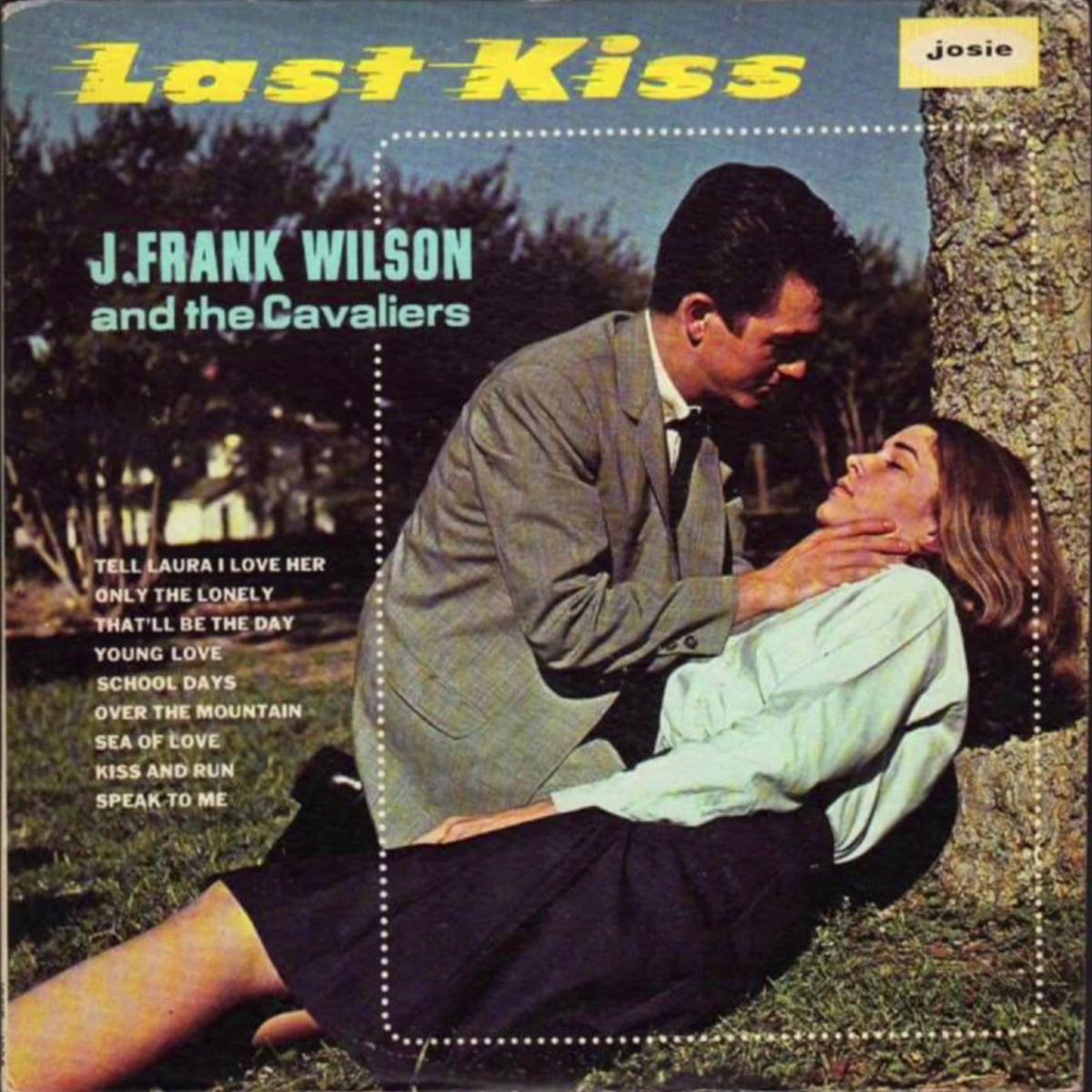
Sometimes callously referred to as ‘death discs’, these songs were all clearly tapping into a very specific sort of modern Romeo and Juliet romanticism built around the relatively new teen obsession with the automobile. By the early ‘60s, James Dean, budding rockstar Eddie Cochran, and doo-wop singer Jesse Belvin had all been killed in car accidents, fueling both the paranoia around this sort of tragedy and the abundance of poetry inspired by it.
In a strange bit of irony, even J Frank Wilson and the Cavaliers became part of this morbid phenomenon themselves, as the band was involved in a road accident while on tour shortly after releasing ‘Last Kiss’. Their manager, Sonley Roush, was driving the car and died in the crash. The highly publicised incident bizarrely helped ‘Last Kiss’ rise back up the charts, hitting its eventual high point of number two, behind only The Supremes’ ‘Baby Love.’



While few people knew it at the time, ‘Last Kiss’ was actually already a cover song, as Wilson and the Cavaliers had quietly revived an obscure 1961 death disc single by a Georgia-born blue-eyed soul artist named Wayne Cochran (no relation to Eddie Cochran).
Cochran, who was just 22 when he wrote the song, looked like a sort of cartoon Elvis with a giant blonde pompadour. He recorded several of his own versions of the track with his band The CC Riders in 1961 and 1962, but failed to see them gain any traction or radio play. What looked like a flop soon became a lifelong source of income, however, as the Cavaliers’ successful cover begat several more renditions in the years that followed, including some famous Spanish-language versions under the title ‘El Último Beso’. A James Bond-themed band from Venezuela, called Los 007, probably had the biggest Latin American cover of the track, topping the charts in their home country for 20 weeks in 1965.
‘Last Kiss’ still had some legs into the 1970s, when a Canadian band called Wednesday covered it in 1973, reaching number 34 on the Billboard and inspiring a brief revival of the Cavaliers’ single, as well. After that, though, it went culturally dormant, both thematically and stylistically out of step with just about every subsequent pop music trend of the 20th century…up until Eddie Vedder dug it out of a crate.

Vedder brought the single to his bandmates in Pearl Jam and suggested covering the song, not as a proper album cut, but as a fun Christmas single for the Pearl Jam fan club. It had become an annual tradition by this point for the band to create these special holiday recordings, a few of which actually concerned the subject of the holiday season. Obviously, the comparatively dark topic of fatal car accidents wasn’t considered off limits for the occasion.
“We recorded [‘Last Kiss’] at a sound check on a little digital recorder,” guitarist Stone Gossard told the Boston Globe in 2006, noting that virtually no bells and whistles were added in post-production, “You can try album after album to write a hit and spend months getting drum sounds and rewriting lyrics, or you can go to a used record store and pick out a single and fall in love with it.”
Pearl Jam’s version of ‘Last Kiss’ wasn’t particularly clever or innovative, as Vedder seemed more intent on trying to do justice to the original feel of both Cochran and J Frank Wilson’s renditions, something more in that authentic ‘60s spirit. Fans immediately connected with the song, though, and it began to organically spread beyond the fan club into college radio stations and then mainstream rock stations.
At the time, Pearl Jam was in the midst of a commercial slump, at least compared to their early ‘90s heyday, when their first two albums, Ten and Vs, had helped define the Seattle sound. Since then, the band’s third record, 1994’s Vitalogy, only sold half as many units as Ten, and both 1996’s No Code and 1998’s Yield sold about one-third as many units as Vitalogy. Some of this was the result of an intentional moving away from mainstream pop stardom, as the band stopped making music videos for a time, and retreated from a lot of self-promotion, as Vedder, in particular, didn’t fancy playing the games required of a top-tier rockstar, which made the unlikely rise of ‘Last Kiss’ such a joy for him.
“It’s the biggest song we ever had on radio, and it wasn’t even for sale,” Vedder told USA Today in 2002, “That’s much more exciting and magical than accomplishing some successful marketing plan”.
Once ‘Last Kiss’ started making waves, Pearl Jam did eventually find ways to get it on some actual records, but not necessarily for their own financial benefit. While the song appeared on compilations of the band’s B-sides and greatest hits in 2003 and 2004, most people purchased it as part of an all-star 1999 charity album called No Boundaries, which raised money for Kosovar refugees.
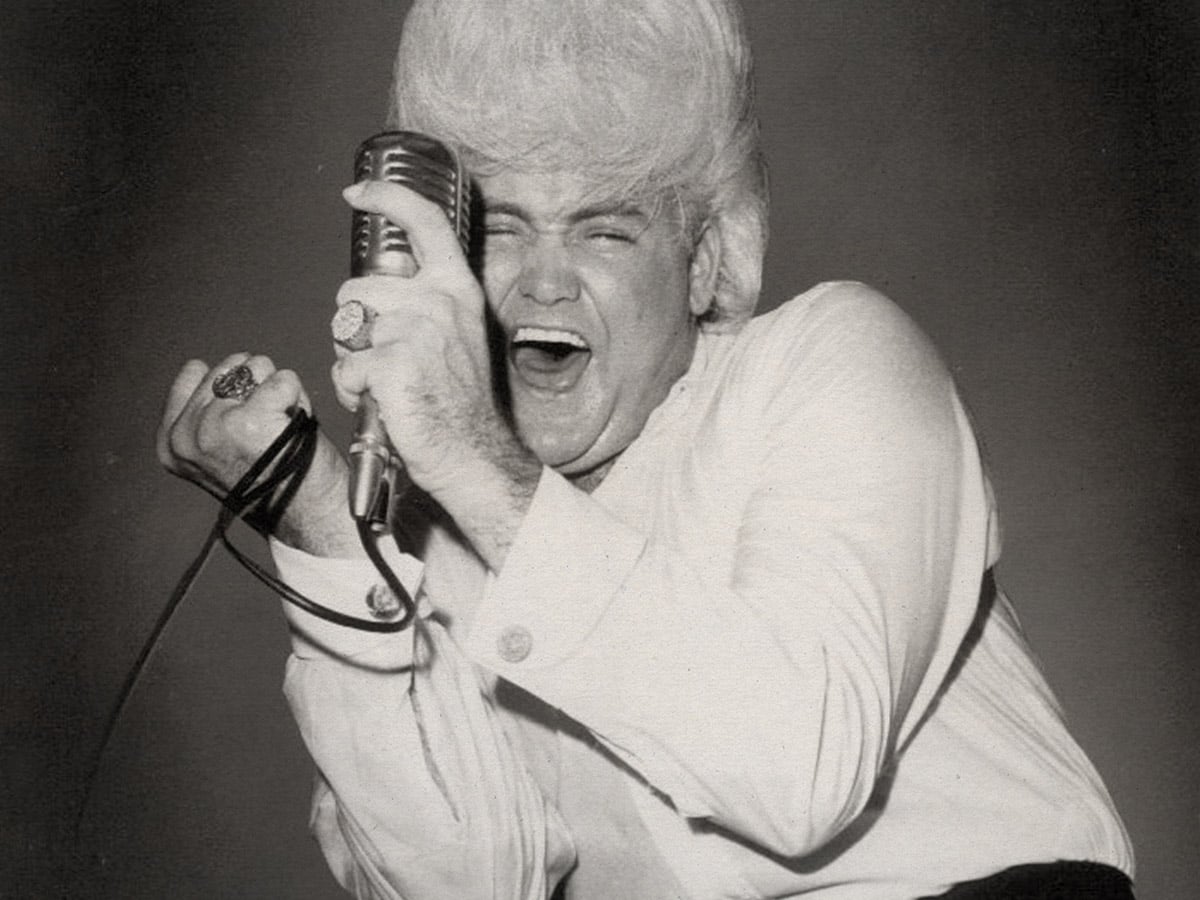
Presumably, at least some of that money also went to Wayne Cochran, the original writer of the song, who was still alive at the time and working as a born-again preacher in South Florida.
“I’m very appreciative that they did it,” Cochran, who died in 2017, told the South Florida Sun Sentinel in 1999, referring to Pearl Jam’s cover, “It’s a very simple song, not a lot you can do with it, but I think it’s very smooth. [Pearl Jam] did a very good job. It’s not as staccato as the one J Frank did.”
In the end, Pearl Jam’s take on ‘Last Kiss’ was the highest charting single of their illustrious career, outperforming ‘Even Flow’, ‘Alive’, ‘Daughter’, and all the rest. It topped out at number two on the Billboard, just as the Cavaliers’ version had 35 years earlier. Whereas the 1964 version was stopped by The Supremes, Pearl Jam couldn’t overtake Jennifer Lopez’s ‘If You Had My Love’.
The only person who seemed to care about that small technicality, however, was the pompadoured scribe himself, Wayne Cochran.
“Oh, I wanted that number one spot so bad!” he said after Pearl Jam’s cover dropped back down the charts, “Maybe with a little push, a little momentum, it could get back up there… It sounds like nothing on the market today.”
“What is it about that song?” Cochran added, grinning at his own hypothetical question, before retorting, “To me, the Lord had something to do with it”.
