


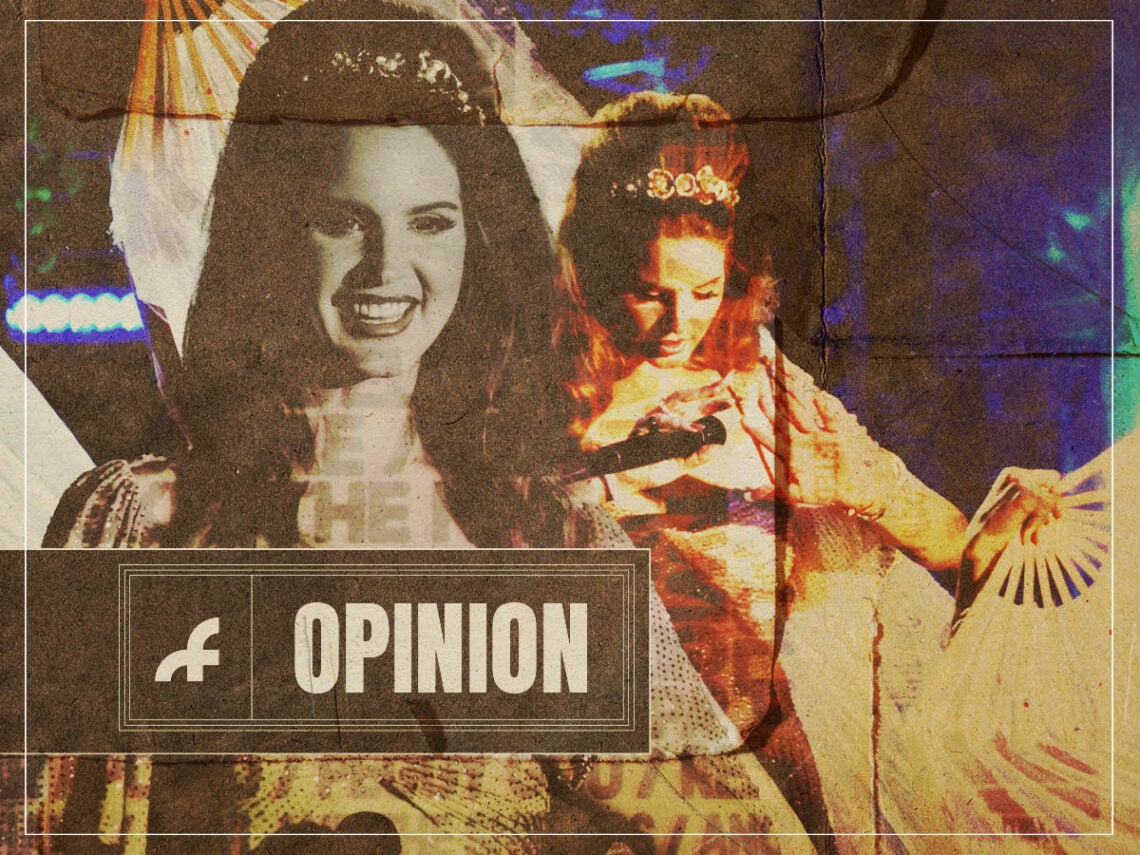
What Lana Del Rey at Primavera can tell us about the intense world of musical cults

Attending Barcelona’s Primavera Sound festival is an enlightening experience. From discovering new favourites to chemically induced revelations about the state of life back home, it’s always a significant four days that takes an extensive period of coming down from as the volume of great art consumed continues to resonate and serotonin levels rise back to normal. While I could ruminate at length about the philosophical effects of the event, this year’s take-home was much more palpable: the impact of drastic musical cults. This realisation came courtesy of Lana Del Rey and her devoted fans.
Let’s be honest: musical cults are nothing new. Since the frenzied days of Beatlemania in the early 1960s, prominent musicians have been hoisted to God-like status by their legions of followers. Yet, in recent times, the intense spirit of the fandom first experienced by the Fab Four has returned in certain extreme aspects.
Perhaps due to the near-nihilism with which many of us regard the socio-political status of the world and the bleak trappings of the future, multiple forms of pure hedonistic abandon and escapism have emerged to help us forget about the perils of the present. From hyperpop to hardcore punk converging with the mainstream, there are many manifestations of this at play.
Regarding musical cults, add the internet to the mix, and a clear picture starts to form. Thanks to the camaraderie offered by social media sites such as TikTok, Reddit, and Instagram, where fans can create a bubble, devotees of all stars and stripes band together under the banner of their favourite artist. Together, they form a sanctuary and, more importantly, a safe space that produces its own lore, sensibilities, and oftentimes jargon, too.
It must also be asserted that the context and quality of an artist’s music are the primary hook and ballast for forming such an ardent and unwavering mass of acolytes. As for Del Rey, not only does she have a knack for resonant, melodic songwriting, augmented by the sheer potency of her voice, she crafted a distinctive world with her cinematic sounds and emotive analyses of doomed romance, Hollywood glamour and, notably, melancholia. For many of the Tumblr generation and beyond, it is a perfect place to escape and lose oneself in the beauty of fiction.
Del Rey is not the only prophet. Perhaps most famous of all is Taylor Swift’s worldwide fanbase, the ‘Swifties’, but there are other just as devoted followings in Beyoncé’s ‘The BeyHive’, Cardi B’s ‘Bardi Gang’ and Lady Gaga’s ‘Little Monsters’. These are just a handful, too, with there sometimes overlap, as naturally, fandom does not account for just one artist.
Despite the union and escapism that musical cults offer, I must say I was surprised by the extent of the dedication of some ‘Lanatics’ at Primavera, which was so intense in parts that if this was a religious conversation, you might obtusely liken it to fundamentalism. From mid-morning on that Friday, it was reported online that fans who had bought tickets to see Del Rey specifically were waiting outside the festival on the tarmac, which did not open its doors until 3:45pm.

That’s all well and good, but once people were through security, the gloves were off. After having bags checked and barcode scanned, it was a race to the start line, with fanatics desperate to get front row at the barrier of the main stage, legging it from the entrance across the festival site to the open field of green astroturf quickly being invaded. Once there, fans then stayed in place all day and waited until Del Rey came on stage at nearly 10pm, half an hour late, despite maintaining she was only tardy by ten minutes. Some irritated fans have even deemed this assertion by the artist gaslighting, which shows how faithful the others are who did not care about her lax timekeeping.
Not only was she very late à la her 2023 Glastonbury appearance, but most fans didn’t mind, with chants of ‘Viva La Reina’ cropping up. Furthermore, judging by the many accounts of those who had made it towards the front, the vibe was anything but comfortable and as harmonious as you might expect. Amid a prominent feeling of disappointment at the quality of the performance when it took place, there were alleged instances throughout the day of fans urinating themselves and worse for fear of leaving their spot, as well as aggressive pushing and physical altercations.
This intense atmosphere also reportedly caused numerous panic attacks and people vomiting, with there apparently a clear lack of respect for other ‘Lanatics’, prompting some to feel trapped within the extremely devoted mass. On Reddit, one fan even expressed their disdain at Del Rey’s preference for posing for photographs with fans rather than performing, adding to the sour taste for some and bolstering the question about the extent of loyalty from elements in such cultish fanbases.
It seemed that the fervour culminated in a profoundly unsettling manner at the Porto instalment of Primavera over this past weekend when a fan managed to sneak over the barricade and run up to Del Rey before being thwarted by security, to which she nonchalantly told the crowd, “She’s insane, I guess”.
All this makes you wonder, when do musical cults go too far? If a group of fans were to have swarmed Del Rey, things might have got ugly. Furthermore, this trail of thought also leads to a serious debate over what role artists play in cultivating such an intense and consolidated fandom, as it won’t take much for such situations to turn really sour in front of all the phone cameras. Just check out her confrontation with photographers in Paris at the weekend.
Just think about the time a crazed fan tried to stab Bob Dylan for going electric or when Frank Zappa was attacked on stage by an angry boyfriend; such frightening instances aren’t unheard of. Of course, most people are ordinary fans with an immense passion for an artist, but it only takes one to ruin it.
