


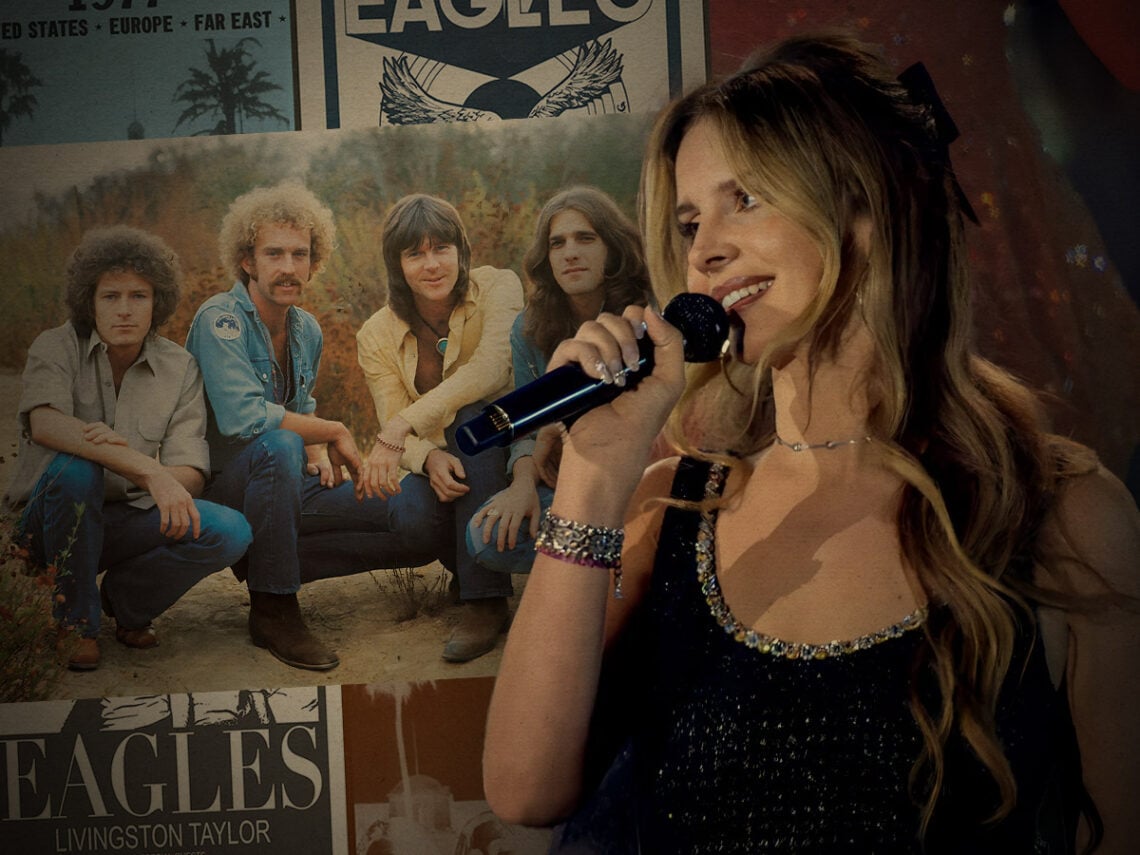
What can learn about Lana Del Rey from her favourite Eagles songs?

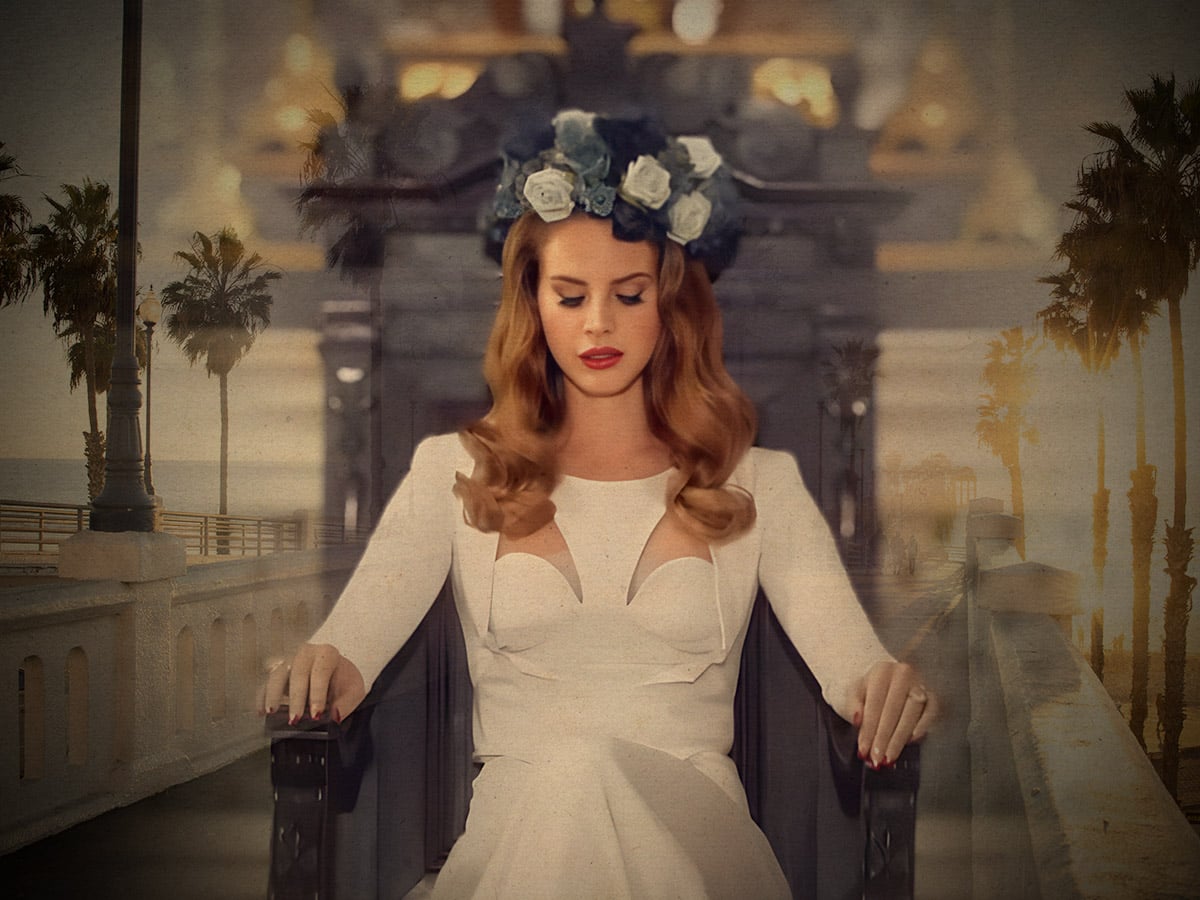
When Lana Del Rey first captivated audiences with the release of her homemade music video for her single ‘Video Games’ in 2011, the New York-born singer-songwriter made herself immediately synonymous with the elusive glamour of California.
Splicing together footage of the Chateau Marmont, the Hollywood sign, the American flag waving in time with palm trees and paparazzi circling the actress Paz de la Huerta, alongside various other iconographies of love and youth, Del Rey aligned herself with a mysterious energy that, through her eyes, California and particularly, Los Angeles, was the epitome of. Thus, ‘Video Games’ grew within its place as a moving love song; it became a beacon of reinvention.
Such a notion was one that Del Rey was no stranger to. Born Elizabeth Woolridge Grant, the beginnings of her personal reinvention came when she first picked up a guitar as a teenager, learning to write songs that she would soon perform at various nightclubs in New York City, adopting monikers including “Sparkle Jump Rope Queen”, “May Jailer”, “Lizzy Grant” and eventually, “Lana Del Ray” (the change to “Rey” would come later). Her evolved identity came from spending time not in California, just yet, but in Miami, Florida, inspired by speaking Spanish with her Cuban friends: “Lana Del Rey reminded us of the glamour of the seaside,” she explained to Vogue.
Taking part of her name from the golden age film icon Lana Turner, Del Rey’s fixation with classic Hollywood took full shape. She may not have been born in the City of Angels, but her reverence for the icons that the town produced, personified in film stars and scores, musicians and cultural movements, was intrinsic to her artistic approach. Del Rey parsed inspiration from a never-ending well of sources, from writers Walt Whitman and Allen Ginsberg, to auteurs David Lynch and Federico Fellini. Musically, she liked “the masters of every genre”, as she told the BBC in 2012, naming everyone from Nirvana to Frank Sinatra to Nina Simone to Amy Winehouse.
A band that is deep-rooted in Del Rey’s identity is the Eagles and their rendering of “California rock”, heard in elements of rhythm and blues, bluegrass, country, folk and soul to form their particular brand of rock ‘n’ roll. The niche of “California rock” is open to interpretation, though as author Sal Manna posited in the liner notes to Eagles’ 1994 album Hell Freezes Over, “Perhaps that, because in California anything was possible, music that came from that promising land was more free-spirited and free-ranging”.
It is easy to see where Del Rey gleaned inspiration from the Eagles’ visions of life in California. Both artists see the state’s allure as a mystifying presence where, yes, anything can happen, but it can also lead towards one’s demise. Both sing of the lesser-known horrors of lives lived with too much hedonism, warning of being caught in your own methods of subversion, and how an enclave like Los Angeles can exacerbate both your highest and lowest moments.
Sung in four-part harmonies, Glenn Frey, Don Henley, Bernie Leadon and Randy Meisner carved tales of their vision of Americana: the good, the bad and the ugly. They reckoned with enduring figures of the past on the Zelda Fitzgerald-inspired ‘Witchy Woman’ and amplified the freewheeling mantra of ‘Take It Easy’, to being haunted by dreams on ‘One of These Nights’, a few among the countless anthems that the Eagles bestowed upon their countercultural California.
For Del Rey, two of the Eagles’ classics stick in her mind, both of which have been woven into her lyrics. On her song ‘God Knows I Tried’ from her 2015 album Honeymoon, the first verse references ‘Tequila Sunrise’ and ‘Hotel California’. She sings of waking up to red, blue and yellow skies: “It’s so crazy I could drink it like tequila sunrise / Put on that ‘Hotel California’ / Dance around like I’m insane.”
Of ‘Hotel California’, Del Rey enthused to Fashion Magazine in 2013 that it was a favourite song of hers to spark inspiration. “Every shoot I do, I have a theme… We always listen to the Eagles’ ‘Hotel California’ while we get ready.” The song is one that she once said she’d like to put her own spin on one day.

You can certainly see where someone like Del Rey would be enchanted by the world of ‘Hotel California’, with its questionable characters, symbols of wealth and the draw between the literal and metaphorical heaven and hell. There is even an intriguing parallel Del Rey draws to her own song in The Eagles’ line, “Some dance to remember / Some dance to forget.”
Henley has spoken of the song as being about life in Los Angeles, but, more importantly, a commentary on American culture.
“The hotel itself could be taken as a metaphor not only for the myth-making of Southern California, but for the myth-making that is the American Dream,” he described in the 2013 documentary History of the Eagles, “Because it is a fine line between the American Dream, and the American nightmare.”
Del Rey, too, interprets her own view of Americana in her songs, singing of its illusions on songs like ‘American’ and ‘National Anthem’ from 2012’s Born to Die and Paradise, an era where symbols of patriotism from the American flag to 1950s-inspired fashions were synonymous with her image, while her 2019 album Norman Fucking Rockwell! reckons with a dystopian vision of America. On ‘Fuck it, I love you’, for instance, she confronts the dual nature of California: “So I moved to California / But it’s just a state of mind.”
As Del Rey has grounded herself in aesthetics and sounds of the past to inspire her brilliant, singular artistic output, her respect for a band like the Eagles shows her penchant for having one foot in the past, one in the future. As the band crafted personal stories as commentaries on society and culture, Del Rey followed suit, both affected by their environments and the people that inhabited them. However moody and peculiar they may be, their songs hold a mirror to the world around them, equally timeless and endlessly fascinating.
