

When Lou Reed called Pete Townshend of The Who “talentless”
Read More


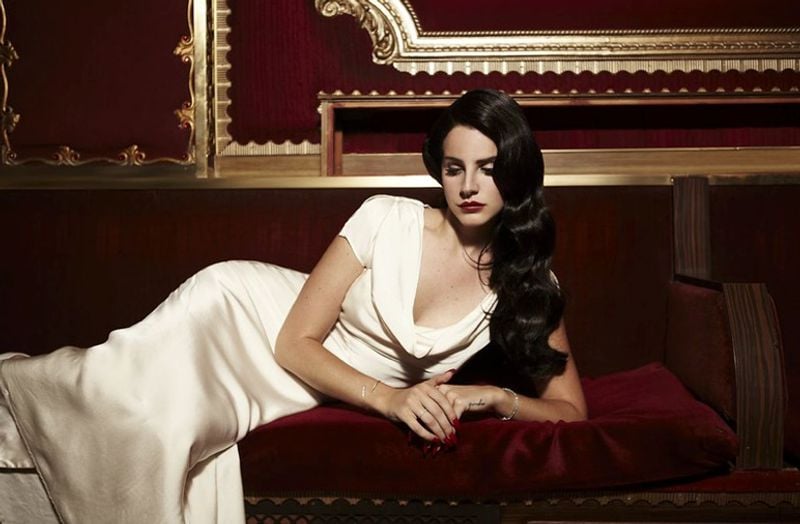
Lou Reed died in 2013 and left behind a unique legacy in musical history. After moving to New York City in 1964 to work as a songwriter for Pickford Records, he met the Welsh multi-instrumentalist John Cale with whom he became very close. The pair began to write together and gradually summoned a complete band, eventually named The Velvet Underground.
The characteristically obstinate contrarian decided that the Velvets would cut against the grain, the grain being the burgeoning pop-rock scene of the British invasion and the hippie Californians. After catching the relentlessly searching eye of Andy Warhol, the group were lucky enough to be invited into the pop artist’s inner circle.
Under Warhol’s management and promotional support, Lou Reed and The Velvet Underground released their debut album, The Velvet Underground & Nico, in 1967. It wasn’t a commercial success at the time of its release, likely because its avant-garde style was years ahead of its time. As creative marvel and production master Brian Eno would later exaggerate, “The first Velvet Underground album only sold 10,000 copies, but everyone who bought it formed a band.” While the statement isn’t exactly true, the general message is entirely accurate.
In 1967, The Velvet Underground sat at the cutting edge of rock music and were way ahead of their time. Reed’s position, surfing ahead of the wave, seemed to follow throughout his subsequent three albums with The Velvet Underground and much of his solo career.
Reed’s solo endeavours have been dismissed by some critics over the years because the music often didn’t live up to the expectations set out by his ‘60s output with the Velvets. However, Reed always knew the importance of experimentalism and never failed to lay down highly evocative and poetic lyrics. His albums over the ‘70s and ‘80s fluctuated between the commercial (Transformer, Coney Island Baby, New York) and the avant-garde (Metal Machine Music, The Blue Mask).
This ability for eclectic and highly absorbing material made Reed one of the true legends of 20th-century music. Just like that first Velvet Underground album, his singular influence on the music industry to this day has been incalculably vast.
The Velvet Underground’s music was cited by most early groups of the 1970s punk movement as a crucial influence. It was also heavily foundational for David Bowie, whom Reed would later befriend and collaborate with on Transformer. This impact flowed through the remainder of the 20th century up to the modern-day, seasoned along the way with Reed’s solo output.
Today, decades on from the height of Reed’s career, contemporary artists regularly namecheck the Velvet Underground frontman as a crucial influence. Among these artists is the American singer-songwriter Lana Del Rey.
In a 2014 interview with The Guardian, Del Rey highlighted her love for Reed and explained that he was on her mind when she wrote ‘Brooklyn Baby’. Later in the interview, she continued to explain how there was a mutual appreciation between her and Reed. According to Del Rey, Reed had wanted to work alongside her on some music and so invited her to fly to New York to meet him. “I took the red eye, touched down at 7am … and two minutes later, he died,” she says.
Tragically, Del Rey was hours from meeting one of her biggest musical heroes, but it was never to be. Reed died at his home on Long Island on October 27th, 2013, after suffering from an ailment that stemmed from his recent liver transplant. He was 71 years old.
