


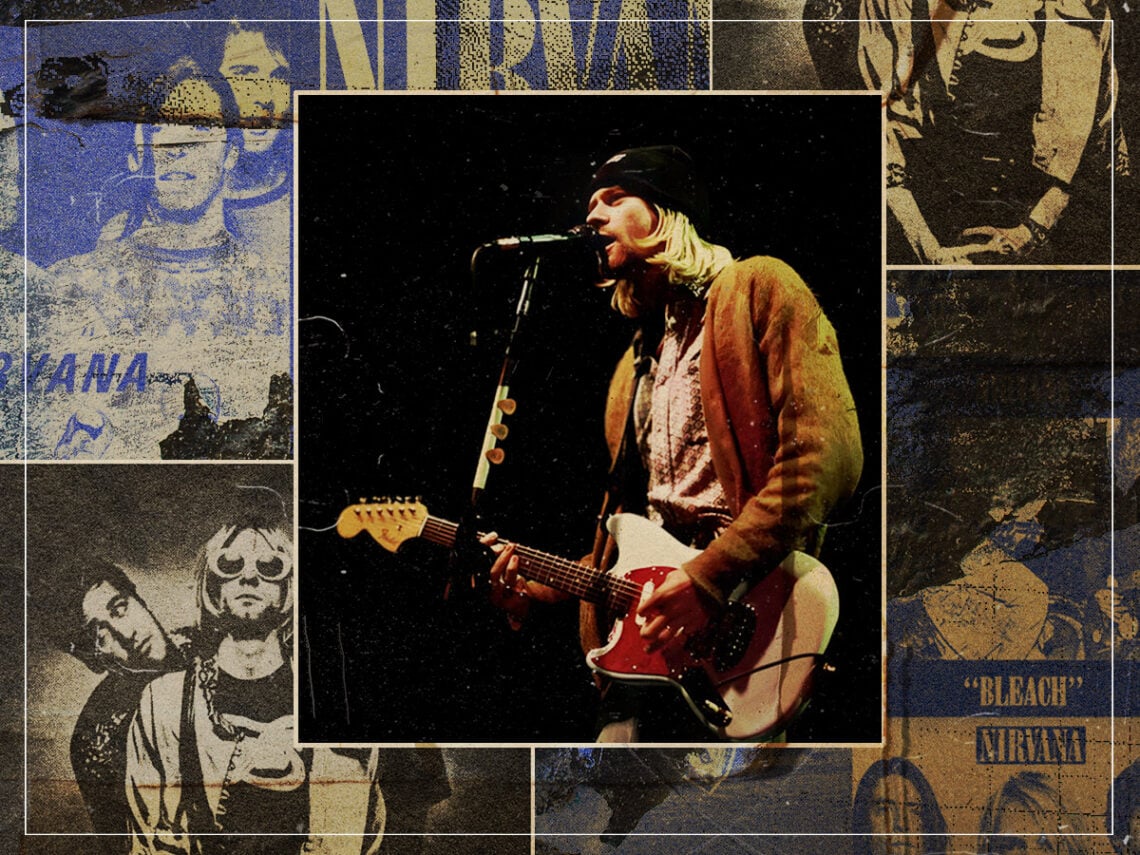
Effortlessly punk: how Kurt Cobain unintentionally set a new standard for anarchy

“I’m kind of a moody person,” Kurt Cobain said during one of his last-ever interviews. For countless others, it could have been perceived with a hint of scepticism, another mere lonely remark from someone masquerading as the ultimate rocker where pessimism and disillusionment fit the bill. It could have been delivered with the kind of committed energy of someone fighting to be perceived, struck down by too many blows to the ego. When the words fell from Cobain’s lips, however, they felt weightless and free, but only from the burden of resembling pretence.
Considering everything Cobain achieved in life—from being a young loner who saw the world for what it truly was to becoming a highly intelligent and observant figure—it’s safe to say he was a remarkable presence. He understood real pain just as deeply as he understood love, knowing that both had the power to either tear everything apart, leaving the soul in ruins, or bring things together like an inexplicable glue.
He might have been, in his own words, “moody”, but he more than earned his keep, having felt everything a human being could possibly feel while inhabiting a far-from-perfect world for just 27 years. He was constantly on the brink of losing his grip on his own fragility, caught in the crux of a troubled home life, a delicate love life, and an overwhelming awareness of everything around him. He was imperfect himself but different from the flaws that defined his world, subjected to the fire that threatened to burn the soul he so desperately wanted to heal.
In the same interview, Cobain discussed his love for Perfume, the historical fantasy novel by Patrick Süskind. Using smell as a conceptual conduit for exploring human discontent, the story resonated with Cobain’s disillusioned mind and his struggle to understand the nature of the world around him—specifically humanity’s tendency to destroy everything in its path. He read it repeatedly throughout his life, finding no other work that so closely captured his own mindset, something he knew had been different from birth.
“I can’t stop reading it,” he said. “It’s about this perfume apprentice in France at the turn of the century, and he is disgusted, basically, with all humans, and he just can’t get away from humans. So, he goes on this track, this walk of death where he goes into the rural areas where there’s woods all over the place and small villages, and he only travels by night. Every time he smells humans like a fire from a far-off way, he’ll just get really disgusted and hide. I can relate to that.”

This frustration-turned-alienation is something Cobain reckoned with all his life, starting as a young boy in school who struggled to make friends after realising how different everybody seemed to him. Growing up, Cobain already had an incredibly sophisticated mind, yet longed for the kind of connection that would make him feel less alone. Struggling to handle or even understand his parents’ divorce, his lack of friends made him grow even more inward, worsened by the fact he couldn’t quite see eye-to-eye with most of the vernacular that spread across the school playgrounds. To him, there were problems no one else seemed to see.
“Because I had no friends, I ended up hanging out with girls a lot,” Cobain told Jon Savage in 1993. “I always felt they weren’t treating me with respect, especially because women are totally oppressed.” He also noted how these young girls would use derogatory language towards each other, likely from hearing it from others, creating a harmful web of misogynistic perpetuation that he couldn’t seem to understand. And when he started to get into music, he found more of the same.
Listening to music by contemporary rock pioneers like Aerosmith, Led Zeppelin, and others, he understood the appeal of the structures and melodies but grew a strong dislike for the lyrics and subjects, finding difficulty with the way all of these rock legends seemingly only talked about one thing: sex. The only time Cobain ever felt he truly identified with music, for the first time in his life, was when punk finally came along. “[It said] everything. It was the anger that I felt. The alienation,” he said.
Hinging on everything he enjoyed about the punk ethos, Cobain realised he could find solace in his own music, writing about how he felt and what he had experienced in authentic and unfiltered ways. He didn’t have to live in his own head anymore and could spill his demons onto the page like finally letting go of a withheld breath, ready for anyone who had ever felt the same to join the movement. And they did; names like Kathleen Hanna became endeared to Cobain’s socially aware, no-nonsense demeanour, and soon, his music became anthems for the new generation.
However, Cobain’s words didn’t just align with the punk movement by mirroring the angst-fuelled aggression of the day’s youth; his music also rallied for change in a bigger, more impactful way, shunning commercialism on a grand scale with stories that screamed rebellion in more subtle ways, lurking in the sluggish and moody aura that categorised the grunge era. Like in Perfume, his music was hauntingly beautiful beneath its overt intensity, exploring human corruption with exhausted resignation, reflecting Cobain’s own fight following years of battling his inner psyche.
In many ways, that is what made Cobain the one thing he neglected to label himself—a true punk. Though both unknowing and intentional in this contradiction, he carried an instinctual drive toward anarchy, even in its insidiousness, reflecting the mind of someone marred by the demons of his own path. He embodied unapologetic individuality in an arena that longed for conformity and embraced the shackles of his own intellect, knowing that anything else would have destroyed him even sooner.
In addition to this, he raised the bar, setting a new standard for embodying the punk ethos in the modern age. In his world, adopting such a label didn’t mean turning up the heat and shouting into the void, nor did it mean fighting for change with unwarranted violence or empty virtue signalling. For him, it meant drawing attention to what you believe in your blood to be true and transforming such honesty into something near tangible.
