


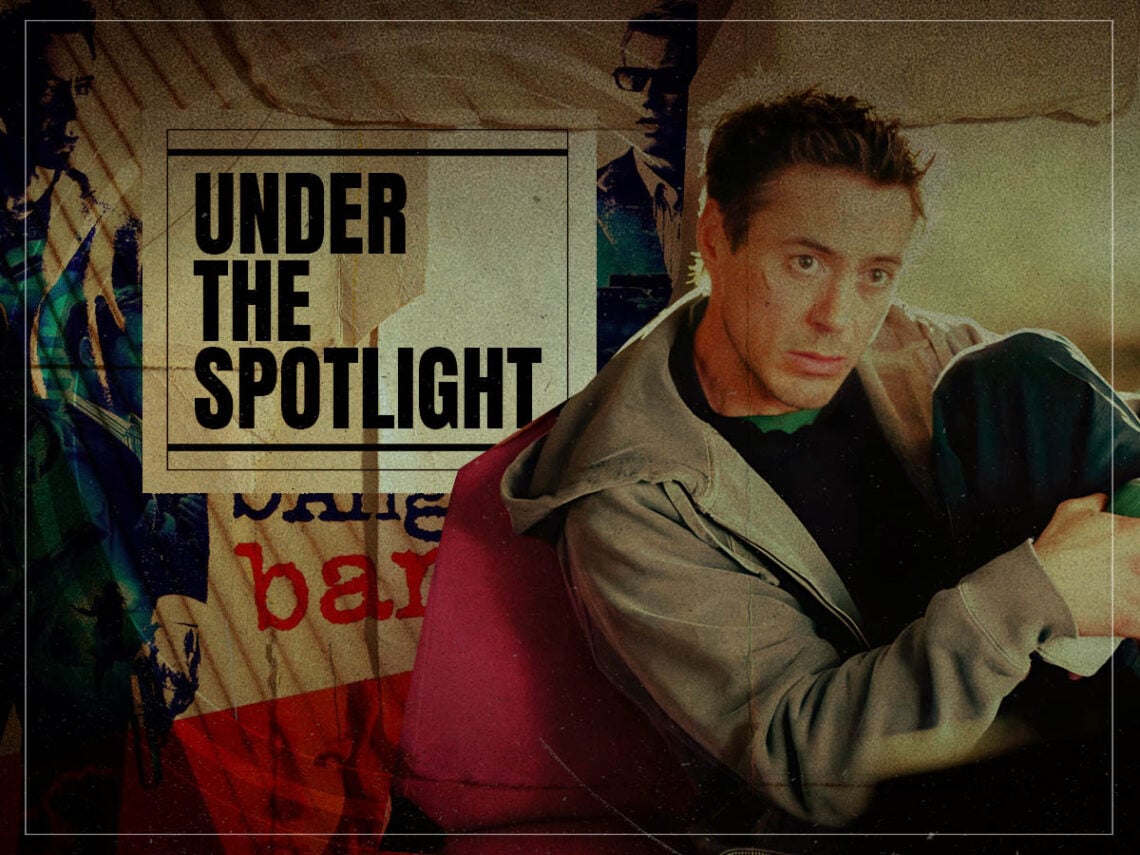
Under the Spotlight: ‘Kiss Kiss Bang Bang’ is Robert Downey Jr at his greatest

Concluding one of the greatest second acts in Hollywood history with an Academy Award win for ‘Best Supporting Actor’ in Christopher Nolan’s Oppenheimer, Robert Downey Jr capped off an incredible renaissance that nobody could have predicted when the star was at his lowest ebb.
Everybody had always known that he was a mercurial performer with the potential to be remembered as a generational talent, but personal issues almost ruined him entirely. Once he put those setbacks in the rear-view mirror, Downey Jr still struggled to find gainful employment, with a fortuitous set of circumstances leading him towards the very top of the A-list.
His comeback role in The Singing Detective only happened because Mel Gibson paid his insurance bond in full. In addition, 40% of his salary on the supernatural thriller Gothika was withheld until the end of production in the event he returned to his wayward ways, and the latter was a terrible film that ended up becoming the most important of his career.
Not because he met his future wife Susan Levin, either, but because he stumbled into his greatest performance in Shane Black’s Kiss Kiss Bang Bang. The writer and director was a longtime collaborator of Gothika producer Joel Silver, and Levin was his assistant. She was reading a screenplay that was lining Johnny Knoxville, of all people, up for the role of private eye Harry Lockhart until Downey seized the script from his partner’s hands, read it, wanted in, auditioned, and was cast.
From beginning to end, Downey Jr has never been better, with Lockhart the perfect conduit for all of the strongest tools in his performative arsenal. Black is a famously verbose and quip-happy screenwriter, which suited the star down to a tee. Throwing his own improvisational stylings into the mix, the character comes across as one that feels as though it was tailor-made for the guy who played it, even though it wasn’t.
A beleaguered, down on his luck, and listless petty criminal who falls upwards into a situation that threatens to spiral out of control required Downey to bring his quick-witted cadence, razor-sharp comedic timing, and endless charisma to the fore without sacrificing the drama, inner turmoil, or imposter syndrome inherent to a protagonist who leads a shitty life they’ve completely lost control of until good things happen by accident.
In a way, it’s not a million miles away from where Downey Jr found himself in the early 2000s, which helps. Convoluted in the best possible way, the story of a thief who ends up being cast in a major Hollywood production before becoming embroiled in a conspiracy linked to his childhood sweetheart embraces and subverts the tropes of film noir, gently prodding at its inspirations without descending into full-blown mockery.
For Kiss Kiss Bang Bang to turn out as the best possible version of itself, Downey Jr had to play the part of somebody who was fully aware of the absurdity of their situation but never behaved as if they were in on the joke. It’s a trap plenty of actors have fallen into when flirting with metatextuality, and it’s a testament to his performance that Lockhart never feels like a character who’s only one step away from turning directly to the screen and winking at the silliness of it all.
Everything that made him a star in the first place – and everything that reaffirmed those credentials, post-Iron Man – is on full display in Kiss Kiss Bang Bang. It’s the definitive Downey Jr turn in that it lays all of his cards on the table, illustrating his adeptness at drama, comedy, slapstick, pratfalling, and pathos in equal measure, which is why it’ll take something truly remarkable to dislodge it as his best ever.
