


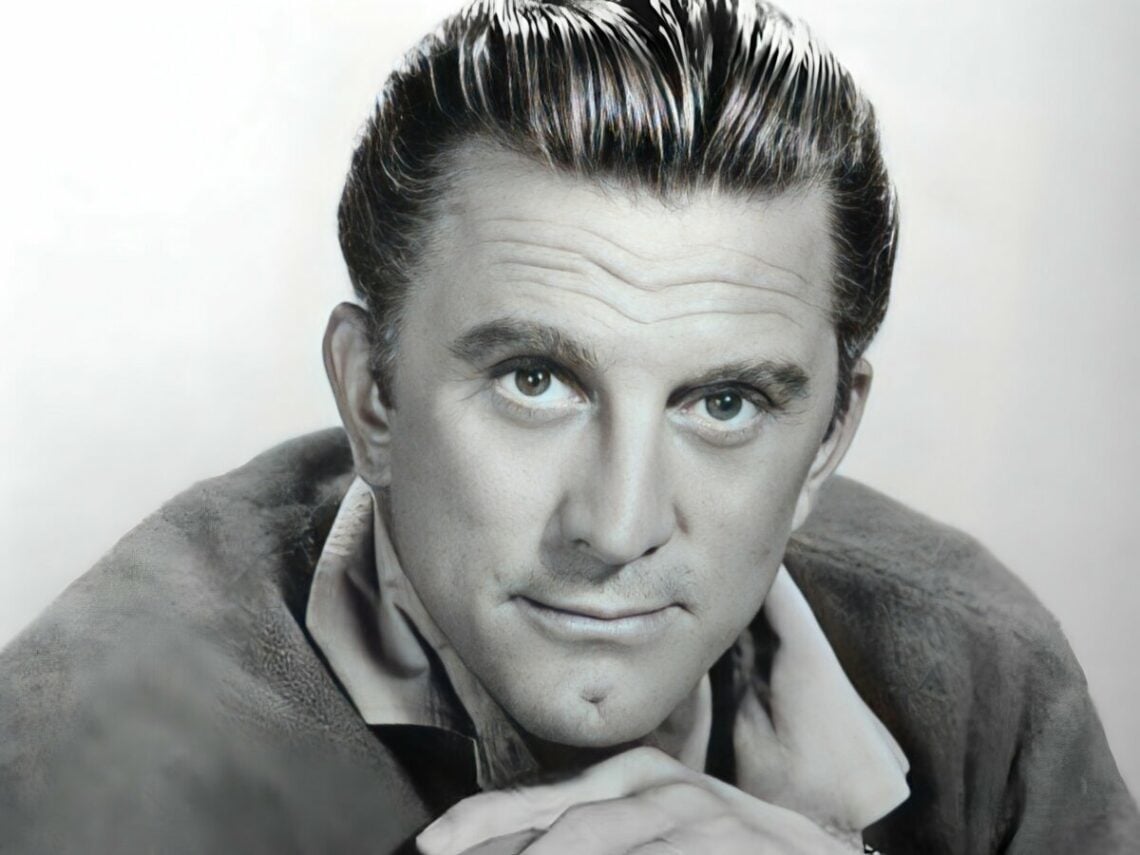
Kirk Douglas reveals the Oscar-winning roles he turned down

While success can often be measured in awards season glory, Kirk Douglas is just one of many stars who gained iconic status without ever winning a competitive Academy Award.
He was nominated three times for ‘Best Actor’ after lending his formidable talents to Champion, The Bad and the Beautiful, and Lust for Life between 1949 and 1956, but he walked away empty-handed on every occasion before being bestowed with an honorary Oscar in 1996 for “50 years as a creative and moral force in the motion picture community”.
Not that he needed a bulging trophy cabinet to become a legend, with Douglas making a habit of breaking down barriers. He was among the first high-profile actors to form their own production company, develop their own projects, and seize control of their career in a stark difference from the old studio system, never mind the fact he was instrumental in ending the communist blacklist.
Bringing Dalton Trumbo onto Stanley Kubrick’s Spartacus to end his exile turned out to be a watershed moment, and the historical epic stands tall as one of the most important films Douglas ever made. Paths of Glory, Ace in the Hole, 20,000 Leagues Under the Sea, and Lonely Are the Brave were all big hits and classics, but the big one continued to elude him.
Things could have turned out very differently, though, with Douglas admitting to Roger Ebert that he turned down two roles that won Oscars. “I turned down Stalag 17, [William] Holden won an Oscar. I turned down Cat Ballou. [Lee] Marvin won the Oscar,” he said. “But, hell, you never know. Decision making… I’ll tell you one thing. Five pictures in a row like Paths of Glory, and I’d have been out of business.”
The most famous near-miss for Douglas came when he optioned the rights to bring One Flew Over the Cuckoo’s Nest to the screen, having previously played Randall P. McMurphy on Broadway. However, by the time the silver screen adaptation began to take shape, it was his own son who told him he’d aged out of the part and was no longer in the running.
Of course, Jack Nicholson would step into the breach and deliver an all-timer of a performance that won him an Oscar for ‘Best Actor’, which would have stung significantly more than his rejection of Stalag 17 and Cat Ballou because it wasn’t only a part he was very familiar with, but a story he’d acquired with the express purpose of starring in it himself.
There’s a cruel sense of symmetry in Douglas going zero-for-three at the Oscars, only for three parts he either turned down or didn’t get being named as the very best of their respective years.
