


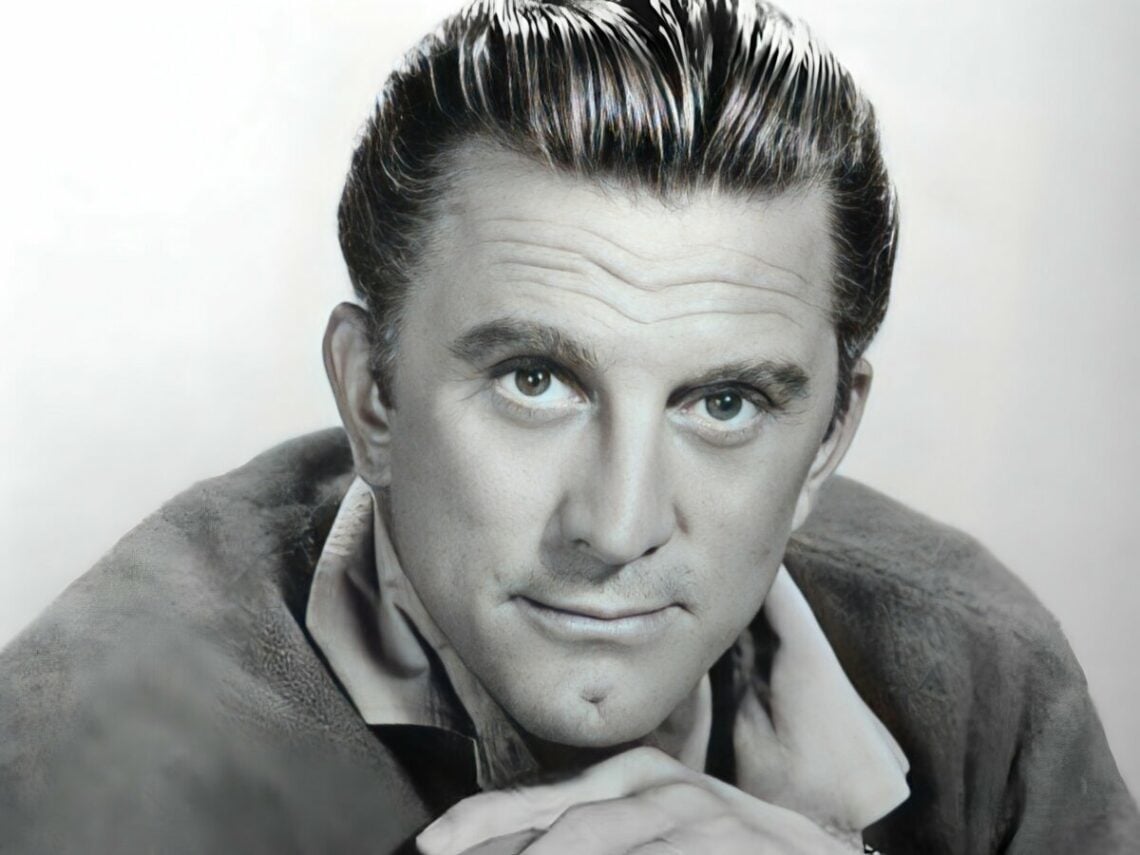
Kirk Douglas names the most important movie he ever made: “I don’t know if this is a good film”

When Kirk Douglas was born, it was the middle of World War I. When he died at the age of 103, it was the early stages of the Covid-19 pandemic. Throughout his long life, the legendary actor witnessed a lot of history and was part of his fair share of it, too. A leading light of the classic Hollywood era, he was one of the biggest draws in an era packed with icons. He gave a leg up to a then-unknown Stanley Kubrick, starring in and producing two of his movies, Paths of Glory and Spartacus. He fathered Michael Douglas, who would go on to become a major name in his own right, and left behind a legacy that was truly one of a kind.
With the better part of 100 big screen credits to his name, being asked to pick your favourites must seem like torture. That’s exactly what HuffPost invited a 98-year-old Douglas to do in 2014. As well as classics like Champion, 20,000 Leagues Under the Sea, and Lonely Are the Brave, which Douglas had previously called ‘overlooked’, the Presidential Medal of Freedom winner also chose an obscure French film called Un acte d’amour (Act of Love in English). The movie is perhaps best known for featuring a young Brigitte Bardot, but for its American star, it holds a very special significance.
“I don’t know if this is a good film, but to me, it’s a great film because that’s where I met my wife, Anne Buydens, to whom I have been married for 60 years,” he explained. “Anne was hired to do publicity for Act of Love, and we became friends. I, of course, wanted more (she was beautiful and had a fantastic sense of humour), but she didn’t want to be a movie star’s latest fling.”
Determined to break the ice, Douglas hatched a plan. “One evening I took her with me to a charity event at Cirque d’Hiver in Paris, in which French movie stars were the featured performers,” he recalled. “I was known as ‘The Darling Brute’ in French media, so the organisers asked me to participate.” Unfortunately, things weren’t quite as romantic as he had anticipated. “I went backstage, where they found something ‘appropriate’ for me,” he said. “Right after the elephant act, I came out – still in my tuxedo – with a broom and shovel to clean up the droppings.” Luckily for Douglas, his date didn’t mind one bit – “Anne laughed so hard that I knew I had won her over.”
Buydens, who became Douglas’ second wife in 1954, was a German-born woman living and working in France. She had previously served as a location scout on the 1952 version of Moulin Rouge and as a party planner for an early iteration of the Cannes Film Festival.
The pair had two children together, Peter and Eric, and worked alongside her husband in various charitable endeavours, including setting up a breast cancer charity and a centre for the study of Alzheimer’s disease.
The couple were married for 65 years prior to Douglas’ death. She passed away the following year, at the age of 101. The pair are buried next to each other, in a plot shared with their son Eric, who died in 2004. It’s a remarkable love story, all thanks to a random French movie nobody has heard of.
