


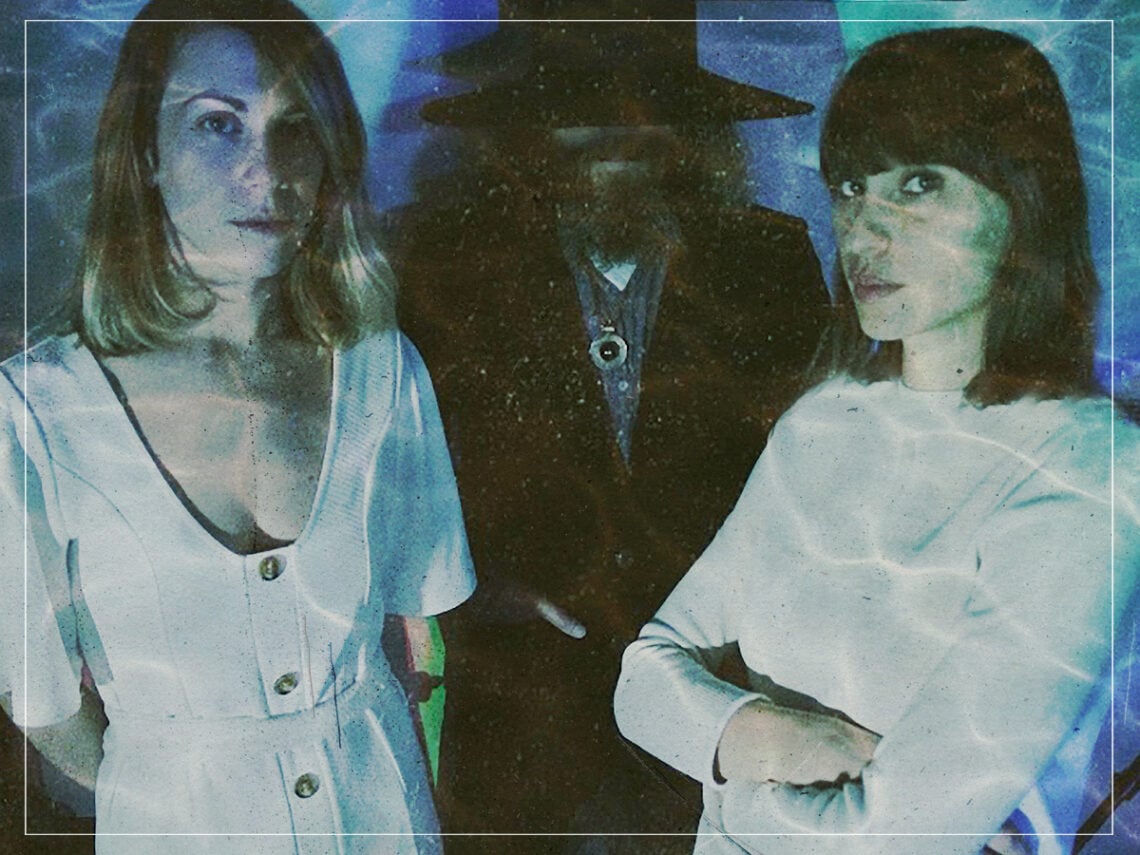
Juniore – ‘Trois, Deux, Un’ album review: effortlessly cool retro rock from Paris

THE SKINNY: From the ethereal tones of Édith Piaf to the indie rock mastery of La Femme, the culturally rich land of France has consistently produced some of music’s most inventive and enduring figures. Although, in the modern age, mainstream audiences rarely look to the European mainland for rock excellence, Parisian outfit Juniore are one of a number of bands succeeding in changing that reputation and continuing a long lineage of French music icons. Led by songwriter and multi-instrumentalist Anna Jean, the band have truly come into their own on the newly unveiled album Trois, Deux, Un.
From its early inception in 2013, Juniore has always been noted for a particular sound, one which places focus on moody basslines, pop sensibilities, and the effortlessly unbothered vocal performances of Anna Jean. Over a decade on, you might think that this sound is becoming somewhat repetitive. While Trois, Deux, Un is certainly not a radical departure from their previous work, each new project taken on by the band adds an exciting new layer to their sound. This album is, by far, their most cinematic to date and according to my recent chat with Anna Jean, this was no accident. So much so that an aspiring filmmaker could easily attach a narrative to the track listing and use the album as a ready-made soundtrack.
Throughout this record, it is virtually impossible to ignore the impact of Juniore’s old-school influences. In particular, the band evoke the sounds of 1960s Disques Vogues, Françoise Hardy and the yé-yé movement regularly, giving tracks like ‘Monumental’ or ‘À Quoi Bon?’ something of a timeless quality. That is not to say, however, that the material of Juniore is stuck in the past; the band manage to pay homage to their influences and the rich musical history of their nation while imbuing those influences with a defiantly modern edge.
The production work carried out by Samy Osta is a key aspect of this record’s success. Across the tracklisting, Osta was able to effectively instil the spirit of mid-century psychedelia and garage rock in Juniore’s work without allowing the recordings to feel deliberately dated or gimmicky. For a band that relies so heavily on influences of cinema and 1960s pop, it is an incredibly fine line to balance between paying tribute to this inspiration and becoming something of a novelty act. Osta’s production, alongside the incredible songwriting of Jean, of course, helps to push the band in the more favourable of these directions.
For fans of: Chain smoking, watching Jean-Luc Godard films, and ignoring the problematic history of our favourite idols.
A concluding comment from Ben’s housemate: “Man, I cannot wait for the next TUI advert; its soundtrack is gonna be mint.”
Trois, Deux, Un track-by-track:
Release date: September 13th | Producer: Samy Osta | Label: Le Phonographe
‘Le Silence’: Juniore certainly know how to immediately capture the attention of an audience. The bassline which introduces this song – and the entire album, by extension – is ruthlessly infectious, and full of all the suave coolness that fans have come to expect from the Parisian outfit. [4.5/5]
‘Bowling de Diano Marina’: Opting for a slowed-down tempo, the sophomore song on Trois, Deux, Un embraces laid-back psychedelia which, while performed expertly, fails to grab the listener quite as expertly as the album’s opener. [3.5/5]
‘Monumental’: The fuzzy guitars and catchy hooks of this effort are wonderfully retro, drawing from 1960s garage rock and even surf. The impact of performers like Françoise Hardy are unavoidable, but Juniore manage to imbue the song with their own original voice, too. [4.5/5]
‘À Quoi Bon?’: Another track which pays homage to France’s rich cultural history, with a particular focus on old-school psychedelic rock and spaced-out pop. The electronic organ employed on this song is a definite highlight, evoking garage rock classics like ‘96 Tears’, although it is buried criminally low in the final mix. [4/5]
‘Amour Fou’: If this album was a film, this song would play as the protagonist realises they have chosen the wrong love interest and yearns for the return of a previous lover. It is awash with a grandiose style of cinematic romanticism which Juniore pull off expertly. [4/5]
‘Grand Voyageur’: Carrying on the theme of the previous effort, this track takes on an incredible cinematic quality. Trois, Deux, Un is almost a fully-formed film soundtrack, just waiting to be made into a full narrative by a daring filmmaker. [3.5/5]
‘Méditerranée’: One of the album’s lead singles, ‘Méditerranée’ represents Juniore stripped back to their core sound; moody, heavy bass tracks layered with moody vocals and pop-centric hooks. It is hard to get bored of such an endearing sound. [4.5/5]
‘En Fumée’: A Juniore song about smoke, performed in a style reminiscent to the golden age of 1960s Disques Vogue; is it possible for any one song to become as uncompromisingly French as this? [3/5]
‘Sauvage’: Presumably, this song is not about the cologne of the same name, but it would certainly provide a fitting soundtrack to one of those nonsensical, sexy, and stylistic television adverts for perfume. [3.5/5]
‘Déjà Vu’: An organ-heavy track which comes as a refreshing addition to the album. Although ‘Déjà Vu’ is perhaps not the most memorable inclusion on this album, it occupies an essential role in keeping the flow of the tracklisting. [3/5]
‘Dans le Dos’: At nearly six minutes in length, this is by far the longest song on the album, yet it never feels as though it is dragging or becoming boring. Juniore’s consistent ability to keep an audience in their grasp is telling of their incredible musical poise and skill. [4/5]
‘Voilà Voilà’: As the album draws to a close, Juniore remain dedicated to their unique brand of moody, polished retro rock. Like the album itself, this track is a colossal blending of countless different influences, but with the voice of Anna Jean expertly tying it all together in a chic package. [3.5/5]
‘Elle est où’: Although this particular song is only included on CD copies of the album, as a bonus track, it feels right at home on Trois, Deux, Un, evoking a similar cinematic quality to previous tracks while hinting at something darker. It might even be worth digging out your old CD player to hear. [3.5/5]

Never Miss A Beat
The Far Out New Music Newsletter
All the latest New Music from the independent voice of culture.
Straight to your inbox.