


John Waters’ unique perspective on ‘The Wizard of Oz’: “It has an unhappy ending”

Don’t ask John Waters a question unless you’re prepared to have your mind blown.
Although he has made his career and celebrity off being a filmmaker, it’s safe to say that this most delightfully eccentric of men would have been a revered sage no matter which profession he chose to pursue. His movies might not be for everyone.
You might need to cover your eyes for 90% of Pink Flamengos and your eyes and ears for Female Trouble, but the man behind them is as warm and cuddly as a Christmas jumper.
When it comes to classic cinema, Waters is in his element. Looking beyond the literal shit-eating of his own works, it’s easy to see that the theme to which he keeps returning is good old-fashioned Hollywood melodrama. Think Douglas Sirk, Gone with the Wind, and Cat on a Hot Tin Roof – movies where sex and Technicolor strain at the seams, where hammy southern accents abound, where housewives shed sparkling tears one at a time, and characters are stricken with mysterious illnesses that only seem to make them more photogenic. Of all these melodramas, The Wizard of Oz stands alone as one of the more unconventional and hallucinogenic.
Aside from being a feast for the eyes, the film has remained cemented in the cultural consciousness because it is so endlessly interpretable. Theories abound over what it’s actually about. Is it an allegory about populism? Feminism? Atheism? Is it a parody, a cautionary tale, or just a fantastical children’s movie?
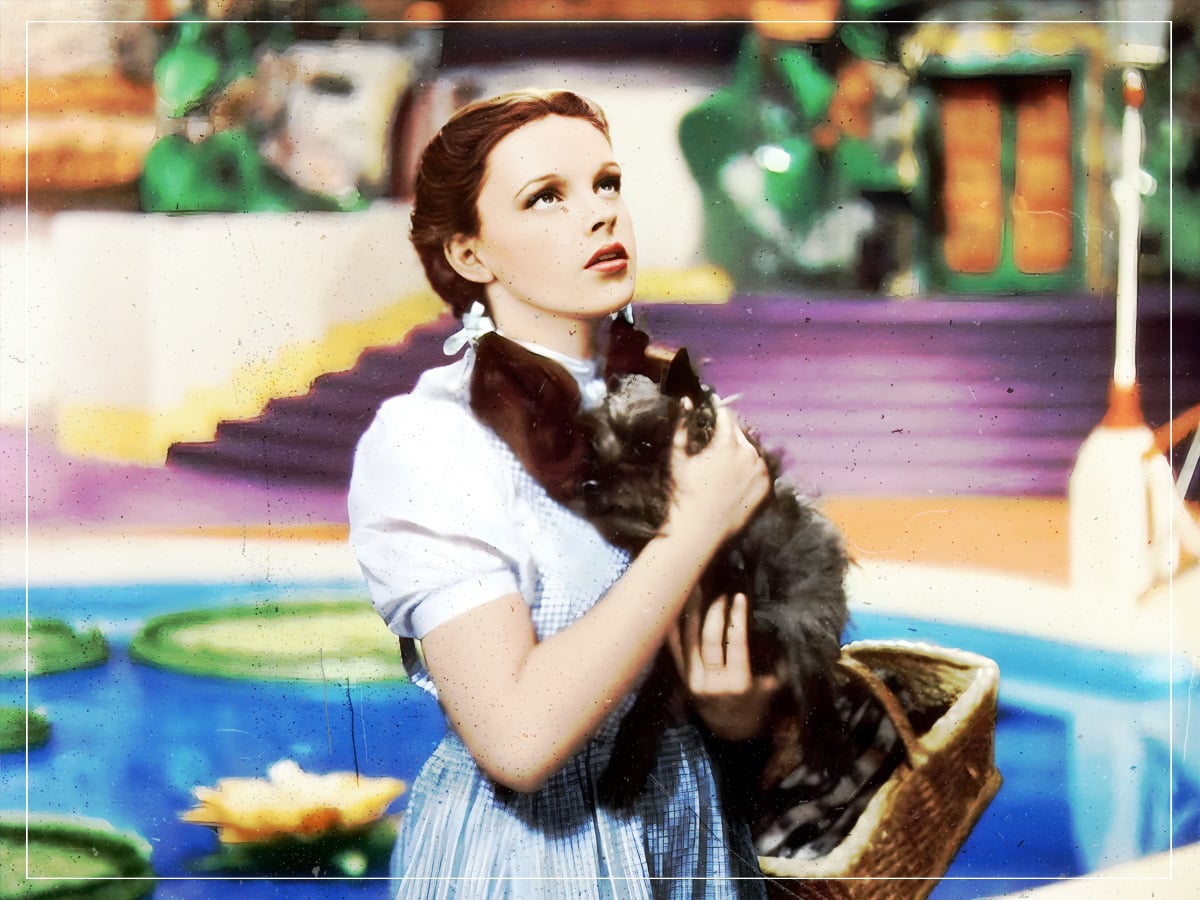
All of these arguments have been made repeatedly, but John Waters has his own take. In Robert K Elder’s The Film That Changed My Life, the Polyester director offered a rundown of what the film means to him. “Girl leaves drab farm, becomes a fag hag, meets gay lions and men that don’t try to molest her, and meets a witch, kills her,” he explained. There’s a lot to unpack there, but he wasn’t finished.
“Unfortunately,” he continued, “By a surreal act of shoe fetishism – clicks her shoes together and is back to where she belongs.” This, he insists, is “an unhappy ending.”
There’s no denying that the film, and Judy Garland specifically, have become gay icons, and there is a certain utopian quality about a naive preteen girl finding herself among a group of strange adult men who are not creepy. It’s more difficult to attribute Dorothy’s return to the farm to shoe fetishism, though goodness knows there are untold numbers of impressionable viewers who had to have their own pair of ruby slippers at some point (including yours truly, of course).
As for the nature of the ending, this is down to personal interpretation, and probably says a lot about a person’s outlook on life. The film ends with Dorothy exclaiming that there’s “no place like home,” but maybe this is just evidence of an indoctrinated mind. The fact that the ‘real world’ is a drab sepia tone makes the eye-popping colour of Oz seem more alluring, and Dorothy’s life on the farm seems pretty lonely and alienating compared to the journey down the yellow brick road in which she meets her soulmates.
For someone like Waters, a purveyor of all things alternative and extraordinary, it’s hardly surprising that Kansas in the early 20th century would inspire a little less excitement than a fantasy land of witches, flying monkeys, and animate scarecrows. Whether you agree with him or not might lead you to some existential musing of your own.
