


“Before that, drag queens were kind of square”: John Waters on how Divine changed everything

These days, the concept of a drag queen is hardly shocking, unless you’re a staunchly right-wing conservative bigot. Just look at how popular RuPaul’s Drag Race is, which has been running for 18 seasons since 2009, followed closely by dedicated fans.
It’s interesting that drag queens have long faced opposition, really, because the very concept of dressing as a gender different to one’s own has been commonplace since the days of Ancient Greece, when male actors had no choice but to play female roles, and since then, drag has evolved into a powerful form of expression and a core part of LGBTQ+ culture, the very act of donning drag a rebellious and defiant stance against gender norms.
But no drag queen has ever made an impact quite like Divine. Born Harris Glenn Milstead, he was obsessed with performing, dressing up, and shocking local Baltimoreans from a young age, often embodying a classic Hollywood star like Elizabeth Taylor. He threw lavish parties when he was young, replicating a dazzling Hollywood soirée from his suburban home, and it was during this time that he met John Waters.
The budding filmmaker was captivated by Milstead because he was so bold, so sure of himself, so unapologetic in the way that he took up space – when Milstead started to do drag more often, it was Waters who came up with the name Divine, lifting it from Our Lady of the Flowers by Jean Genet, which features a transvestite with the same name.
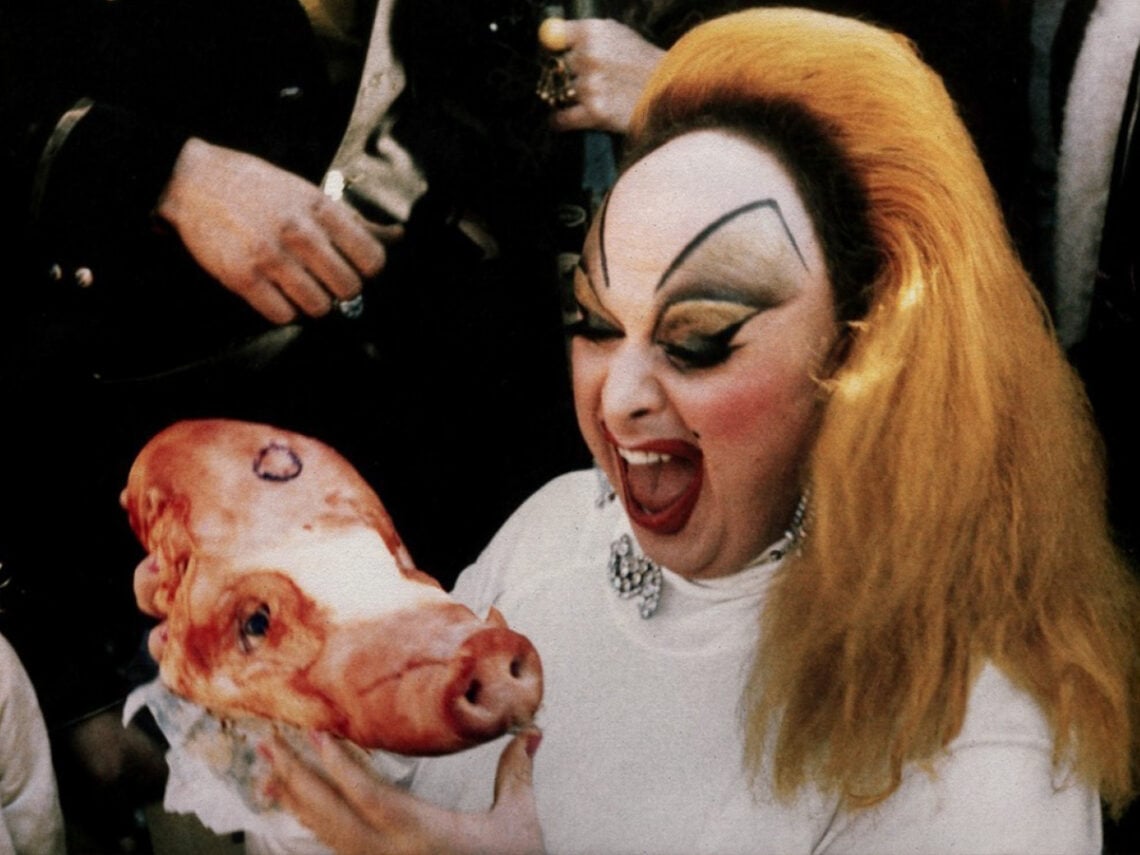
Divine came to appear in most of Waters’ films before the actor tragically died in 1988 at the age of just 42. Most notoriously, Divine led Pink Flamingos, a role in which he pushed the boundaries of bad taste by actually putting freshly laid dog shit in his mouth, performing real fellatio, and tearing at meaty bones like a cannibal. Many viewers were horrified – the film was banned in various countries – but others were mesmerised by this transgressive vision of complete rebellion against normality.
What made Divine so striking was his utter rejection of gender roles, even when embodying a female character… In Pink Flamingos, the overweight drag queen totters about in heels while wearing figure-hugging dresses, his hairline shaved right back to allow more room for outrageous, exaggerated eye makeup, his yellow bouffant looking ripely flammable.
Divine showed the drag world that there really were no rules, and the ultimate form of resistance against the hegemonic powers that oppress those for being different is complete subversion of expectation. To be provocative, shameless, and completely sure of oneself despite one’s otherness, was to truly be free – and there’s nothing more rebellious than that.
“I think the drag queen world kind of caught up with him. Before that, drag queens were kind of square, which is why we dreamed up Divine. Nowadays, all drag queens have an edge, they’re all cool, so I think Divine had something to do with that,” Waters told SSense.
By working together, Divine and Waters brought drag to the attention of those who’d otherwise never heard of it. While many people were disgusted by what the pair were doing, others found a sense of visibility, of understanding, or simply a new and exciting form of entertainment within this vision of drag. “I think we also introduced drag to a lot of new fans,” Waters said.
Divine went on to inspire everyone from iconic drag queens such as Katya to Disney villains like Ursula in The Little Mermaid. He really changed everything, helping to usher in this bold declaration of queerness in the mainstream.
