


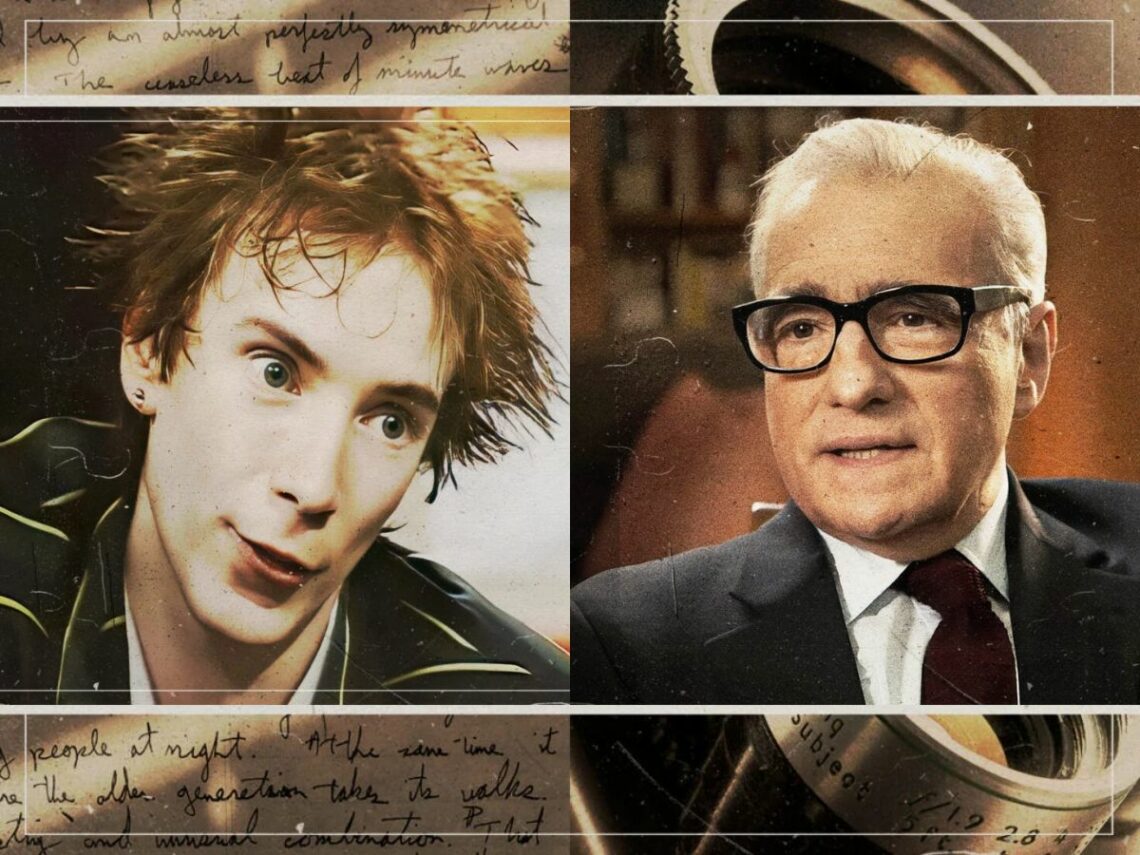
“He’s very, very insane”: The time John Lydon met Martin Scorsese

Martin Scorsese is a filmmaking giant. Since making his directing debut in the late 1960s, he’s helmed some of the best films of all time, from classics like Taxi Driver and Raging Bull to modern-day masterpieces like The Wolf of Wall Street and last year’s Killers of the Flower Moon. He’s honed one of the greatest filmographies in cinema, both in size and in scale.
Every era of Scorsese’s filmmaking is filled with evidence of his skill behind the camera, but it all spawned from the 1970s. The decade gave us his first collaboration with Robert De Niro, Mean Streets, which would spark one of the most celebrated partnerships in cinema history. Taxi Driver arrived not long after, which still remains a cult classic, and New York, New York closed out the decade.
While Scorsese was directing future all-time greats in the States, John Lydon was gearing up to become a punk figurehead. At the forefront of the Sex Pistols and, later, Public Image Ltd., he honed his own crafts: music-making and chaos-creating. He also briefly ventured into the world of filmmaking, starring alongside Harvey Keitel in Roberto Faenza’s 1983 film Copkiller.
Keitel is one of Scorsese’s frequent collaborators, having starred in several of his films between the 1960s and now, but Lydon’s feature film career never went too much further. He would never reach the level of starring in a Scorsese flick – but he did admire the director, though he admitted that he wouldn’t like to work with him.
“I like Scorsese,” the Sex Pistols singer stated during a conversation with Interview magazine via the John Lydon website, “I think he’s very, very insane, but I’m not quite sure he’s the kind of person I’d want to make a film with.” He went on to recall his encounter with the celebrated director, which took place while he was working on his 1980 boxing classic, Raging Bull.
Another iconic collaboration between De Niro and Scorsese, the film charted the life of Jake LaMotta, including some particularly graphic and violent boxing scenes. Though the intensity of the film was muted by black and white colour grading, it was too much for even Johnny Rotten to withstand.
When the director invited Lydon round to watch some of the shots, Lydon found the experience nightmarish. “‘Look at this, look at the blood spatter!’” he stated, presumably imitating Scorsese, “‘Isn’t it mad – isn’t everybody mad! Look out the window, look at all those New Yorkers! They’re all mad, I tell you, they’re all killers! Everybody’s a murderer!’ Ouch! Time to go home.”
There aren’t many people who would turn down the chance to work with Scorsese, but, apparently, Lydon is one of them. But while Lydon might have been turned off by Scorsese’s intensity and cynicism, it’s these elements of his filmmaking that have endeared him to so many others.
It’s the shock of the twist in Shutter Island that makes it so good; it’s the grit of Taxi Driver that made the film a cult classic; it’s the excess and unpleasantry on display in The Wolf of Wall Street that maintains your attention for a three-hour runtime. Lydon may have described Raging Bull as a “nightmare” that sent him running home, but, to others, it’s amongst the greatest films ever made.
Revisit Scorsese’s Raging Bull below.
