


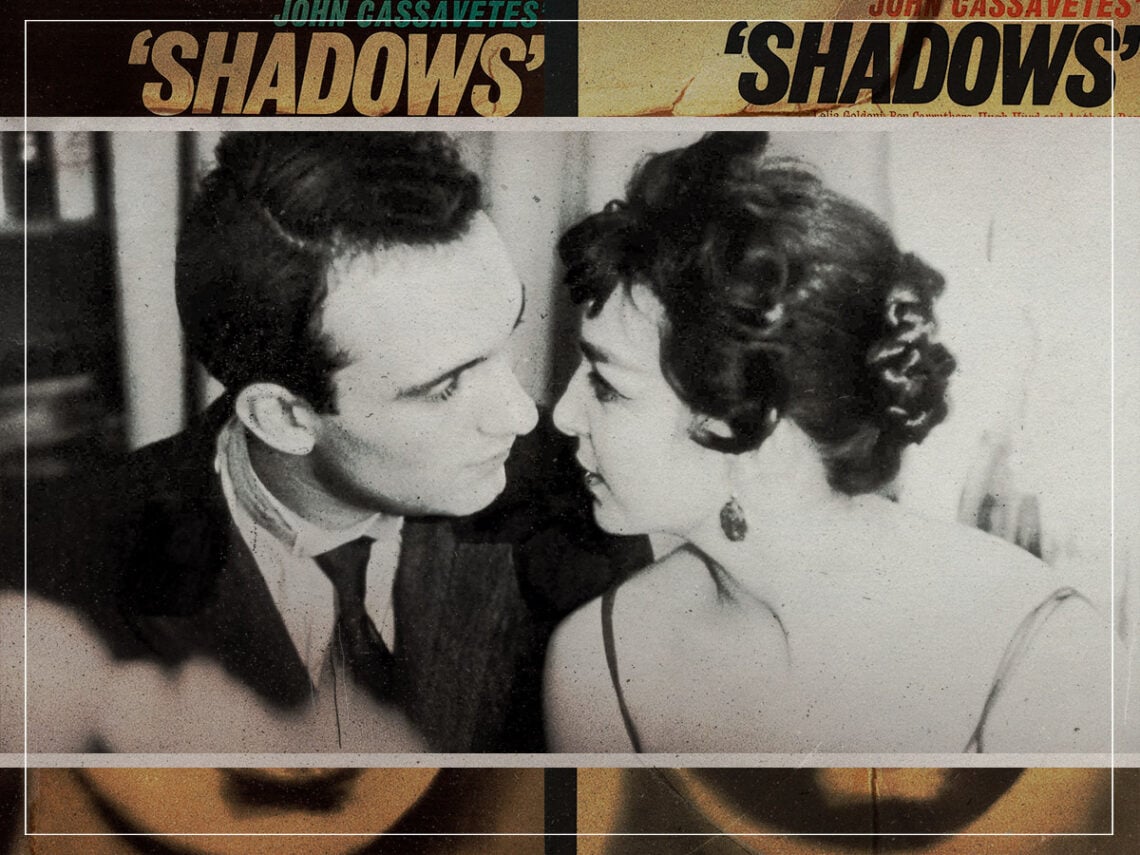
How John Cassavetes’ ‘Shadows’ became a titan of independent cinema

Independent cinema has long been associated with experimentation, taboo themes, low budgets and non-professional actors, allowing those with little filmmaking experience to push boundaries and make something outside of Hollywood’s dominant studio system. Free from strict demands and censorship, independent filmmakers have pioneered innovative cinematic techniques and ushered in new attitudes towards the power of the medium.
One of the most vital indie filmmakers in cinema history was John Cassavetes, whose first feature, Shadows, predated movements such as the French New Wave and New Hollywood. Released in 1959, it’s a feat of filmmaking which was way ahead of its time, paving the way for the approach that many directors used when making indie and avant-garde gems in the 1960s and ‘70s.
Shadows was born from one of Cassavetes’ acting workshops, which he ran in New York’s Variety Arts Theatre. Using budding actors, he came up with an idea for a film and set about actually turning it into one rather than keeping it confined to a drama class. With a limited budget and crew, Cassavetes did what he could do: turn his ideas into a feature, bypassing filming permits and improvising the story as he went rather than writing out a solid screenplay.
It turned out his actors were more than capable of discovering their characters through improvisation despite them all being students, not professionals. They channelled their real experiences as young people living in New York into their performances, with scenes being filmed in real locations, such as the streets, Cassavetes’ apartment, and local bars. This was completely different from what cinema-goers were used to seeing. While movements like Italian neorealism often used real locations, it wasn’t something that became more prominently used in cinema until the ‘60s, when French New Wave filmmakers really championed this break away from studio convention.
Cassavetes abandoned all rules and made a film that was utterly unique. While Hollywood was obsessed with glamour, thrilling sequences, noir aesthetics and compelling drama, here was a simple movie about a few young people who operated in New York’s underground jazz bars. When you look at the other top-grossing films from 1959, there’s a stark contrast between Shadows and what was popular in the mainstream. The historical epic Ben-Hur was one of 1959’s biggest releases, with movies such as Anatomy of a Murder, The Nun’s Story and Some Like It Hot also earning significant critical acclaim that year.
It’s actually hard to believe that Shadows was released in 1959 for many reasons. The movie is so free-flowing, led by improvisational jazz, that it centres around (the score is mainly by Charles Mingus), with conversations occurring naturalistically. It’s gritty and honest, as though Cassavetes has taken a camera with him to local bars, cafes, streets and even private spaces like bedrooms, offering us a glimpse at the real New York, not a glossy Hollywood version.
The film was also groundbreaking for its thematic content, with the narrative revolving around interracial relationships. There was still a long way to go in terms of civil rights in the United States during this time, and depictions of interracial relationships – particularly between someone white and someone Black – were few and far between.
Yet, Cassavetes explored the lives of three siblings, although only one of them ‘passes’ as Black. When the youngest sibling, Leila, starts dating a white man, he is shocked to discover that she is not fully white, too, resulting in tension between characters. Relationships between the siblings, their romantic entanglements, and the two brothers’ experiences as struggling jazz musicians are weaved together, creating a portrait of late ‘50s New York – a vibrant city full of unique characters, creativity, violence and a bubbling undercurrent of change.
