


Jimi Hendrix’s five favourite bands of all time: “This is the best group in the world”

When Jimi Hendrix was just a young whippersnapper in the US Army, Sgt Louis Hoekstra promptly saw to his discharge.
In fact, his letter of recommendation pretty much prognosticated the future for the young Seattleite. It read: “Pvt Hendrix plays a musical instrument during his off-duty hours, or so he says. This is one of his faults because his mind apparently cannot function while performing duties and thinking about his guitar.”
There are more than a few corroborated reports that suggest for Pvt Hendrix: it was the six-string or bust. There was no life for him beyond playing the guitar. He couldn’t go into sales or construction. He was addicted to the expression he could achieve on his instrument. “You have to go on and be crazy,” he said. “Craziness is like heaven.” That’s not something a 9-5 boss would agree with, and Hendrix’s defiance of that is what set him up for greatness.
It all began back in 1959. In the basement of a synagogue, Seattle’s Temple De Hirsch to be precise, Hendrix took to the stage with an unnamed band and started as he intended to go on. Far from being a tentative recital of simple chord progressions, Hendrix expressed himself with the liquid bravura and unrivalled skill for which he would later become known. He blew people’s minds a little too much for a simple debut synagogue gig.
This resulted in him being fired between sets. He was simply too good for the rest of the group. Therein lies Hendrix’s complex relationship with bands. He was a maestro who yearned for the camaraderie and power of a collective, but also a unique and overwhelming presence who didn’t always function within them. He jammed and experimented, unbound by preconceptions and unable to write music.
As he said himself, “You never know what shape clouds are going to be before you see them.” This gave him a very singular outlook on music. With a love of Handel and Beethoven, you get the sense that his dream music would have been a fully improvised psychedelic orchestra. That, by definition, is an impossibility, but the groups he dug came as close as possible.
Jimi Hendrix’s five favourite bands:
King Crimson
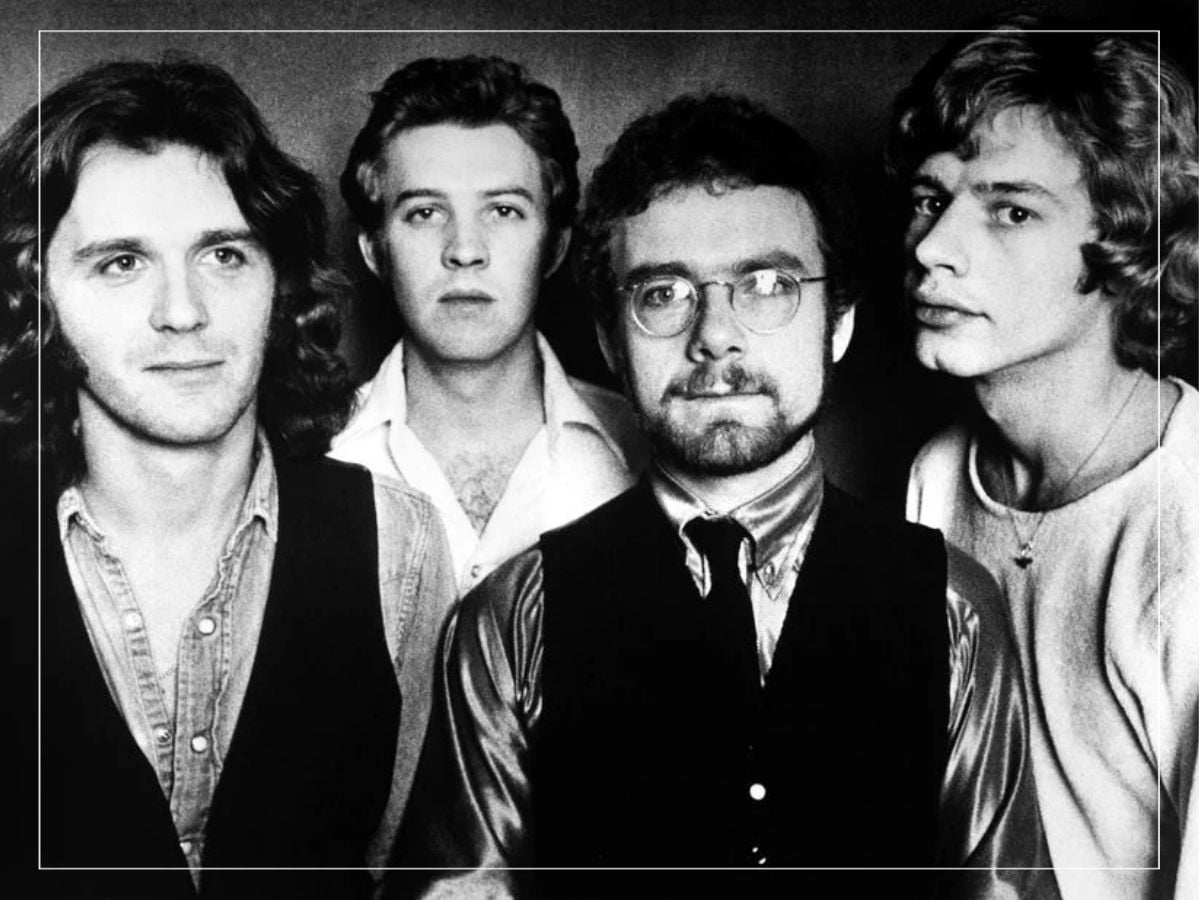
“The single time I met Jimi Hendrix was at The Revolution Club in Mayfair (London) when [King] Crimson were playing in 1969, and it was the first time I sat down,” Robert Fripp once revealed. At this point in their career, King Crimson were only a matter of months into their infancy. Nevertheless, after the show, Hendrix – then a star – was so moved by the music, that he approached the band after the show. Fripp stuck out a hand for Hendrix to shake, at which point the luminary said, “Hey, shake my left hand, man, it’s closer to my heart.”
For a while, that was the gilded punchline to Fripp’s anecdote and, for all intents and purposes, the greatest accolade that any guitarist could wish to receive. However, years later, Fripp bumped into the sister-in-law of King Crimson’s first drummer, Michael Giles, in a bookstore. She was in attendance on the momentous night that Hendrix shook his hand, and, as fate would have it, she was sitting at the table next to Jimi.
What she revealed to Fripp about that evening probably bewildered him so much that he had to sit down if she caught him on a rare occasion when he happened to be standing. “He was jumping up and down,” she told Fripp, shouting: “THIS IS THE BEST GROUP IN THE WORLD!’” She asserted that he bawled this several times over the booming stereo. “In all due modesty,” Fripp concludes the story. “That is one of the best calling cards any working musician is ever likely to be able to present.”
The Beatles

At the Handel and Hendrix Museum in London, you can see the late guitarist’s record collection. In the collection is a copy of The Beatles’ Sgt. Pepper’s Lonely Hearts Club Band, which looks about as well-thumbed as Sir David Attenborough’s passport. Throughout his life, Hendrix expressed a profound love for the seminal experimental album and clearly played it countless times during his stay in London.
The star was so enamoured with the classic Beatles record that only three days after it was released, he opened his show at the Saville Theatre with an interpretation of the titular track so masterfully delivered that Paul McCartney, who was in attendance, described it as being “one of the greatest honours of my career.” As McCartney once declared of his mutually admiring luminary, “He was very self-effacing about his music, but when he picked up that guitar, he was just a monster.”
His daring ways were, in part, inspired by the Fab Four. He endeavoured to follow their luminous lead rather than succumb to what he perceived to be a dumbing down among his American cohorts. “Oh, yes, I think it’s good,“ he said of The Beatles. “They’re one group that you can’t really put down because they’re just too much, and it’s so embarrassing, man, when America is sending over the Monkees – oh, God, that kills me!”
The Bee Gees

One of the key curators of Hendrix’s record collection for the Hendel and Hendrix Museum was his former partner, Kathy Etchingham. When she looked back over her musical memories with the musician, one of the very first records that she recalled the guitarist adoring was the Bee Gees’ 1967 debut effort 1st. The brothers offered a far different sound in their Disco BC years, crafting emotional soft rock ditties with extravagant yet seamless arrangements.
As Etchingham explained, “[this was] one of the first records in the collection. We used to listen to that quite a lot. Jimi thought their harmonies were really great.” Their sweet chirping sounds revealed both a sweeter side to Hendrix and one that was absolutely devoid of prejudice.
While the Bee Gees might not have topped the cool-o-meter of the era, it was the music that the magical Hendrix appraised, and he was moved by their complex Baroque take on the pop ballad. You can even hear a touch of their influence on his unique layering, mimicking their harmonising ways.
Cream

As the famous story goes, a pre-fame Hendrix once took to the stage with Cream – the most esteemed group of musicians in the UK – and pretty much wiped the floor with them, sending Eric Clapton into a tizzy. However, the American soon offered up an olive branch of sorts.
In 1969, The Jimi Hendrix Experience were set to perform on the BBC’s new music show, Happening For Lulu. Earlier that day, news of Cream’s split had just broken. So, in an impromptu move that enraged the show’s producers, Hendrix cut the planned ‘Hey Joe’ short and announced, “We’d like to stop playing this rubbish and dedicate a song to the Cream, regardless of what kind of group they may be in. We dedicate this to Eric Clapton, Ginger Baker and Jack Bruce.” He then burst into ‘Sunshine of Your Love’.
“You know, he really dug Cream,” drummer Ginger Baker once recalled. “Hendrix and us basically had created this very large audience of people who were turned onto instrumental, vocal, loud – whatever you wanna call it – music. Rock ‘n’ roll, I guess, with blues in it. I was very proud to be a friend of Jimi Hendrix, and he encouraged me a lot. I think he is not with us because nobody cared about him enough and I think nobody cared enough about us then either.” But looking back, their soaring musicianship is inextricably linked.
The Band
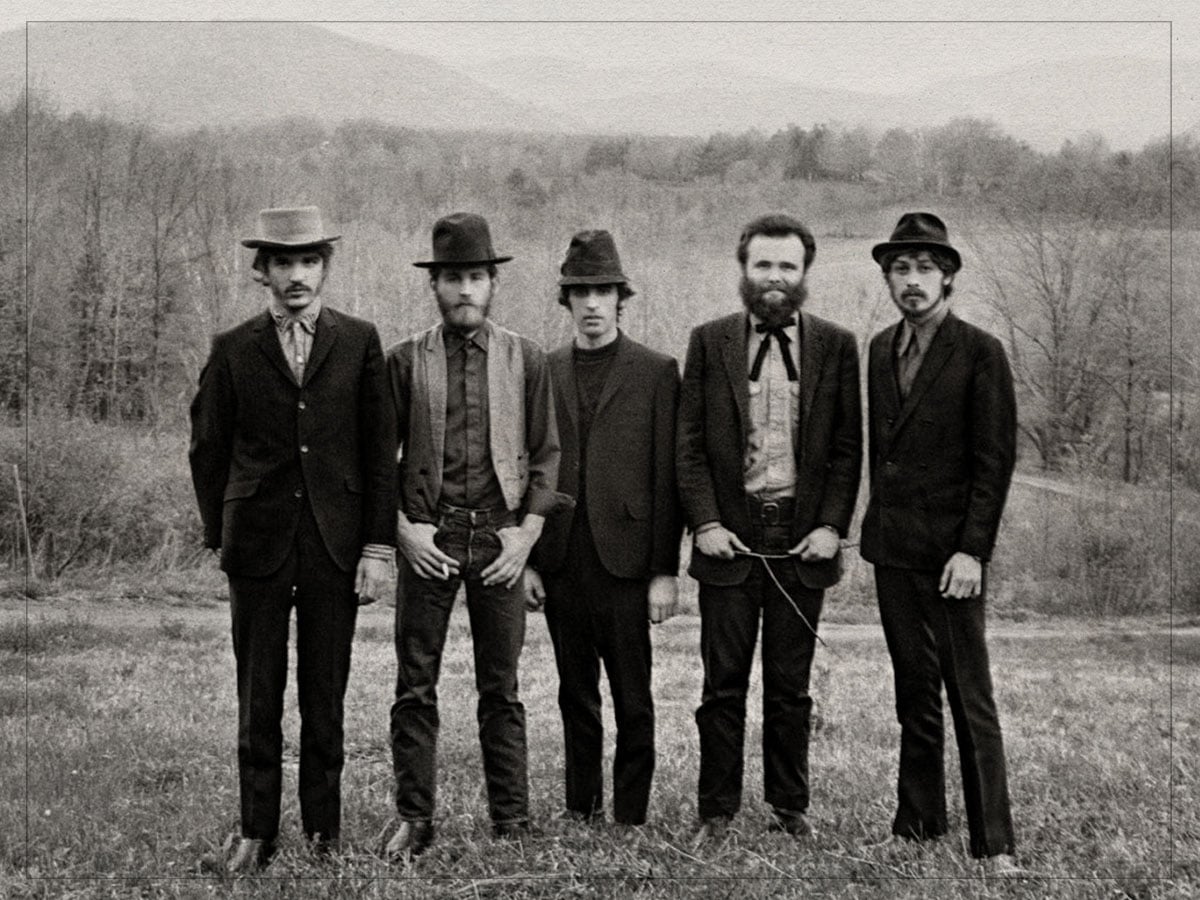
The musician whom Jimi Hendrix loved, perhaps above all, was Bob Dylan. “All those people who don’t like Bob Dylan’s songs should read his lyrics. They are filled with the joys and sadness of life,” he proclaimed. But he didn’t just love The Band as an extension of this owing to their association with the folk star, Music from Big Pink sat firmly amid his favourite albums of all time, and their cohesive nature helped to inspire the sort of soulful sound he wanted to get from his own group.
”We want our sound to go into the soul of the audience and see if it can awaken some little thing in their minds… ‘Cause there are so many sleeping people,” Hendrix once said. This was a goal that he felt Dylan and The Band were already leading the way with. Not only were they radicals in the true sense, but their political ways were emboldened by a strange sound that blended the blues of Muddy Waters that he loved with timeless folk, twists of rock ‘n’ roll, and above all, something entirely new. They typified Hendrix’s obsession with turning the past into something that the present has never heard before.
And their uniqueness was something that aligned with him, too. “I just hate to be in one corner,” he said in 1967. “I hate to be labelled. I just want to be myself.” Over half a century later and nobody has found a truly apt label for The Band either.
