


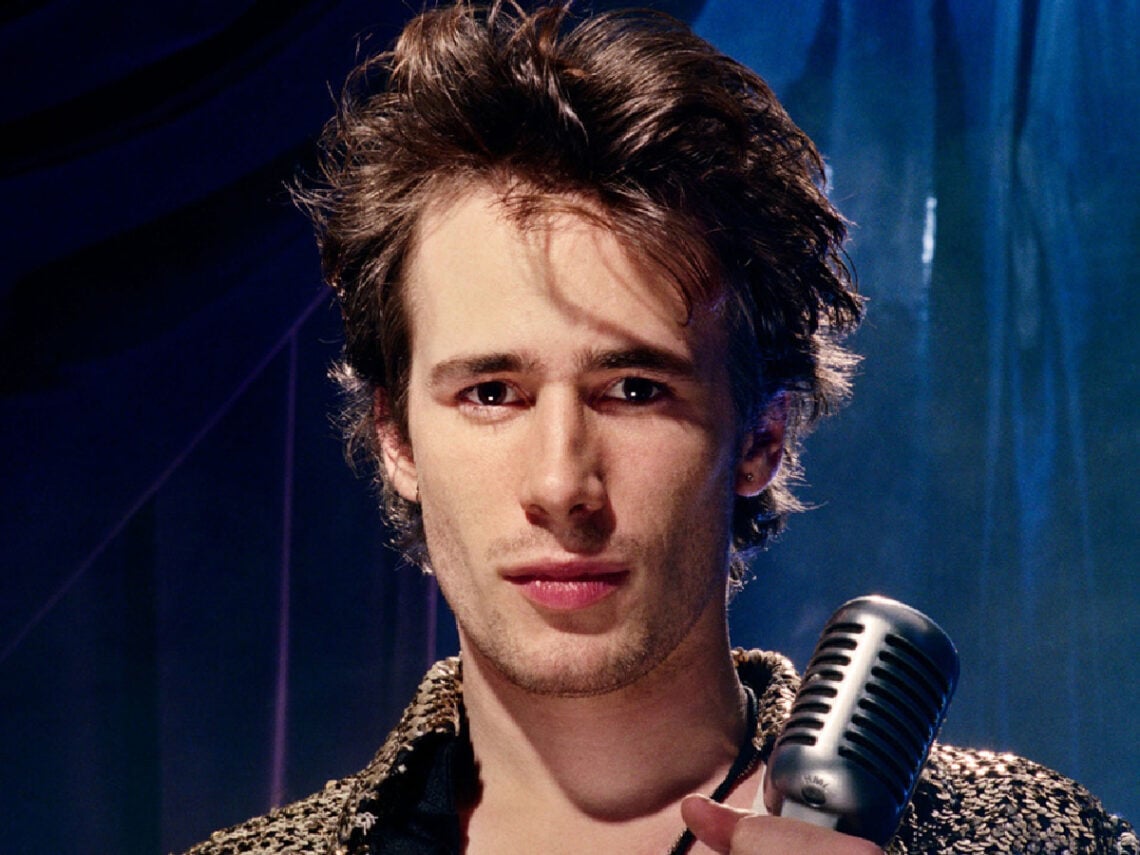
Jeff Buckley on the singer who far outstripped the influence of his father: “The first voice I really fell in love with”

If you happen to watch footage from 1995’s Les Eurockéennes de Belfort festival, you may spot a figure dangling from the stage’s scaffolding during Robert Plant and Jimmy Page’s set. That person was none other than Jeff Buckley.
At the French festival on July 9th, 1995, Buckley got to see his personal heroes, performing as Page and Plant, for what is believed to be the first time. Joined by musician Ben Harper, just after their respective sets, Buckley rushed to the stage just as Page and Plant were beginning. Harper saw no sign of Buckley in the crowd; as he searched while watching the duo, he glanced up to see his friend scaling the scaffolding of the stage.
“Zeppelin is at full throttle,” Harper recalled, speaking in the 2025 documentary, It’s Never Over, Jeff Buckley, “and Jeff is with every decibel coursing through his veins. You could call it death-defying.” As Harper described, Buckley glanced down, back at Harper, and waved, gesturing for him and his friends to join him in the dangerous stunt.
Buckley’s love for Led Zeppelin reached a literal height then, but he had always had a professed reverence for his favourite band. In black-and-white footage from a past interview, Buckley considers, “My main musical influences?” With a smile, he summarises, “Love, anger, depression, joy… and Zeppelin.”
Physical Graffiti was the first album that Buckley ever owned, gifted to him by his stepfather. It was an introduction to Led Zeppelin’s world that expanded his own immeasurably: by the time he decided he wanted to become a musician at the age of 12, no band defined his voraciousness for rock music more than Led Zeppelin.

Some may say that Buckley’s draw to creating music of his own was inevitable, given that his father, Tim, was a musician himself. Tim was a folk singer-songwriter with a cult following in the 1960s, but he was also an absent father, abandoning Buckley and his mother, Mary Guibert, when his son was just six months old. The father and son would meet once, when Buckley was eight years old, before Tim’s death from an overdose in 1975, at just 28 years old.
Buckley may have been introduced to New York’s music scene largely from a performance that he gave at a tribute concert in honour of Tim in 1991, but from his point of view, that is where their connection severed. “See, I sacrificed something for my father’s memory,” Buckley told The New York Times in 1994, his voice described as heated. “Technically, the tribute will be seen as my debut in New York – which it really wasn’t.”
Any resemblances to be found in, say, their tone of voice while singing, or in inherited facial features, were mere coincidences; Buckley was wholly his own person, outside of his father’s shadow.
“Robert Plant and Jimmy Page have much more influence on me than he ever did,” Buckley once said, speaking in reference to his father. “That was the first voice I really fell in love with. Young Robert Plant back when he sounded like Janis [Joplin]… The only thing my father ever gave me was a fleeting glimpse.”
Throughout Buckley’s life, music seemed to be a constant, and where his sound was concerned, the sprawling, elaborate techniques that comprise his sole album, 1994’s Grace, are clearly indebted to the influence of Led Zeppelin. In his voice, he possessed a similar wail to Plant’s, at times, and the connection was mirrored in Buckley’s softer moments, too.
The respect was reciprocated. In one interview, Page expressed how Grace grew on him as a listener. “I started to play Grace constantly, constantly,” he revealed, “and the more I listened to the album, the more I heard, the more I appreciated of Jeff’s talents and Jeff’s technical ability, to which he was just a wizard, and it was close to being my favourite album of the decade.”
In 2010, Plant recalled watching Buckley to QTV, alongside Page, at a festival in Switzerland: “We went to see him, and it was mind-altering, his voice. Spectacular singing. And so much conviction.”

Never Miss A Beat
The Far Out Led Zeppelin Newsletter
All the latest stories about Led Zeppelin from the independent voice of culture.
Straight to your inbox.