


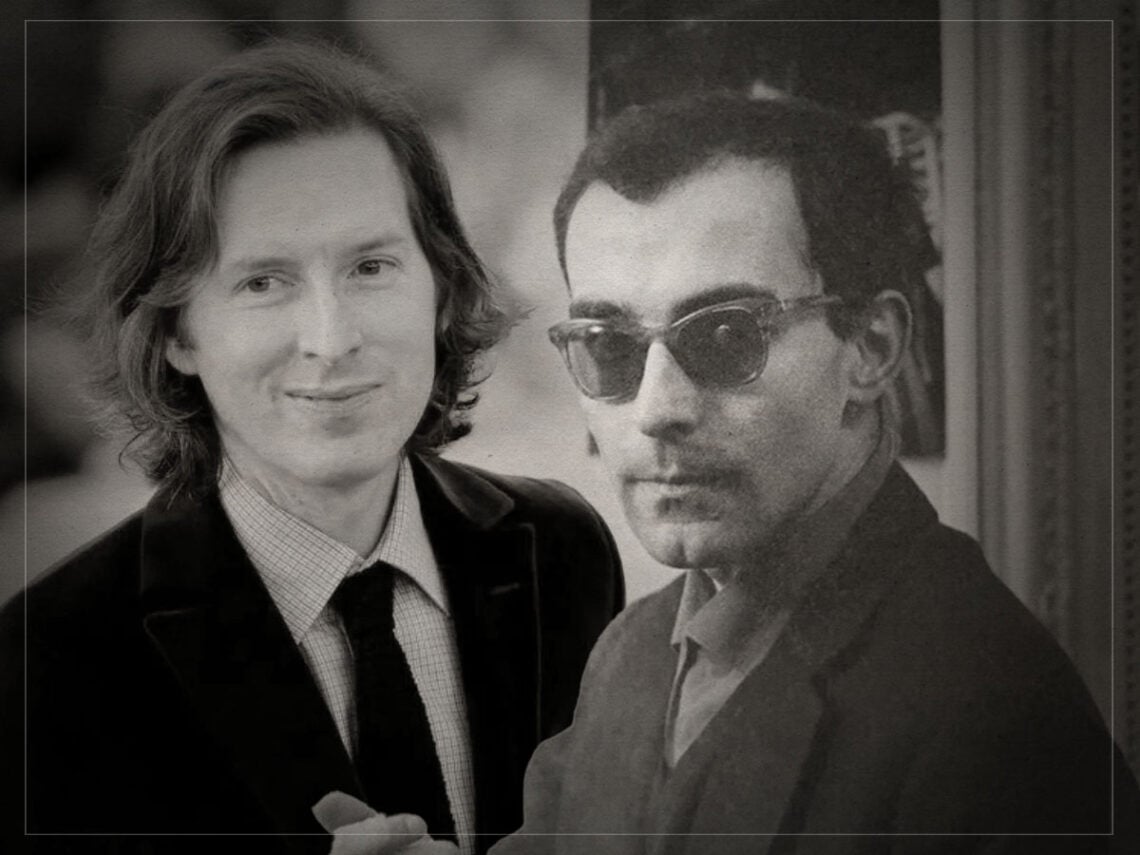
The Jean-Luc Godard movie booed at Venice that Wes Anderson owes his career to

There are films that, despite their acclaimed status, were once received rather viciously, being met with scathing reviews and perhaps even some boos from the audience.
That was the case for Pierrot le Fou, Jean-Luc Godard’s 1965 crime comedy-drama, a romantic, colourful tale of a couple on the run. It remains one of the French New Wave filmmaker’s greatest efforts, full of all his signature techniques, from fourth-wall breaks to innovative uses of editing (that party scene is simply unforgettable), while Anna Karina and Jean-Paul Belmondo lead the film to greatness. Karina even performs ‘Ma ligne de chance’, an earworm of a song that feels a little out of place, yet, at the same time, why wouldn’t Godard throw in a fun little number?
Pierrot le Fou is as political as it is playful, with Godard using a palette of primary colours and the backdrop of the Mediterranean Sea to comment on the emptiness of bourgeois life, the increasingly shallow hold of capitalism, and political rebellion. Marianne, played by Karina, and Belmondo’s Ferdinand run away from a life of boringness as the former tries to escape OAS hitmen, finding more excitement in this world of danger and violence than the mundanity of Parisian life.
With references to paintings and the artistic process, something only further emphasised by the breaking of the fourth wall, like when Marianne snips a pair of scissors across the screen, Pierrot le Fou basks in meta storytelling, actively commenting on France’s uneasy political climate through rebellion and romance. It all falls apart, unsurprisingly, because as much as Godard wanted a world that looked radically different, he was a realist, and he knew that Marianne and Ferdinand couldn’t simply get their happy endings. The world doesn’t work that way.
Despite the film being laden with experimental techniques which directly informed and aided its political themes, when the movie was screened at the Venice Film Festival, it was met with an audience of boos. People didn’t know what to make of the film, although it wasn’t long before critics began to give the film more positive reviews as the years went by.
It has come to have a great influence over cinema, with its pop art palette and rich use of style as a purposeful mirror to its politics, but if one filmmaker owes his career to Pierrot le Fou, it’s Wes Anderson. It doesn’t take a genius to see the parallels between Godard’s ‘60s work and Anderson’s signature style, what with his similarly bold use of colour and symmetry.
Moonrise Kingdom, in particular, bears significant influence from this Godard venture, from the narrative to its stylistic choices. The two young characters, Suzy and Sam, end up running away together and camping out with a scenic backdrop akin to the French film. Even the image of Suzy with her suitcase mirrors the image of Karina’s Marianne carrying hers.

Then there are the handwritten notes, which take up the screen in both films, while the bright colours are a clear nod to the French New Wave, too. The film soon became one of Anderson’s most praised, but it owes a lot to Pierrot le Fou, with its playful atmosphere and theme of unabashed resistance.
It’s one of the various Godard movies that have shaped Anderson’s approach to cinema, although he rarely utilises the same level of political substance within these stylistic choices, unlike the French master.
