


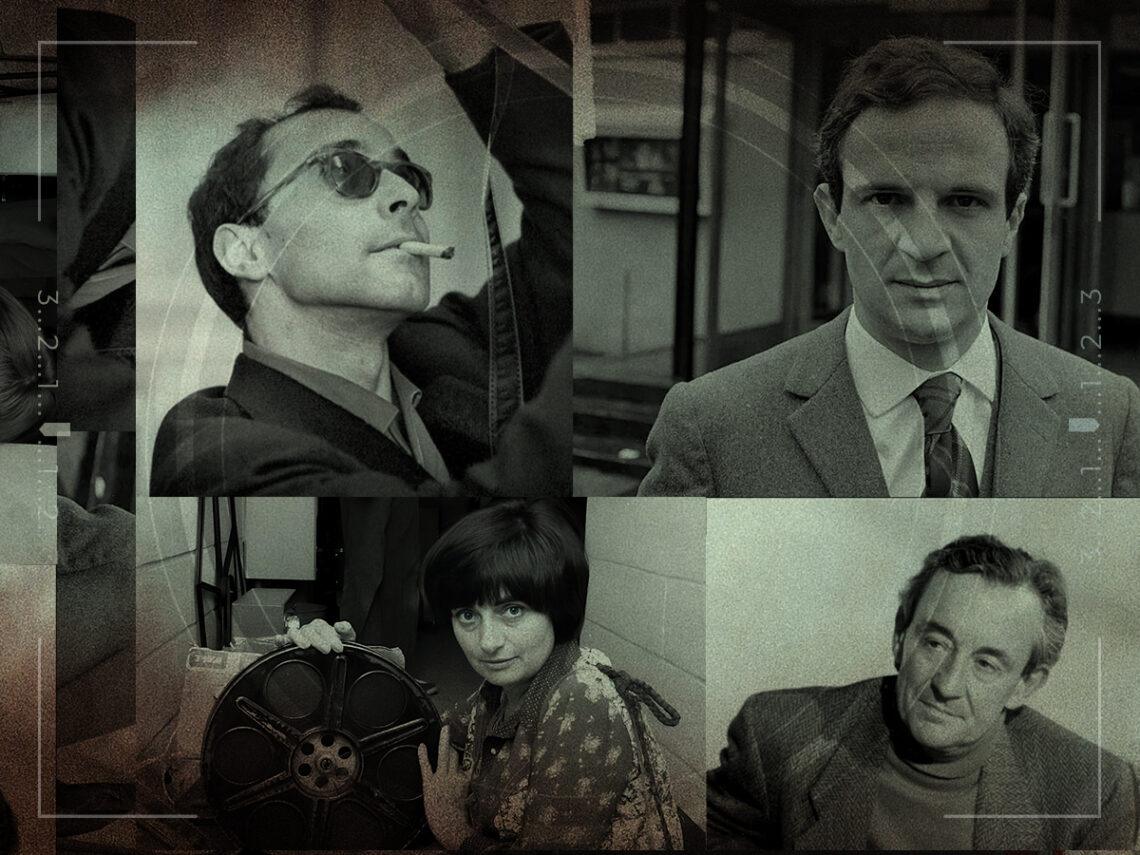
Who was the real hero of the French New Wave?

For many of us, French New Wave movies are a gateway into ‘foreign cinema’, with movies like Breathless and The 400 Blows appearing on practically all film syllabuses. It’s not hard to see why; at a time when cinema was dominated by Hollywood’s studio-bound productions and French cinema was, to passionate cinephiles, becoming rather boring, the nouvelle vague transformed the cinematic landscape during the late 1950s and 1960s.
The effect of these new and experimental films on the rest of cinema cannot be understated, but who was the real hero of this revolutionary moment in film history?
The French New Wave emerged when a group of dedicated film critics for Cahiers du cinema, such as Jean-Luc Godard, François Truffaut, and Eric Rohmer, started to make their own movies. Inspired by a desire to free French cinema from the shackles of unoriginality, these filmmakers began experimenting with new techniques, like handheld on-location shooting, playfully trying out the kinds of editing styles that just hadn’t been seen before. The fourth wall was often broken, scenes would chop back and forth, and, especially in the work of Godard, political commentary became a prominent feature.
When the French New Wave is discussed, it’s Godard and Truffaut who tend to get the most flowers, with the former standing as arguably the country’s most well-known director; in fact, his name has become synonymous with cliché. Yet, it’s because of his wide-spanning influence that he has become such a contentious figure, with some people doubling down on his brilliance and the many gifts he gave cinema, while others see him as nothing more than a pretentious and overrated figure who thought too highly of his ideas.
Godard is a tricky one. Many of his films are incredible, from the poetic Vivre sa vie to the playful crime comedy Bande à part, but he certainly made many creative decisions that you can’t help but roll your eyes at. His depiction of women is a complicated issue, too, because while he gave certain female characters agency and understanding (usually the ones given life by the incredible Anna Karina), others were much more objectified and clearly written from a male perspective.
“Cinema is not the reflection of reality, but the reality of the reflection”.
Jean-Luc Godard
Yet, for all his flaws, Godard really did change cinema. You only have to watch Quentin Tarantino’s Pulp Fiction or Wes Anderson’s Moonrise Kingdom (or any Anderson movie for that matter) to see the glaringly obvious influence that the filmmaker has exerted over those who have emerged in his wake. Watch Richard Ayoade’s Submarine and you’ll find visual and sonic references to Godard’s work, while Martin Scorsese’s Mean Streets borrows editing techniques from Breathless, and Arthur Penn’s Bonnie and Clyde was inspired by the filmmaker, which subsequently ushered in the New Hollywood era.
The New Hollywood era, heavily inspired by the nouvelle vague’s experimental editing and mixture of nihilism and playfulness, particularly that pioneered by Godard, changed mainstream cinema forever. So many of Godard’s ideas are embedded into the very framework of modern cinema, which is why it wouldn’t be unfair to call him the true hero of the French New Wave.
Yet, what about the others? I would argue that two other figures from the period, Eric Rohmer and Agnes Varda, have had a lasting influence that isn’t as widely appreciated, making them the real unsung heroes of the French New Wave. Unsung might be the wrong word here since they both get their praise these days, but still, in comparison to Godard, they are typically relegated to the background of the movement’s history, when really, they were vital to it.

Varda’s first film, La Pointe Courte, actually predates the first movies made by Godard or Truffaut, but it flew under the radar for years. Yet, it was a work of artistic genius inspired by Varda’s interest in photography and documentary, and it paved the way for the rest of her career. Her most popular film, Cleo From 5 to 7, is a staple, and with its unique editing and complex exploration of feminist themes, war, illness, and the fragility of life, it endures as a film with rich depth, and I wouldn’t hesitate to say that it is far more impressive a piece of work than Breathless, Le Mepris, or Masculin Feminin.
Varda continued to experiment throughout her career, making fictional narratives, documentaries, and movies that blended the two, often weaving herself into her films as well. She fearlessly explored topics like abortion, race, and the many facets of the female experience, proving that there is space for women in the film industry at a time when she was one of the only female directors working in France. Today, you’ll be hard-pressed to find a female filmmaker who doesn’t cite Varda as a major inspiration.
Then there’s Rohmer, who worked closely with Godard at the start of his career, only to move forward with a distinctive style that has since inspired movies like the Before trilogy and the films of Mia Hansen-Løve. His conversational style – often inviting us to watch characters discuss as they work through moral and philosophical dilemmas – is so compelling, and he wasn’t concerned with forcing formal experimentation in the same way as Godard.
Instead, Rohmer’s filmmaking was radical in its thematic approach, allowing his characters to be flawed and utterly human while they navigated relationships. As his career progressed, his films kept getting better, and he often prioritised the perspectives of female characters and worked with all-female crews, creating a body of work that stands as a testament to honing a singular vision and ignoring any external pressures.
So, while we have to acknowledge Godard’s position as the most well-known and widely influential filmmaker of the French New Wave, Varda and Rohmer in particular were vital figures whose contributions to cinema were just as important. Both Varda and Rohmer made incredible films for decades after the nouvelle vague died out, continuing to experiment as the film industry developed, and demonstrating the importance of true creative integrity.
